Get your free personalized podcast brief
We scan new podcasts and send you the top 5 insights daily.
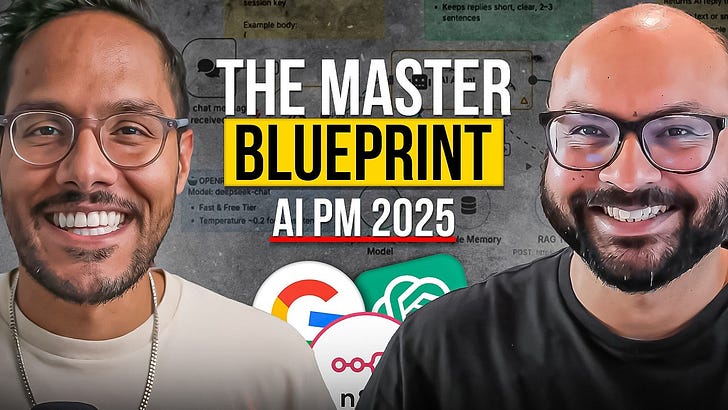
Prototyping and even shipping complex AI applications is now possible without writing code. By combining a no-code front-end (Lovable), a workflow automation back-end (N8N), and LLM APIs, non-technical builders can create functional AI products quickly.
Related Insights
Building complex, multi-step AI processes directly with code generators creates a black box that is difficult to debug. Instead, prototype and validate the workflow step-by-step using a visual tool like N8N first. This isolates failure points and makes the entire system more manageable.

Vercel's Pranati Perry argues that even with no-code AI tools, having some coding knowledge is a superpower. It provides the vocabulary to guide the LLM, give constructive criticism during debugging, and avoid building on a 'house of cards,' leading to better, more stable results.

A repeatable workflow exists for non-technical builders: research ideas with Perplexity, formalize a Product Requirements Document with Claude, generate a frontend prototype with Magic Patterns, and then deploy the code in Replit with a Supabase backend.
Simply instructing engineers to "build AI" is ineffective. Leaders must develop hands-on proficiency with no-code tools to understand AI's capabilities and limitations. This direct experience provides the necessary context to guide technical teams, make bolder decisions, and avoid being misled.

Tim McLear used AI coding assistants to build custom apps for niche workflows, like partial document transcription and field research photo logging. He emphasizes that "no one was going to make me this app." The ability for non-specialists to quickly create such hyper-specific internal tools is a key, empowering benefit of AI-assisted development.

Advanced AI like Gemini 3 allows non-developers to rapidly "vibe code" functional, data-driven applications. This creates a new paradigm of building and monetizing fleets of hyper-specific, low-cost micro-SaaS products (e.g., $4.99 per report) without traditional development cycles.

Use Claude's "Artifacts" feature to generate interactive, LLM-powered application prototypes directly from a prompt. This allows product managers to test the feel and flow of a conversational AI, including latency and response length, without needing API keys or engineering support, bridging the gap between a static mock and a coded MVP.
The surprising success of Dia's custom "Skills" feature revealed a huge user demand for personalized tools. This suggests a key value of AI is enabling non-technical users to build "handmade software" for their specific, just-in-time needs, moving beyond one-size-fits-all applications.

The new Spiral app, with its complex UI and multiple features, was built almost entirely by one person. This was made possible by leveraging AI coding agents like Droid and Claude, which dramatically accelerates the development process from idea to a beautiful, functional product.
While N8N is powerful for building complex AI agent workflows, its steep learning curve is geared towards engineers. Product Managers will find Lindy.ai more effective because it allows for agent creation through simple AI prompts, removing the technical barrier and speeding up prototyping.