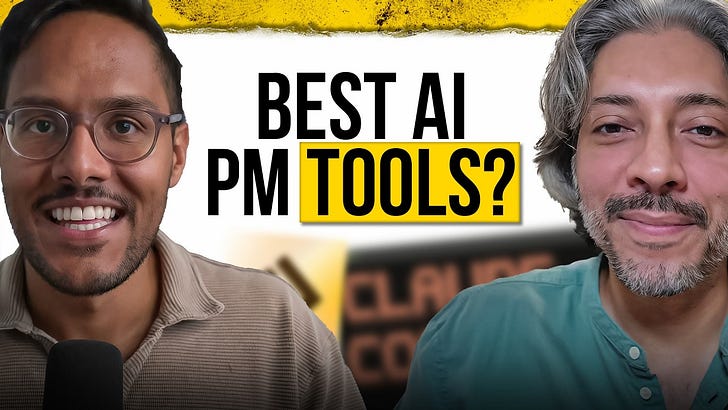
Get your free personalized podcast brief
We scan new podcasts and send you the top 5 insights daily.
The learning curve for traditional workflow automation tools like N8N is steep for non-coders. A more accessible starting point is "vibe coding"—using natural language prompts to build applications in environments like Anthropic's Claude. This lowers the barrier for marketers to create valuable, custom tools without deep technical expertise.

Related Insights
Moving beyond chatbots, tools like Claude Cowork empower non-coders to create complex, multi-step autonomous workflows using natural language. This 'agentic' capability—connecting documents, searches, and data—is a key trend that will democratize automation and software creation for all knowledge workers.

Tools like Claude Code are democratizing software development. Product managers without a coding background can use these AI assistants to work in the terminal, manage databases, and deploy apps. This accelerates prototyping and deepens technical understanding, improving collaboration with engineers.

Beyond using pre-made skills, users can simply prompt Claude to create a new skill for itself. The AI understands the required format and can generate the instructional text for a new capability, such as crafting marketing hooks that create FOMO. This democratizes the process of AI customization.
Claude Code can take a high-level goal, ask clarifying questions, and then independently work for over an hour to generate code and deploy a working website. This signals a shift from AI as a simple tool to AI as an autonomous agent capable of complex, multi-step projects.
Use Claude's "Artifacts" feature to generate interactive, LLM-powered application prototypes directly from a prompt. This allows product managers to test the feel and flow of a conversational AI, including latency and response length, without needing API keys or engineering support, bridging the gap between a static mock and a coded MVP.
The process of building AI tools is becoming automated. Claude features a 'Skill Creator,' a skill that builds other skills from natural language prompts. This meta-capability allows users to generate custom AI workflows without writing code, essentially asking the AI to build the exact tool they need for a task.

AI is moving beyond text generation. Using Claude's 'Artifact Builder' skill, it can create and deploy functional web applications directly in the chat window. A user can prompt it to build a tool, like a UTM link generator, and receive a usable app, not just code snippets.
The true advantage of AI coding tools like Claude Code is not just task automation, but the ability for non-engineers to build a suite of personal, custom applications. This "personal software" is the ultimate unlock for scaling a marketer's unique craft and workflows.
AI tools like Claude Cowork can now handle complex tasks like app development, including UX/UI design and coding, from natural language prompts. This dramatically lowers the barrier to creating custom software, as demonstrated by one host building a fully functional meditation app in minutes.

While N8N is powerful for building complex AI agent workflows, its steep learning curve is geared towards engineers. Product Managers will find Lindy.ai more effective because it allows for agent creation through simple AI prompts, removing the technical barrier and speeding up prototyping.