Get your free personalized podcast brief
We scan new podcasts and send you the top 5 insights daily.
Hunter Biden argues that historically significant presidents like Teddy Roosevelt (creating National Parks) and Abraham Lincoln (the Emancipation Proclamation) bent or broke constitutional rules to achieve monumental goals, suggesting that transformative leadership often operates outside of accepted legal boundaries.

Related Insights
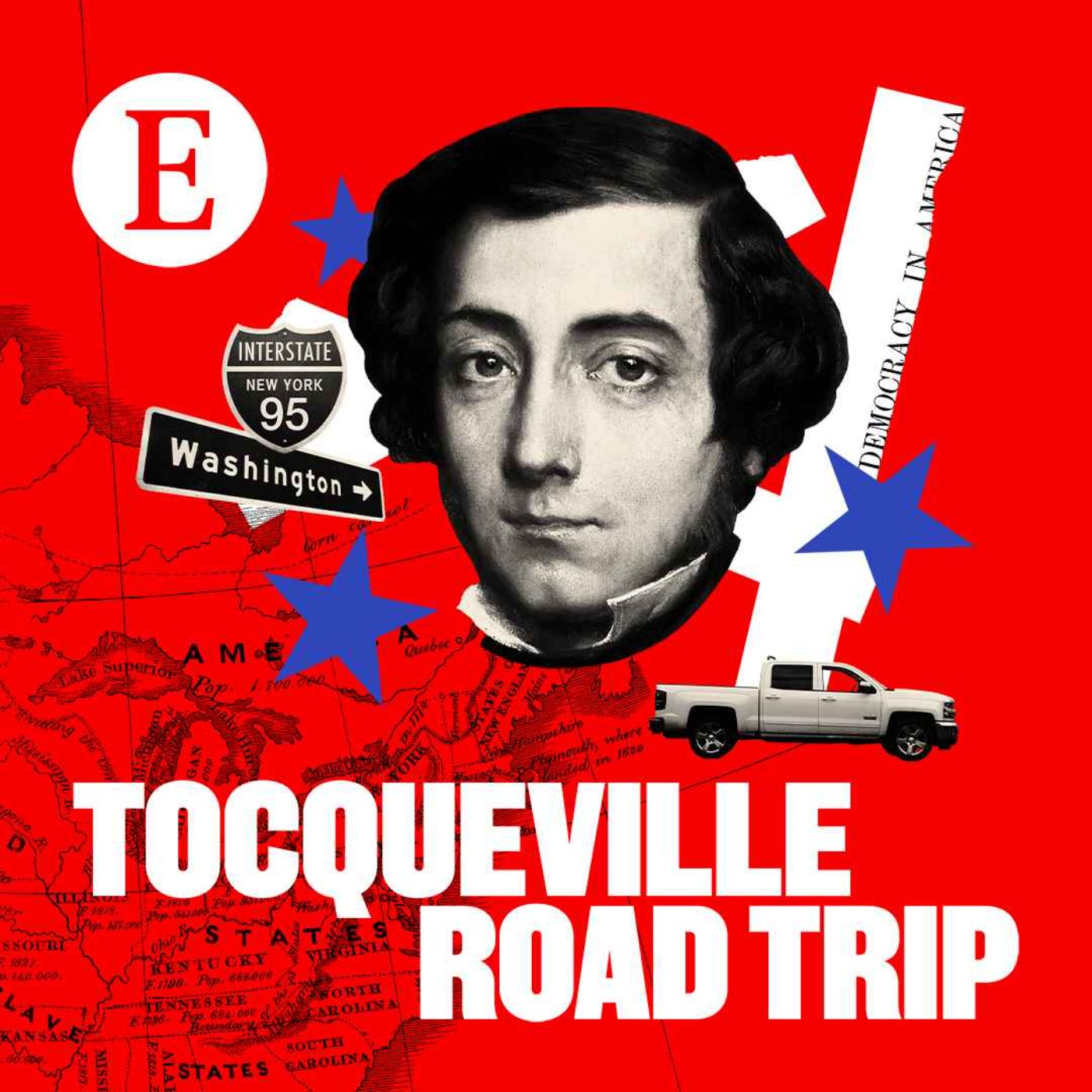
Modern anxieties about a president's despotic tendencies, often associated with Donald Trump, are not new. Tocqueville himself observed similar concerns about Andrew Jackson in 1831, noting Jackson's inclination "to become a despot." This historical parallel suggests a recurring tension within American democracy regarding executive power.
The president's pardon power applies only to federal crimes. However, a president can issue a symbolic "pardon" for a supporter convicted on state charges. While legally void, this action serves as a powerful political signal to followers that the president stands with them, demonstrating a use of the pardon power for pure messaging.

Despite being a champion of limited government and a strict interpretation of the Constitution, Jefferson's most celebrated achievement, the Louisiana Purchase, was likely unconstitutional. He chose pragmatic national expansion over his own ideological purity.

The proclamation was not just a moral act but a calculated strategy. By making the war explicitly about ending slavery, Lincoln made it politically impossible for abolitionist nations like Great Britain to support the Confederacy, cutting off their resources.

Historian Heather Cox Richardson rejects the 'great man' theory, arguing that transformative leaders like Abraham Lincoln don't just appear. Instead, they are the product of a popular intellectual ferment that crystallizes into a new ideology, which a skillful politician then articulates.

Criticisms of a president's 'authoritarian tendencies' often miss the historical context. The concentration of power in the executive branch, or 'imperial presidency,' is a long-standing issue in U.S. politics, dating back to at least FDR and Nixon, and is often exacerbated by a weak and ineffective Congress.

Even when Trump loses court cases, such as the challenge to birthright citizenship, the goal is to advance a maximalist agenda. Each legal fight, win or lose, normalizes challenges to the constitution and pushes the boundaries of what future presidents might attempt, serving as a form of constitutional intimidation.

Policies like universal education and environmental protection are often labeled "far-left." However, historian Heather Cox Richardson notes they align with Republican President Theodore Roosevelt's platform, which framed them as essential measures to preserve American democracy itself, not to advance a specific ideology.
The alleged plan for Donald Trump to become the lifetime head of a new global 'board of peace' highlights a dangerous precedent. It shows how a sitting president can leverage the power of their office to create a permanent, influential political role for themselves as a private citizen.

Trump's efforts are not just breaking norms but constitute an attempt at a full-blown "political revolution." The goal is to gain direct political control over institutions like the FBI and DOJ, weaponize them against political opponents, and eliminate the checks and balances that constrain presidential power.