Get your free personalized podcast brief
We scan new podcasts and send you the top 5 insights daily.
Tom Holland and Dominic Sandbrook examine an entry in the Annals of Wales recording the Battle of Camlan alongside a great dying across Britain. Modern climatologists confirm an enormous volcanic eruption caused worldwide famine in 535, proving that tenth-century chroniclers drew on authentic, vanished eyewitness accounts of the sixth century.

Related Insights
Tom Holland points out that the famous twelve battles ascribed to Arthur in the ninth-century Historia Brittonum rhyme in Latin. This rhyming structure reveals that the chronicler likely scavenged names from early medieval Welsh poems. Holland notes such verse was traditionally focused on poetic performance rather than factual recording.
Graham Hancock argues that hundreds of flood myths worldwide, like Noah's story, are not exaggerated local events but are humanity's only collective memory of a real, global cataclysm that wiped out a previous era before written history.

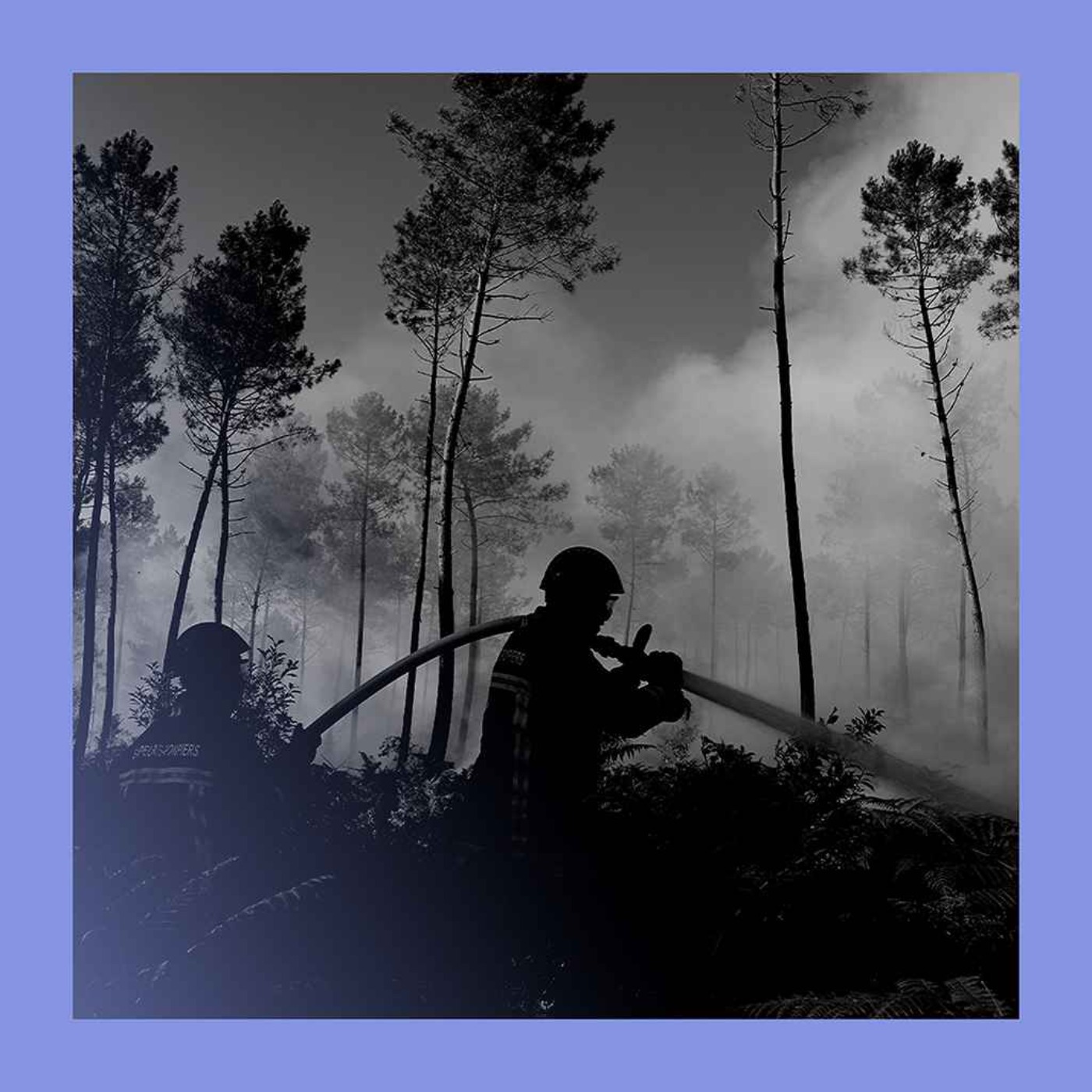
The largest "extraordinary" wildfires release enough smoke and particulates to influence global systems. Australia's Black Summer fires may have prolonged the La Niña climate pattern and their smoke fertilized the Pacific Ocean, causing massive phytoplankton blooms. These events demonstrate how regional disasters can have planet-wide consequences.
Most classical texts survived only as copies made by medieval scribes, who often altered them. The Herculaneum scrolls are the original artifacts from an ancient library, providing a direct and uniquely authentic source, free from centuries of potential transcription errors or ideological "tinkering."

The Younger Dryas Impact Hypothesis suggests a fragmented comet struck Earth, causing a sudden deep freeze, mass extinctions, and anomalous sea-level rise. This event is the scientific basis for the theory of a lost civilization being wiped out.
Tom Holland cites historian Ken Dark's evidence that the name Arthur surged across British and Irish royal families strictly during the sixth and seventh centuries. Before this brief window, zero British inscriptions record the name Artorius, and it vanishes again until the ninth century, suggesting an actual hero inspired the sudden trend.
Eschatological prophecies shouldn't be dismissed as mere fantasy. They likely represent lost historical memories of past civilizational cycles, preserved and passed down through allegory. This gives them a powerful, historically-grounded predictive validity for current events.

The extreme heat from Vesuvius carbonized the scrolls, creating a unique physical state that is impossible to replicate. This gives the Herculaneum collection an unassailable provenance, unlike other famous artifacts like the Dead Sea Scrolls, which have been plagued by forgeries.
Tom Holland recounts how archaeologist Leslie Alcock excavated Cadbury Castle in Somerset during the 1960s under intense media scrutiny. After uncovering substantial sixth-century fortifications and imported Mediterranean luxury pottery, Alcock titled his 1973 excavation summary Arthur's Britain, enthusiastically depicting Arthur striding across the site in Roman uniform.
Henry of Huntingdon and Orderic Vitalis were not gullible; they recognized authentic older source material inside Geoffrey's narrative. That recognizable scaffolding made them assume his lost Welsh source was even richer, so Merlin and Arthur seemed historical to smart medieval readers. Their trust rested on source recognition.
