Get your free personalized podcast brief
We scan new podcasts and send you the top 5 insights daily.
The Younger Dryas Impact Hypothesis suggests a fragmented comet struck Earth, causing a sudden deep freeze, mass extinctions, and anomalous sea-level rise. This event is the scientific basis for the theory of a lost civilization being wiped out.

Related Insights
Graham Hancock argues that hundreds of flood myths worldwide, like Noah's story, are not exaggerated local events but are humanity's only collective memory of a real, global cataclysm that wiped out a previous era before written history.
Ancient myths describe a golden age civilization that fell into hubris, imposed its power, and caused its own destruction. Hancock sees our modern, arrogant, and self-destructive society as a direct parallel, ticking all the mythological boxes for a similar collapse.
Marine cyanobacteria, essential to the carbon cycle, are controlled by viruses. A mirror version would be immune, potentially leading to explosive population growth. This could act as a massive, unpredictable carbon sink, sequestering enough atmospheric CO2 to catastrophically alter the climate and risk an ice age.
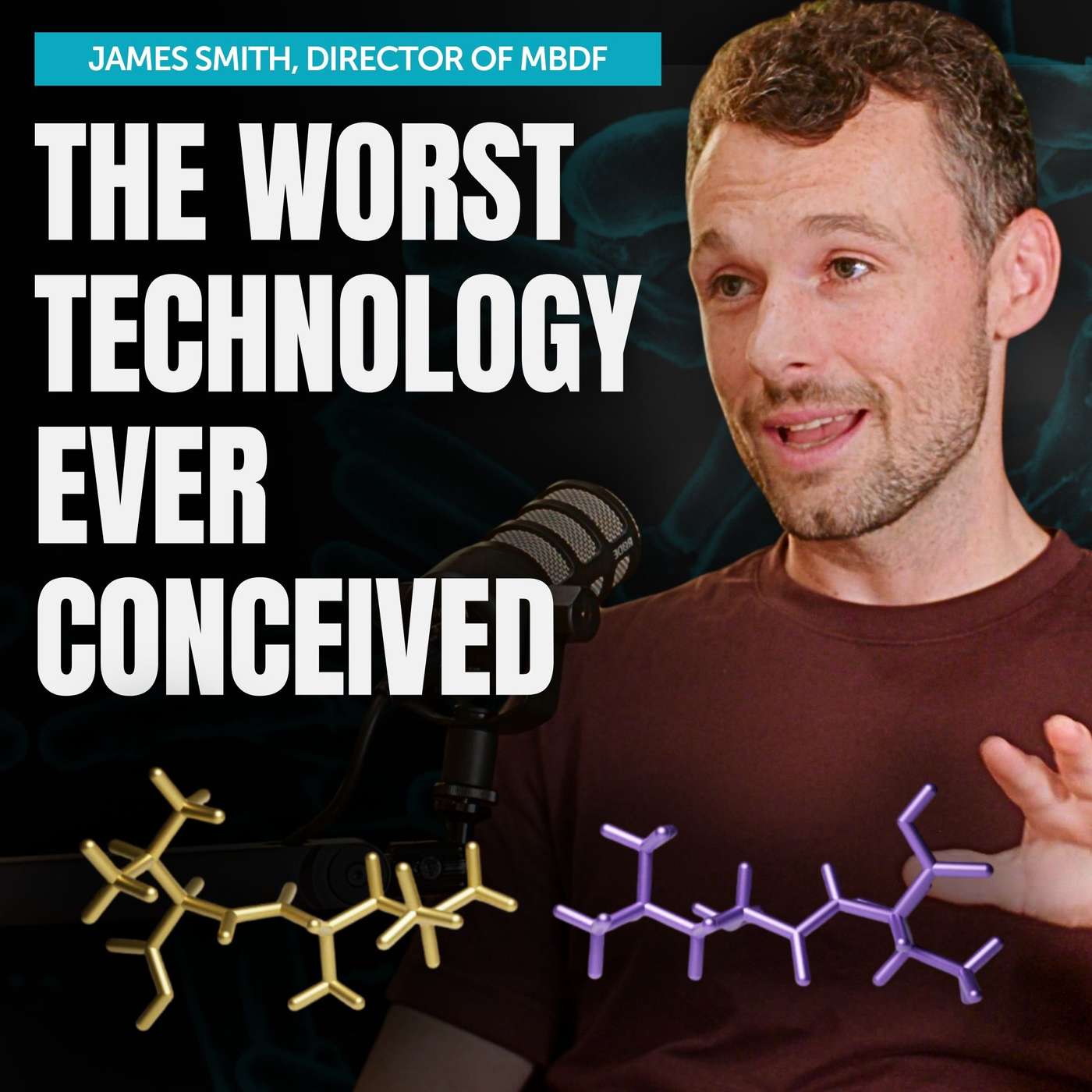
Contrary to common perception focused on climate change-induced heatwaves, the global death toll from cold is overwhelmingly larger than from heat. This holds true even in hot climates like sub-Saharan Africa, revealing humanity's deep evolutionary vulnerability to cold after losing most of our body hair.

The mainstream view is that modern humans, despite having the same brains as us for over 300,000 years, only started building complex civilizations 6,000 years ago. Hancock proposes we didn't wait; we are simply missing a major, earlier episode from our history.
All populations that developed agriculture descend from ancestors who lived long before its invention, implying the necessary cognitive abilities were in place. The simultaneous, independent emergence of farming worldwide points to a global environmental trigger: the unprecedented climate stability of the last 12,000 years (the Holocene).

Hancock theorizes that organizations like Egypt's "followers of Horus" or Sumer's "Apkallu" were remnants of a lost civilization. These sages advised early historical kings, acting as a hidden hand to re-ignite civilization after a global cataclysm.
Eschatological prophecies shouldn't be dismissed as mere fantasy. They likely represent lost historical memories of past civilizational cycles, preserved and passed down through allegory. This gives them a powerful, historically-grounded predictive validity for current events.

A cuneiform tablet from 1700 BC, predating the Old Testament by a millennium, tells a nearly identical flood story. The Babylonian version attributes the flood to gods annoyed by human noise, whereas Judean authors later repurposed the narrative to be about a single God punishing humanity for its sins.

Loeb presents a practical critique of searching for Dyson spheres. He calculates that such a megastructure couldn't survive asteroid impacts for more than a billion years. This suggests we are more likely to find its fragments—like 'Oumuamua, he speculates—than an intact, active megastructure.
