Get your free personalized podcast brief
We scan new podcasts and send you the top 5 insights daily.
In a crowded multiple myeloma treatment landscape with options like CAR-T and bispecifics, patient preference often leans toward the least intensive regimen. Clinicians must present a menu of viable options, allowing patients to select a therapy that aligns with their personal circumstances and quality-of-life goals, knowing more intensive options remain available later.

Related Insights
The sequence of therapies like bispecifics and CAR-T critically impacts future options and outcomes. This necessitates early, strategic collaboration between community oncologists and academic centers to plan a patient's entire treatment journey, not just the next immediate step.
The field of multiple myeloma has transformed from having few treatments to an abundance of effective drugs. The primary clinical challenge is no longer finding a therapy that works, but rather determining the optimal sequence and combination of available options, highlighting a unique form of market maturity.

Unlike stem cell transplants, CAR T-cell therapy has less intense conditioning, making it a viable option for patients into their late 80s. Eligibility focuses more on fitness and frailty rather than chronological age, broadening access for a larger patient population.

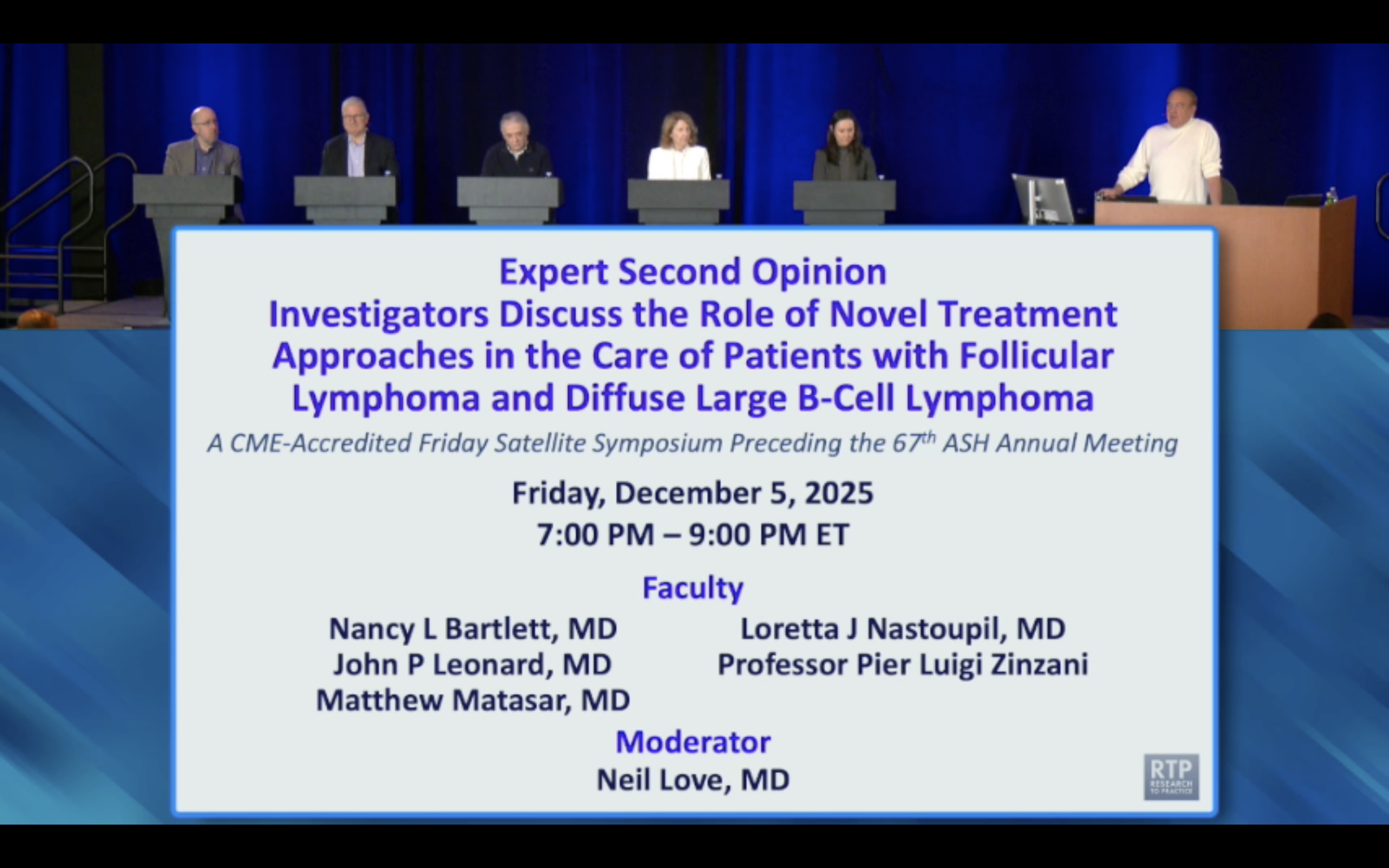
In follicular lymphoma, the treatment goal is durable remission with manageable toxicity, not necessarily a cure. Therefore, clinicians frequently prefer using a bispecific antibody first, reserving the more complex and toxic CAR-T cell therapy for transformed disease or after a bispecific fails.
With highly effective treatments like CAR-T and bispecifics moving into earlier lines of therapy for multiple myeloma, the clinical focus must evolve. While efficacy benchmarks have been met, the next advancement requires vigilant attention to safety, particularly infection risks and other side effects of new paradigms.
The future of medicine isn't about finding a single 'best' modality like CAR-T or gene therapy. Instead, it's about strategic convergence, choosing the right tool—be it a bispecific, ADC, or another biologic—based on the patient's specific disease stage and urgency of treatment.

Even with strong data supporting targeted agents, respecting a patient's decision to refuse them due to fears about side effects is a reasonable approach. Proceeding with standard chemotherapy and immunotherapy in such cases is a valid clinical choice that prioritizes shared decision-making and patient autonomy.

Using a BCMA bispecific antibody first can exhaust a patient's T-cells or cause tumors to lose the BCMA target, rendering a subsequent BCMA-targeted CAR-T therapy ineffective. The optimal sequence is CAR-T first, which preserves T-cell function and BCMA expression, leaving bispecifics as a viable later-line option.

Experts advise referring patients to CAR T centers upon diagnosis, not when they need the therapy. This isn't for a "second opinion" but to establish a collaborative relationship early. This facilitates seamless access and planning when CAR T becomes necessary later.
Without head-to-head trials, clinicians select between Obicell and Brexacel based on a practical algorithm. Patient factors like age and frailty, disease burden, and logistical concerns like product availability dictate the selection, with safer options prioritized for high-risk patients.