Get your free personalized podcast brief
We scan new podcasts and send you the top 5 insights daily.
Without head-to-head trials, clinicians select between Obicell and Brexacel based on a practical algorithm. Patient factors like age and frailty, disease burden, and logistical concerns like product availability dictate the selection, with safer options prioritized for high-risk patients.

Related Insights
In the Cartitude 1 trial, the strongest predictor of long-term remission with Siltacel was a lower burden of disease (measured by bone marrow percentage and soluble BCMA levels), rather than the number of prior treatments. This implies using CAR-T therapy earlier in the disease course is more effective.

Real-world data confirms that the favorable safety profile of CAR T-cell therapies like Obicell holds true in broad clinical practice. This has been a crucial factor in expanding eligibility to older patients, with successful treatments now being administered to individuals in their 70s and 80s.
Moving CAR T-cell therapy to earlier treatment lines is crucial. This approach targets cancer before it develops resistance and, more importantly, utilizes patient T-cells that are healthier and more effective, not having been damaged by extensive prior chemotherapy regimens.
The success of early CAR-T cell therapies was partly luck. Future therapies face a high bar, as an ideal target must meet three criteria: 1) be abundant on cancer cells, 2) be indispensable for the cancer's survival, and 3) be dispensable for the patient's healthy tissues to avoid lethal toxicity.

In a crowded multiple myeloma market, treatment sequencing is critical. The International Myeloma Working Group (IMWG) recommends using BCMA CAR-T therapies like Carvykti before BCMA bispecifics. This guidance helps defend Carvykti's position, as prior bispecific use may reduce CAR-T efficacy.

Clinicians must weigh the immediate benefit of using community-accessible belantumab against the risk of reducing the efficacy of future BCMA-targeted therapies like CAR-T or bispecifics. This decision hinges on a patient's ability to travel and access advanced care, creating a complex treatment sequencing challenge.
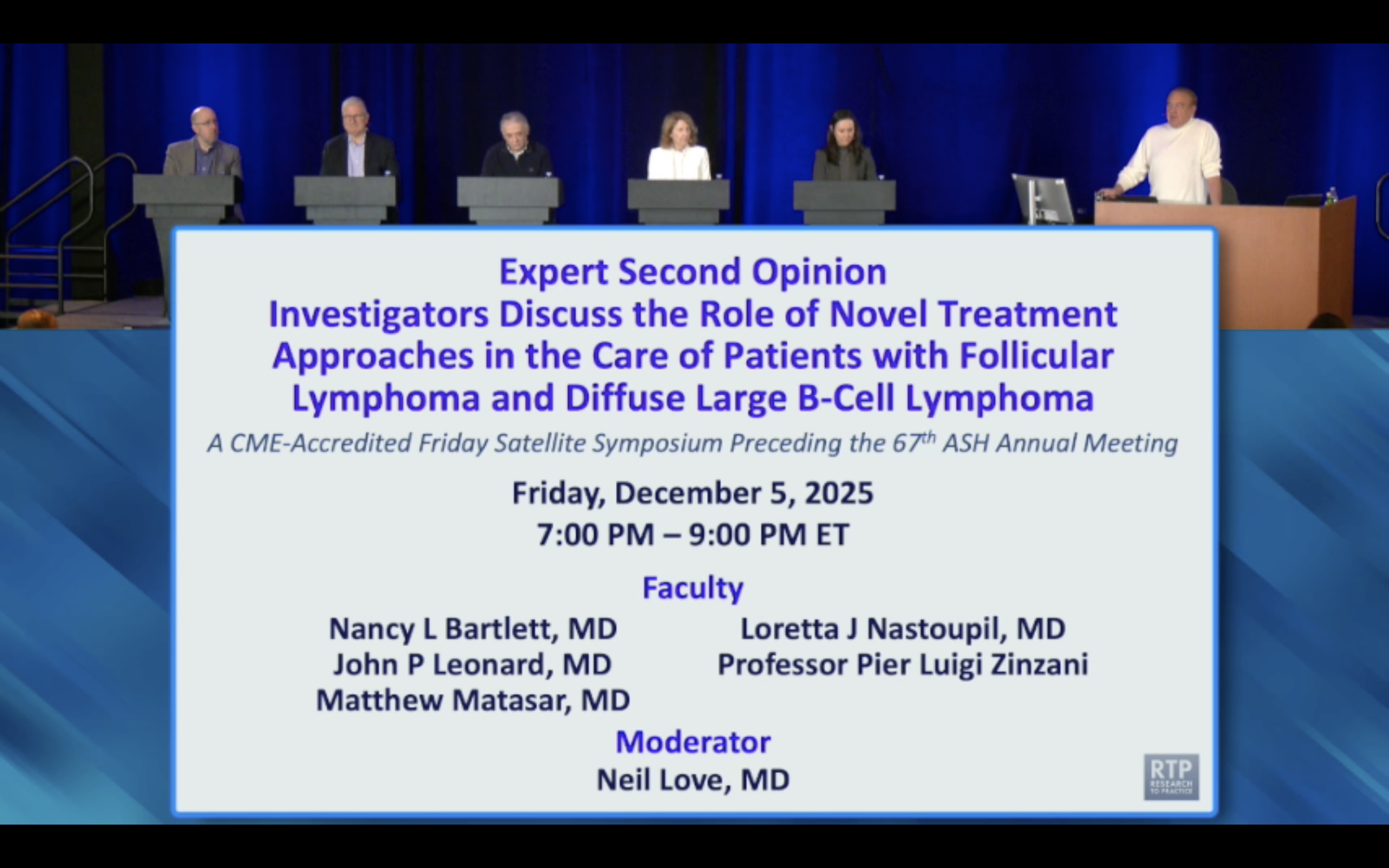
In follicular lymphoma, the treatment goal is durable remission with manageable toxicity, not necessarily a cure. Therefore, clinicians frequently prefer using a bispecific antibody first, reserving the more complex and toxic CAR-T cell therapy for transformed disease or after a bispecific fails.
The manufacturing process for Brexicel CAR-T in ALL differs from other products like Axicel. It isolates T-cells first to avoid contamination from circulating leukemia blasts. This crucial step prevents the T-cells from becoming over-activated or exhausted before they are even reinfused into the patient, preserving their potency.

The future of medicine isn't about finding a single 'best' modality like CAR-T or gene therapy. Instead, it's about strategic convergence, choosing the right tool—be it a bispecific, ADC, or another biologic—based on the patient's specific disease stage and urgency of treatment.

Even when a new drug like zanidatumab is proven superior, experienced clinicians are reluctant to use it on their most frail or borderline-performance patients immediately. They prefer to gain real-world experience managing its side effects in more robust individuals before expanding use to these more complex cases.