Get your free personalized podcast brief
We scan new podcasts and send you the top 5 insights daily.
While Salesforce seems difficult to disrupt externally, its large Fortune 500 customers have the resources to build their own tailored solutions using AI. They can bypass paying for a bloated software suite they only partially use, posing a significant "insourcing" risk.

Related Insights
Established platforms like Salesforce won't be replaced overnight by AI. However, they have a critical but small window—perhaps 12 months—to build powerful AI agents that enhance their products. Failure to innovate quickly will open the door for disruption as customer expectations for AI functionality increase.

As SaaS firms use AI to optimize operations, they feed models data on how their products are built. This creates a deflationary spiral where customers can use the same AI to build cheaper alternatives, threatening the core SaaS business model by accelerating price and profitability compression.
Frustration with a mediocre, AI-lacking vendor drove the decision to build a custom replacement, even when a commercial option existed. This signals a major vulnerability for incumbent SaaS players who fail to innovate with AI, as customers may choose to build rather than renew.
The "SaaSpocalypse" narrative misses a key reason large enterprises buy from vendors like Salesforce. It's not just about features, but accountability—like hiring McKinsey, it provides "air cover" and "a throat to choke." This institutional trust is a powerful moat against nascent, AI-generated tools.

Moats built around the sheer number of integrations or data connectors are vulnerable. AI coding assistants can now replicate this work in a fraction of the time, threatening incumbents like Salesforce and creating opportunities for new, nimbler challengers.

The core value of CRM software like Salesforce has been to structure unstructured sales data via manual human input. Modern AI can now ingest sources like meeting transcripts and automatically populate a database, threatening the entire CRM software category and the data entry aspect of sales roles.

SaaS products like Salesforce won't be easily ripped out. The real danger is that new AI agents will operate across all SaaS tools, becoming the primary user interface and capturing the next wave of value. This relegates existing SaaS platforms to a lower, less valuable infrastructure layer.
The idea that AI will eliminate SaaS is overblown because it incorrectly projects small startup behavior onto large enterprises. Fortune 100s face immense change management, security, and maintenance challenges, making replacing established vendors with internal AI-coded tools impractical.
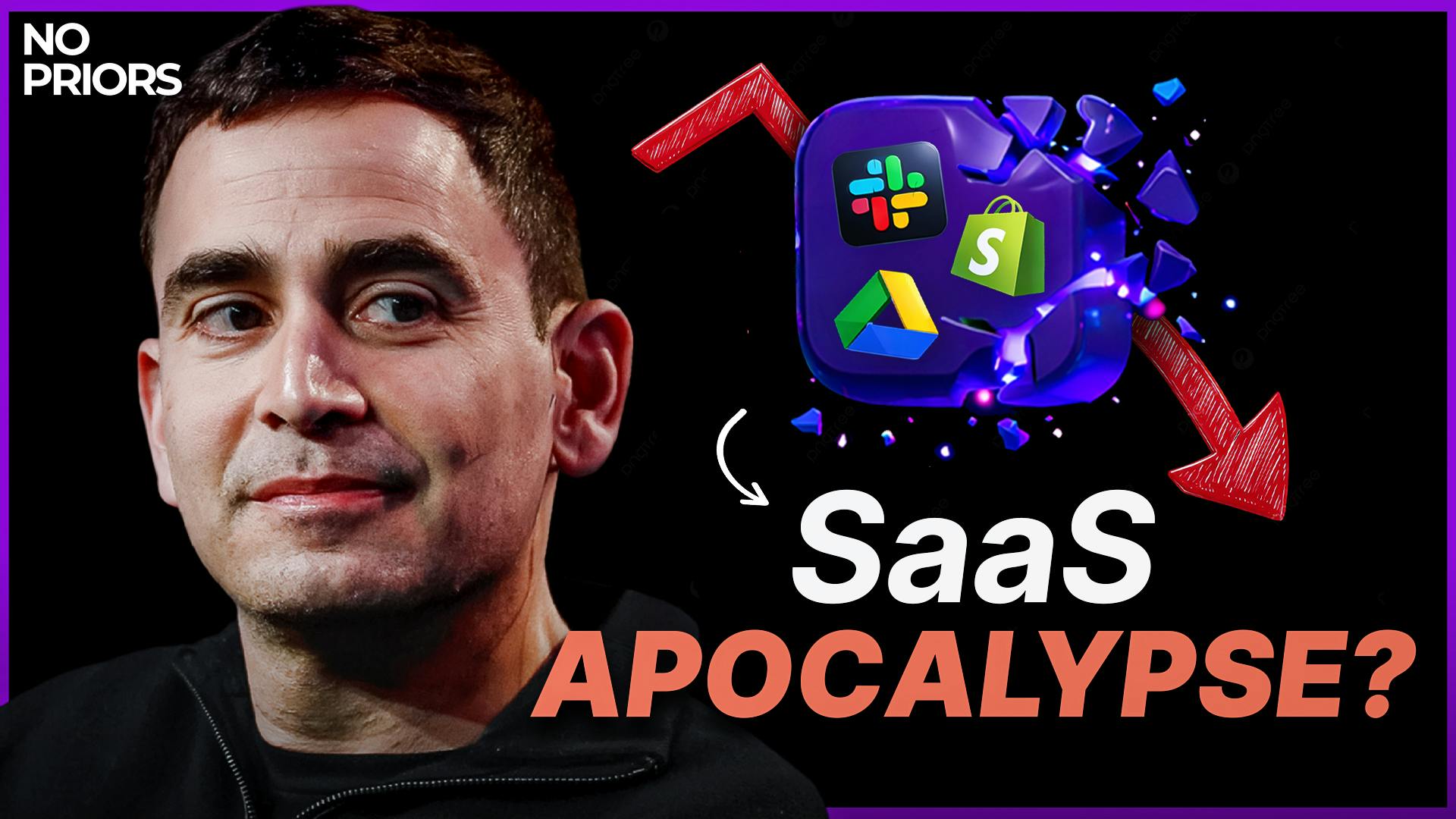
The threat of AI to SaaS is overstated for companies that own either a deep relationship with the user or a critical system of record. "Glue layer" SaaS companies without these moats are most at risk, while those like Salesforce (owning the customer relationship) are more durable.

For a system of record like Salesforce to survive the threat of AI agents built on top of them, they must actively commoditize their complement. This means identifying their core profit pool (data vs. workflows) and aggressively building and offering the other for free to neutralize new entrants.