Get your free personalized podcast brief
We scan new podcasts and send you the top 5 insights daily.
The world's largest asset manager, BlackRock, employs a behavioral finance team to consult with fund managers, using analytics and psychology to identify and correct costly biases like loss aversion and overconfidence, treating investor psychology as a manageable risk.

Related Insights
Markets, technologies, and companies change constantly. The one constant is the human operating system—our biases, emotions, and irrationality. The ability to systematically trade against predictable human behavior is an enduring source of alpha.

Challenging the Efficient Market Hypothesis, the hosts speculate that finance professionals add value beyond security selection. Their worth may come from managing client anxiety, providing risk counseling, and other intangible services that are hard to articulate but valuable to customers.

Post-mortems of bad investments reveal the cause is never a calculation error but always a psychological bias or emotional trap. Sequoia catalogs ~40 of these, including failing to separate the emotional 'thrill of the chase' from the clinical, objective assessment required for sound decision-making.

To improve decision-making, BlackRock's investment committee, guided by a behavioral scientist, uses autonomous voting to prevent peer pressure. It also mandates a non-voting "challenger" to play devil's advocate and champion a pre-mortem perspective, ensuring dissent is valued.

In an effective investment team, the responsibility of junior members is to "attack" and "challenge" the lead portfolio manager's ideas. This structure leverages cognitive diversity to cancel out individual biases and leads to more robust decisions than seeking consensus.
BlackRock's behavioral finance team confidentially analyzes Oura ring data from volunteer portfolio managers. This links their physiology (stress, sleep) to portfolio activity, revealing how physical states can unconsciously drive risk-taking decisions and impact returns.
The common bias of loss aversion doesn't affect investors who have done exhaustive upfront work. Their conviction is based on a clear understanding of an asset's intrinsic value, allowing them to view price drops as opportunities rather than signals of a flawed decision.

An AI-powered simulation loads a team's actual portfolio and subjects it to stressful, AI-generated news headlines. This "war game" allows managers to rehearse their strategy for volatile markets, identifying weaknesses before real money is on the line.
Hervé Hoppenot's core advice is to actively combat our evolutionary bias towards risk aversion. He observes that in business, careers, and investments, people are too conservative and systematically fail to appreciate the full upside potential of their opportunities.

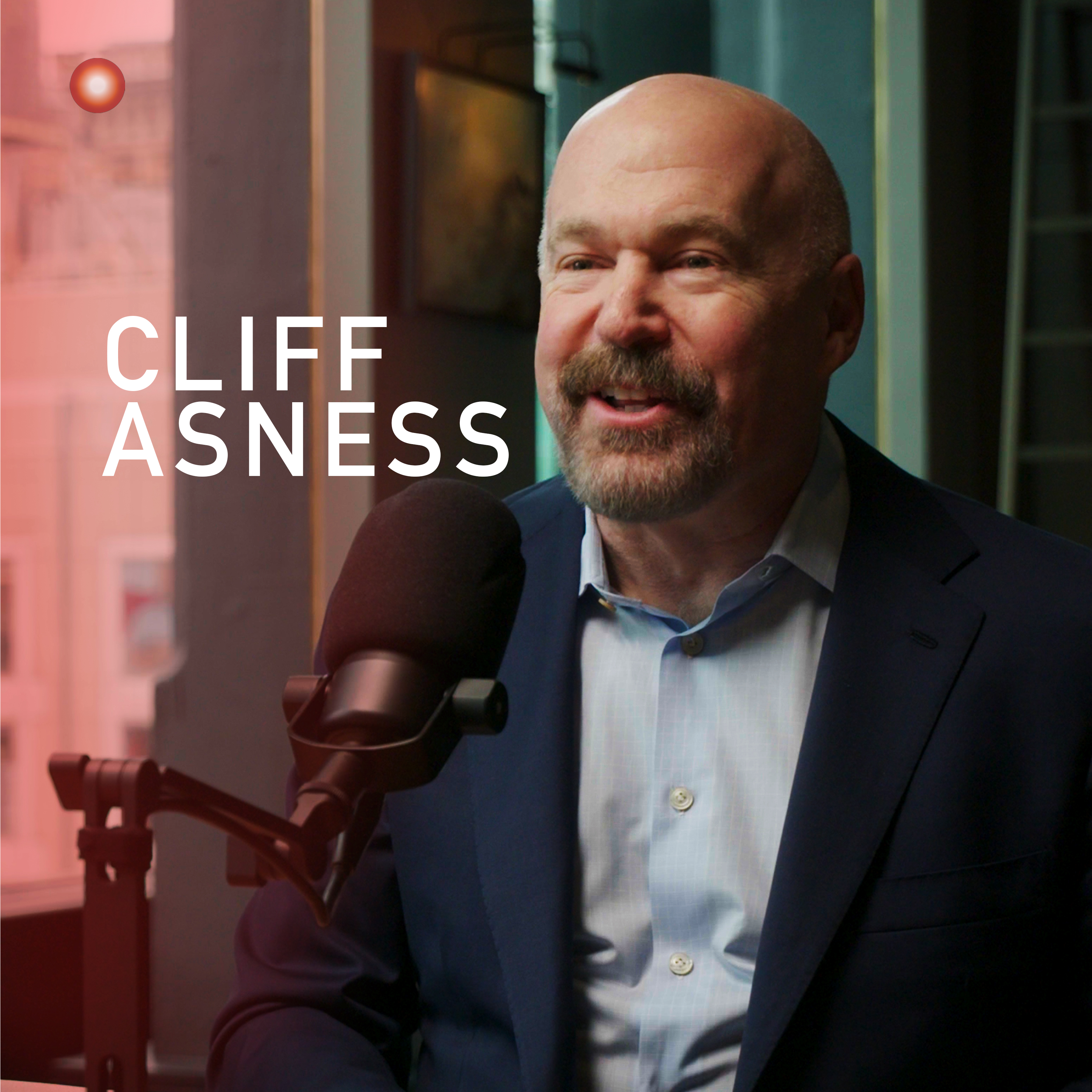
Despite rational strategies, top quant Cliff Asness confesses to feeling the emotional sting of losses far more intensely than the pleasure of gains, a classic example of prospect theory in action. This human element persists even at the highest levels of quantitative finance.