Get your free personalized podcast brief
We scan new podcasts and send you the top 5 insights daily.
As bots dominate internet traffic, content creators face "machinic capture," optimizing for AI agents, not just humans and algorithms. This will give rise to "machinic taste"—aesthetic preferences defined by agent-to-agent interactions, revealing what an AI-driven culture finds compelling, independent of human preferences.

Related Insights
As AI floods the internet with perfectly optimized but synthetic content, the most valuable asset becomes that which cannot be easily replicated: proprietary data, original research, and unique human experiences. AI agents will be designed to seek out and reward this scarcity.
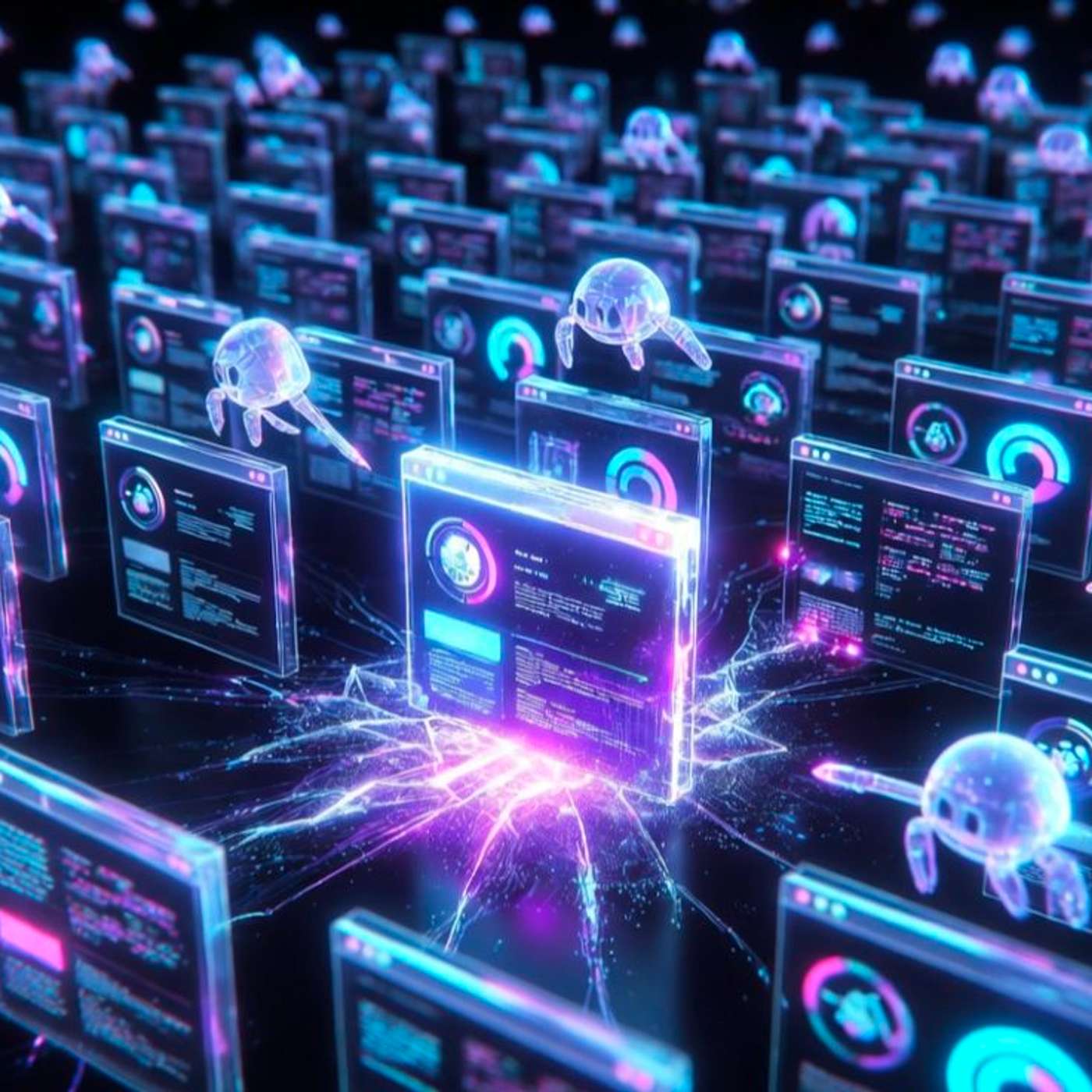
The creator economy's foundation of authentic human connection and monetized attention is at risk. AI can now generate content at scale (e.g., 100 videos/day) and simulate viewership with bot farms, devaluing advertisements and eroding the trust between creators and their human supporters.
Moltbook, a social network exclusively for AI agents that has attracted over 1.5 million users, represents the emergence of digital spaces where non-human entities create content and interact. This points to a future where marketing and analysis may need to target autonomous AI, not just humans.

The internet was built for human interaction. The rise of autonomous agents shopping for products and services on our behalf signals the dawn of an 'agentic web.' This will force a fundamental shift in marketing and sales, requiring businesses to learn how to effectively market to and be discovered by AI agents, not just humans.

The fundamental change in marketing is moving from creating content for human consumption to creating it for AI bots and "answer engines" that crawl the web on behalf of users. This requires a new approach to content strategy, focusing on discoverability and usefulness to machines.

As consumers use AI for discovery, brand marketing must shift from human-centric storytelling to distributing structured information aimed at AI retrieval agents. These bots prioritize raw data over narrative, with the AI itself creating the story for the end-user post-ingestion.
An evolution of the 'Dead Internet Theory,' this concept posits the internet isn't dead but hyperactive with AI content and algorithms engaging with each other. The human's role is reduced to that of a 'consenting observer' watching these non-human systems interact for advertising revenue.

The rise of AI search and personal agents requires a fundamental shift in marketing. Brands can no longer create content solely for humans. They must develop a separate strategy to "educate" and "engage" AI agents as a new audience, using machine-readable content to ensure their products are discoverable.

The creator economy will bifurcate. One stream will feature authentic creators with deep fan connections. The other will be AI-generated personas, including personalized versions of real people like MrBeast, designed to deliver perfect content for each individual viewer, leading to a co-existence of human and AI creators.

Accessible tools like Open Claw are making "Dead Internet Theory" a reality by allowing individuals to automate their social media presence. Users deploy bots to generate and comment on content, creating a world where AI agents increasingly interact with each other, degrading the authenticity of online platforms.
