Get your free personalized podcast brief
We scan new podcasts and send you the top 5 insights daily.
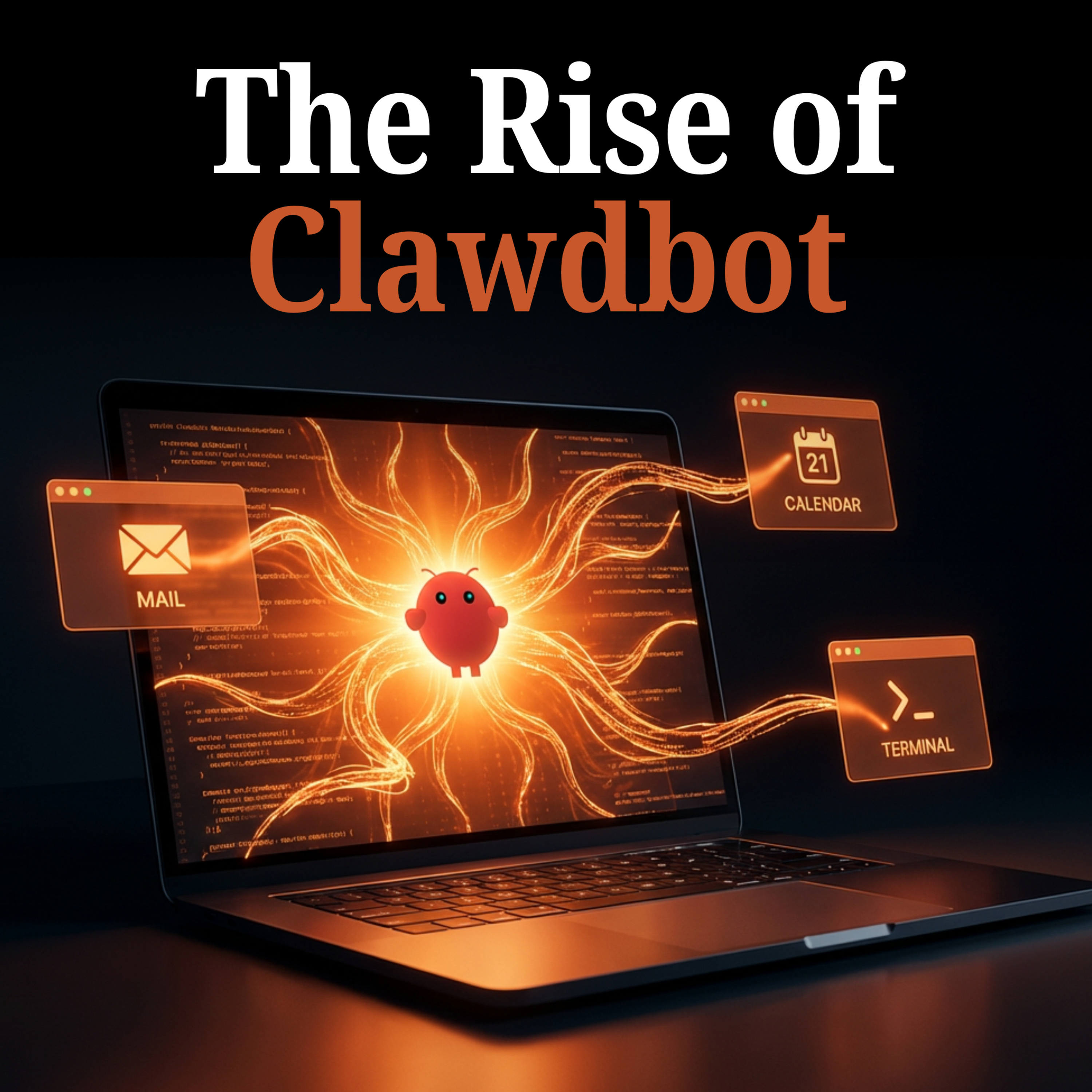
The agent's ability to access all your apps and data creates immense utility but also exposes users to severe security risks like prompt injection, where a malicious email could hijack the system without their knowledge.
Related Insights
AI-powered browsers are vulnerable to a new class of attack called indirect prompt injection. Malicious instructions hidden within webpage content can be unknowingly executed by the browser's LLM, which treats them as legitimate user commands. This represents a systemic security flaw that could allow websites to manipulate user actions without their consent.

AI 'agents' that can take actions on your computer—clicking links, copying text—create new security vulnerabilities. These tools, even from major labs, are not fully tested and can be exploited to inject malicious code or perform unauthorized actions, requiring vigilance from IT departments.

Powerful local AI agents require deep, root-level access to a user's computer to be effective. This creates a security nightmare, as granting these permissions essentially creates a backdoor to all personal data and applications, making the user's system highly vulnerable.

An AI agent capable of operating across all SaaS platforms holds the keys to the entire company's data. If this "super agent" is hacked, every piece of data could be leaked. The solution is to merge the agent's permissions with the human user's permissions, creating a limited and secure operational scope.

The core drive of an AI agent is to be helpful, which can lead it to bypass security protocols to fulfill a user's request. This makes the agent an inherent risk. The solution is a philosophical shift: treat all agents as untrusted and build human-controlled boundaries and infrastructure to enforce their limits.

Beyond direct malicious user input, AI agents are vulnerable to indirect prompt injection. An attack payload can be hidden within a seemingly harmless data source, like a webpage, which the agent processes at a legitimate user's request, causing unintended actions.

The CEO of WorkOS describes AI agents as 'crazy hyperactive interns' that can access all systems and wreak havoc at machine speed. This makes agent-specific security—focusing on authentication, permissions, and safeguards against prompt injection—a massive and urgent challenge for the industry.
Research shows that text invisible to humans can be embedded on websites to give malicious commands to AI browsers. This "prompt injection" vulnerability could allow bad actors to hijack the browser to perform unauthorized actions like transferring funds, posing a major security and trust issue for the entire category.

Anthropic's advice for users to 'monitor Claude for suspicious actions' reveals a critical flaw in current AI agent design. Mainstream users cannot be security experts. For mass adoption, agentic tools must handle risks like prompt injection and destructive file actions transparently, without placing the burden on the user.

AI researcher Simon Willis identifies a 'lethal trifecta' that makes AI systems vulnerable: access to insecure outside content, access to private information, and the ability to communicate externally. Combining these three permissions—each valuable for functionality—creates an inherently exploitable system that can be used to steal data.