Get your free personalized podcast brief
We scan new podcasts and send you the top 5 insights daily.
The current user experience of jumping between apps on iOS and macOS is considered outdated within Apple. The future is seen as AI agents that can perform multi-step tasks across functions, eliminating the need for users to manually open and navigate individual applications.

Related Insights
The hosts argue that a key test for agentic AI on iOS is its ability to perform OS-level tasks with a single prompt, like automatically organizing a messy desktop of apps into logical folders. This trivial-seeming task demonstrates deep OS integration and is a practical benchmark for "Apple Intelligence."

Context-aware personal agents will subsume the functions of many standalone apps, such as fitness or calorie trackers. An agent that already knows a user's location, schedule, and goals can perform these tasks more seamlessly, reducing many current apps to mere APIs for the agent to consume.
Apple is replacing Siri with a chatbot, a strategic reversal of its long-held view that AI should only be woven into existing features. This acknowledges the market success of conversational interfaces popularized by OpenAI and Google, suggesting a dedicated chat experience is now essential for a modern OS.

Apple is revamping Siri into a full-fledged AI chatbot, a strategic shift away from its previous stance of embedding AI invisibly within apps. This acknowledges the market dominance of the chatbot interface.

Apple's forthcoming Siri overhaul, codenamed "Campo," signals a strategic shift away from the traditional app-based ecosystem. The goal is to create an AI agent capable of executing complex, multi-app tasks via natural language. This "agentification" of the operating system positions the App Store and individual apps as legacy interfaces over the long term.
User workflows rarely exist in a single application; they span tools like Slack, calendars, and documents. A truly helpful AI must operate across these tools, creating a unified "desired path" that reflects how people actually work, rather than being confined by app boundaries.

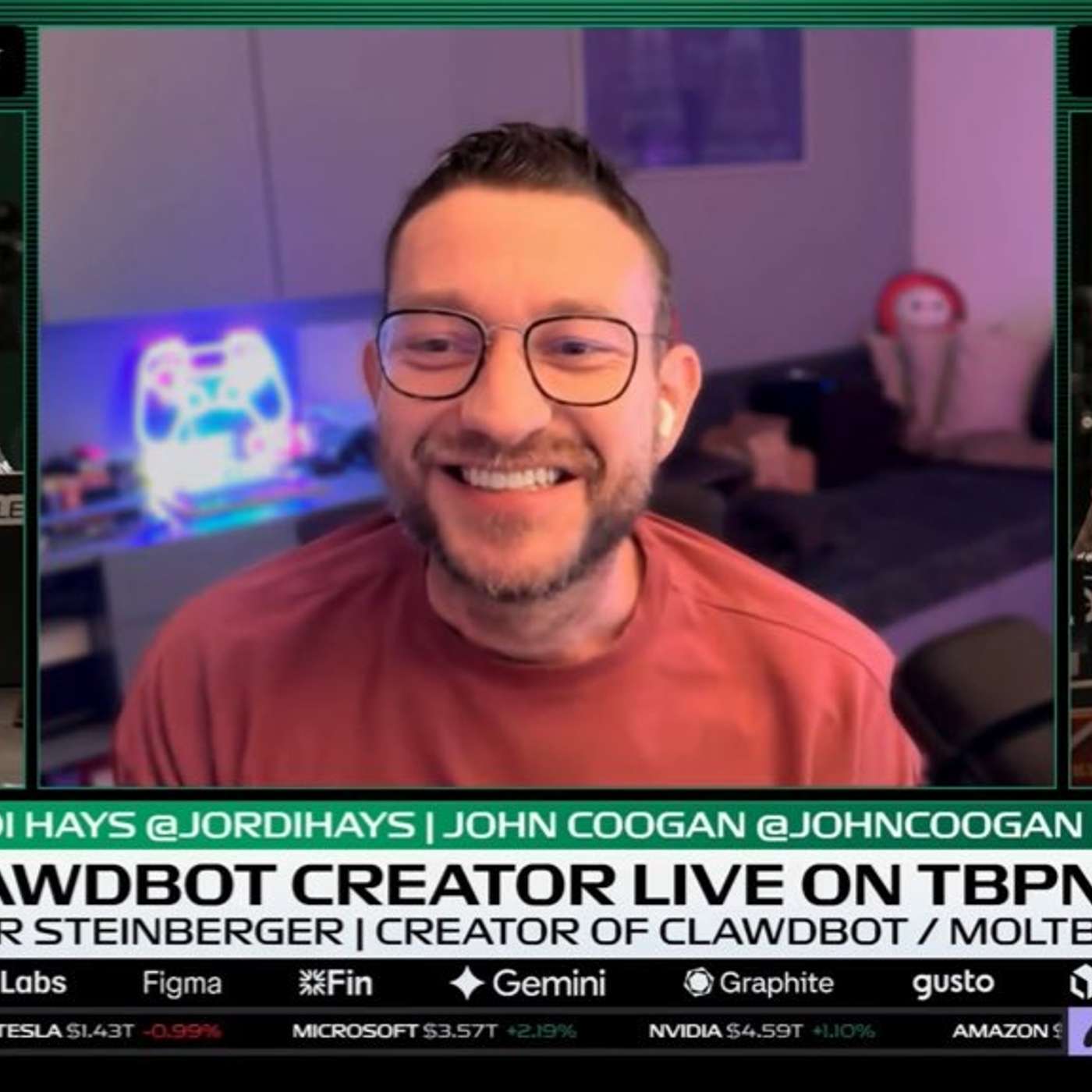
OpenAI's 2025 acquisition of Sky, an AI with deep macOS integration, shows its intent to build a product similar to Claude Bot. This move indicates a strategic shift towards AI agents that can directly interact with a user's apps and operating system.
The next major leap for AI is its ability to connect disparate apps and data sources (email, calendar, location) to take autonomous actions. This will move AI from a Q&A tool to a proactive agent that seamlessly manages complex workflows.
The next user interface paradigm is delegation, not direct manipulation. Humans will communicate with AI agents via voice, instructing them to perform complex tasks on computers. This will shift daily work from hours of clicking and typing to zero, fundamentally changing our relationship with technology.

A conflict is brewing on consumer devices where OS-level AI (e.g., Apple Intelligence) directly competes with application-level AI (e.g., Gemini in Gmail). This forces users into a confusing choice for the same task, like rewriting text. The friction between these layers will necessitate a new paradigm for how AI features are integrated and presented to the end-user.
