Get your free personalized podcast brief
We scan new podcasts and send you the top 5 insights daily.
Apple's forthcoming Siri overhaul, codenamed "Campo," signals a strategic shift away from the traditional app-based ecosystem. The goal is to create an AI agent capable of executing complex, multi-app tasks via natural language. This "agentification" of the operating system positions the App Store and individual apps as legacy interfaces over the long term.

Related Insights
Generative AI primarily changes an app's user interface, but agentic AI can bypass UIs entirely to complete tasks. This makes transaction-fulfillment apps, which constitute a huge portion of the market, vulnerable to being replaced by agents that act directly on a user's behalf.

The hosts argue that a key test for agentic AI on iOS is its ability to perform OS-level tasks with a single prompt, like automatically organizing a messy desktop of apps into logical folders. This trivial-seeming task demonstrates deep OS integration and is a practical benchmark for "Apple Intelligence."

Context-aware personal agents will subsume the functions of many standalone apps, such as fitness or calorie trackers. An agent that already knows a user's location, schedule, and goals can perform these tasks more seamlessly, reducing many current apps to mere APIs for the agent to consume.
While Apple may license Google's Gemini for Siri, the real technical hurdle is enabling the assistant to access and analyze data across a user's sandboxed applications. This deep integration is a far more complex engineering problem than simply creating a conversational chatbot interface.

Apple is replacing Siri with a chatbot, a strategic reversal of its long-held view that AI should only be woven into existing features. This acknowledges the market success of conversational interfaces popularized by OpenAI and Google, suggesting a dedicated chat experience is now essential for a modern OS.

Apple is revamping Siri into a full-fledged AI chatbot, a strategic shift away from its previous stance of embedding AI invisibly within apps. This acknowledges the market dominance of the chatbot interface.
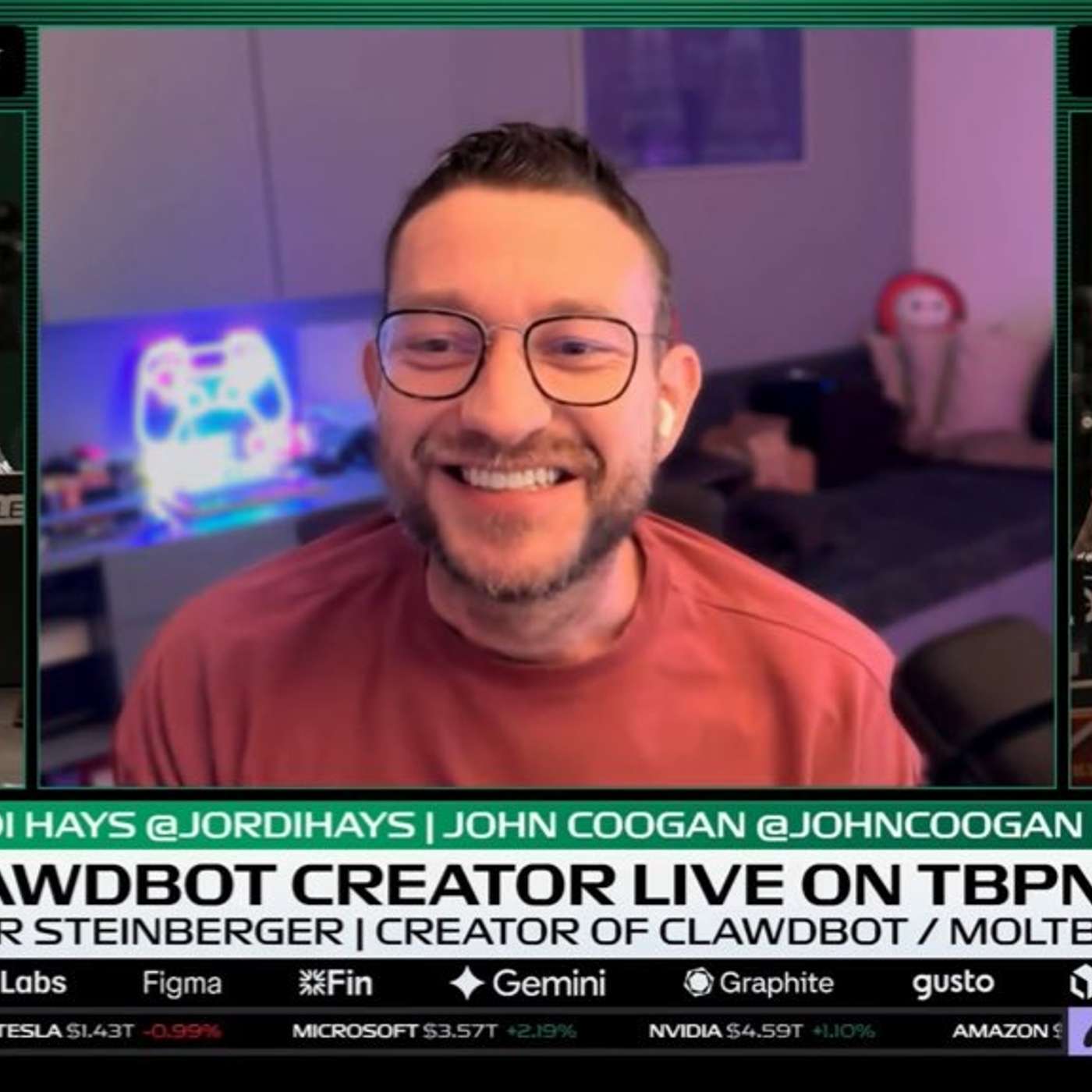
OpenAI's 2025 acquisition of Sky, an AI with deep macOS integration, shows its intent to build a product similar to Claude Bot. This move indicates a strategic shift towards AI agents that can directly interact with a user's apps and operating system.
The 'agents vs. applications' debate is a false dichotomy. Future applications will be sophisticated, orchestrated systems that embed agentic capabilities. They will feature multiple LLMs, deterministic logic, and robust permission models, representing an evolution of software, not a replacement of it.

Similar to how mobile gave rise to the App Store, AI platforms like OpenAI and Perplexity will create their own ecosystems for discovering and using services. The next wave of winning startups will be those built to distribute through these new agent-based channels, while incumbents may be slow to adapt.

As Siri integrates powerful LLMs like Gemini, a simple voice interface is insufficient. A dedicated app is necessary for users to review conversation history and interact asynchronously, much like texting a human assistant, to handle complex, multi-turn interactions.