Get your free personalized podcast brief
We scan new podcasts and send you the top 5 insights daily.
In ROS1-positive NSCLC, starting with older TKIs before newer agents like Repotrectinib dramatically worsens outcomes. Median overall survival has not been reached after 5 years for TKI-naive patients but drops to just 25 months for those pre-treated with another TKI. This starkly quantifies the critical importance of using the most effective treatment first.

Related Insights
When treating refractory kidney cancer, clinicians prioritize regimens offering the most durable initial response. They argue against “saving” effective drugs for later, as disease progression is traumatic for patients and many never successfully receive subsequent lines of therapy. The goal is long-term disease control now, not preserving theoretical future options.

Subgroup analyses of menin inhibitor trials reveal a key difference for treatment sequencing. Patients with prior venetoclax exposure showed lower response rates to Revumenitib. In contrast, early data for Ziftomenib suggests prior venetoclax use did not negatively impact its efficacy.
The NeoADURA trial demonstrates that adding osimertinib in the neoadjuvant setting for EGFR-mutated NSCLC results in a 'humongous benefit' in major pathological response and nodal downstaging compared to chemotherapy alone, significantly improving surgical outcomes.

Contrary to the standard 'TKI-first' approach for driver mutations, a study in MET exon 14 skipping NSCLC suggests a different strategy. Patients with high PD-L1 expression appeared to have better outcomes with first-line chemoimmunotherapy, reserving the targeted therapy for later. This challenges the conventional wisdom of prioritizing the driver mutation over immunotherapy biomarkers in this specific subgroup.
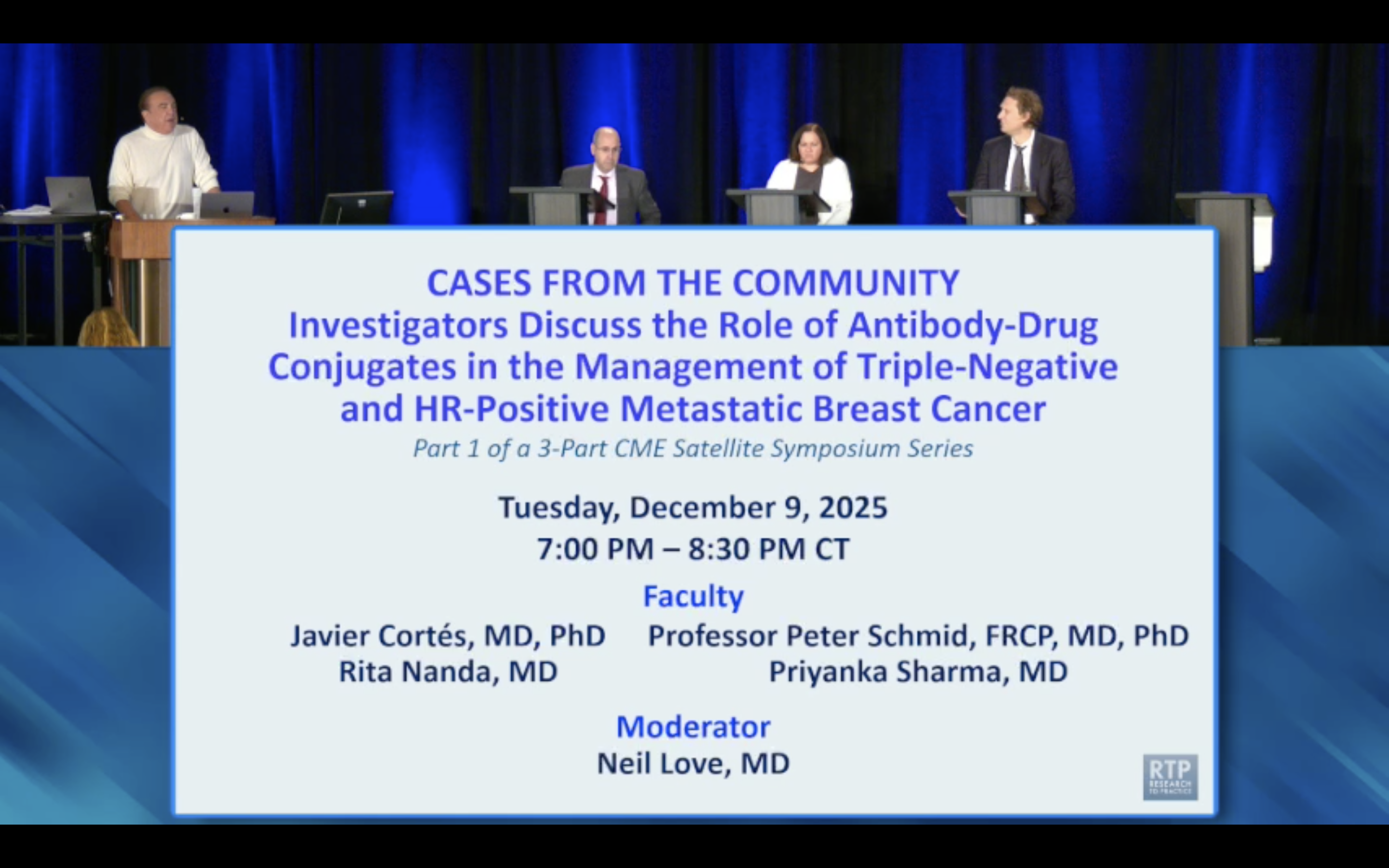
In metastatic breast cancer, approximately one-third of patients are unable to proceed to a second line of therapy due to disease progression or declining performance status. This high attrition rate argues for using the most effective agents, such as ADCs, in the first-line setting.
While pirtobrutinib is effective after covalent BTK inhibitors, the reverse is unproven. Starting with pirtobrutinib frontline raises a critical unanswered question about whether patients will still respond to older covalent inhibitors, complicating sequencing decisions, especially for younger patients.

The long-standing platinum doublet backbone for frontline SCLC may soon be challenged. The high efficacy of novel agents like antibody-drug conjugates and bispecific antibodies in later lines is prompting trials that consider moving them into the first-line setting, a strategy previously considered "unthinkable."
For patients with actionable mutations like EGFR or ALK, targeted therapy is the priority, regardless of PD-L1 score. Starting immunotherapy first in these patients can significantly increase the risk of developing severe pneumonitis (ILD) when they later switch to targeted therapy like osimertinib.
For N2+ EGFR-mutant NSCLC, clinicians now face a choice. Combining neoadjuvant osimertinib with chemotherapy is potent and gets treatment done upfront, but osimertinib monotherapy is better tolerated, reducing the risk of toxicity that could prevent a patient from reaching their planned surgery.

Clinicians are hesitant to use newer, potentially safer non-covalent BTK inhibitors before established covalent inhibitors. While it's known that non-covalents work after covalents fail, the reverse is unproven, creating a one-way treatment path that reserves these newer agents for later lines of therapy.