Get your free personalized podcast brief
We scan new podcasts and send you the top 5 insights daily.
Instead of monetizing its new AI features directly, fintech Mercury is offering its "Intelligence" layer—which helps customers analyze their finances—for free. This strategy uses powerful AI tools as a differentiator and a moat to attract new users and increase the stickiness of its core banking products.

Related Insights
With hundreds of AI vendors pitching enterprises weekly, trust is low and differentiation is difficult. The most effective go-to-market strategy is to prove the technology works before asking for payment. Offering a free "solution sprint" for several weeks de-risks the decision for the customer and demonstrates confidence.

User stickiness for AI models is increasingly driven by the 'harness'—the custom prompts, workflows, and integrations built around a specific model. This ecosystem creates high switching costs, even when a competing model offers incrementally better performance.

The strategy of sacrificing short-term revenue for long-term growth is a repeatable playbook. After success at Appfolio with free support, the guest applied the same model at Ontra. By using AI to lower onboarding costs, they made the service free, reducing friction and dramatically increasing new customer conversion rates.
![[REPLAY] Think Financial, Act Customer thumbnail](https://storage.buzzsprout.com/9xn5wg1i0ed9bwrk6slghdmijcr6?.jpg)
Lobster Capital's YC Roaster, an AI-powered application reviewer, demonstrates a new VC playbook. By offering a free utility, funds build brand loyalty and make founders feel valued before they even raise money, creating a powerful, early-stage deal flow advantage.

In a market where customers eagerly pay for valuable AI tools, an inability to monetize new AI features is a major red flag. It indicates the product lacks sufficient value. A key test is whether AI can drive average revenue per user (ARPU) up by 50% or more; anything less is just a feature, not a transformation.

Read AI discovered that the longer a user stays on the free plan, the more likely they are to eventually pay. By allowing users to build a large personal data archive for free, the value of upgrading to access and query that history becomes a powerful, self-created incentive.

Current unprofitability in some AI applications, like subsidizing tokens for coding, is a deliberate strategy. Similar to Uber's early city-by-city expansion, AI labs are subsidizing usage to rapidly gain market share, gather data, and build a powerful flywheel effect that will serve as a long-term competitive moat.

Counter to the "do one thing" mantra, Simple AI maintains a free consumer app. This product serves as a potent marketing engine where amazed users become evangelists and introduce the technology to their workplaces, creating a unique B2B acquisition channel.
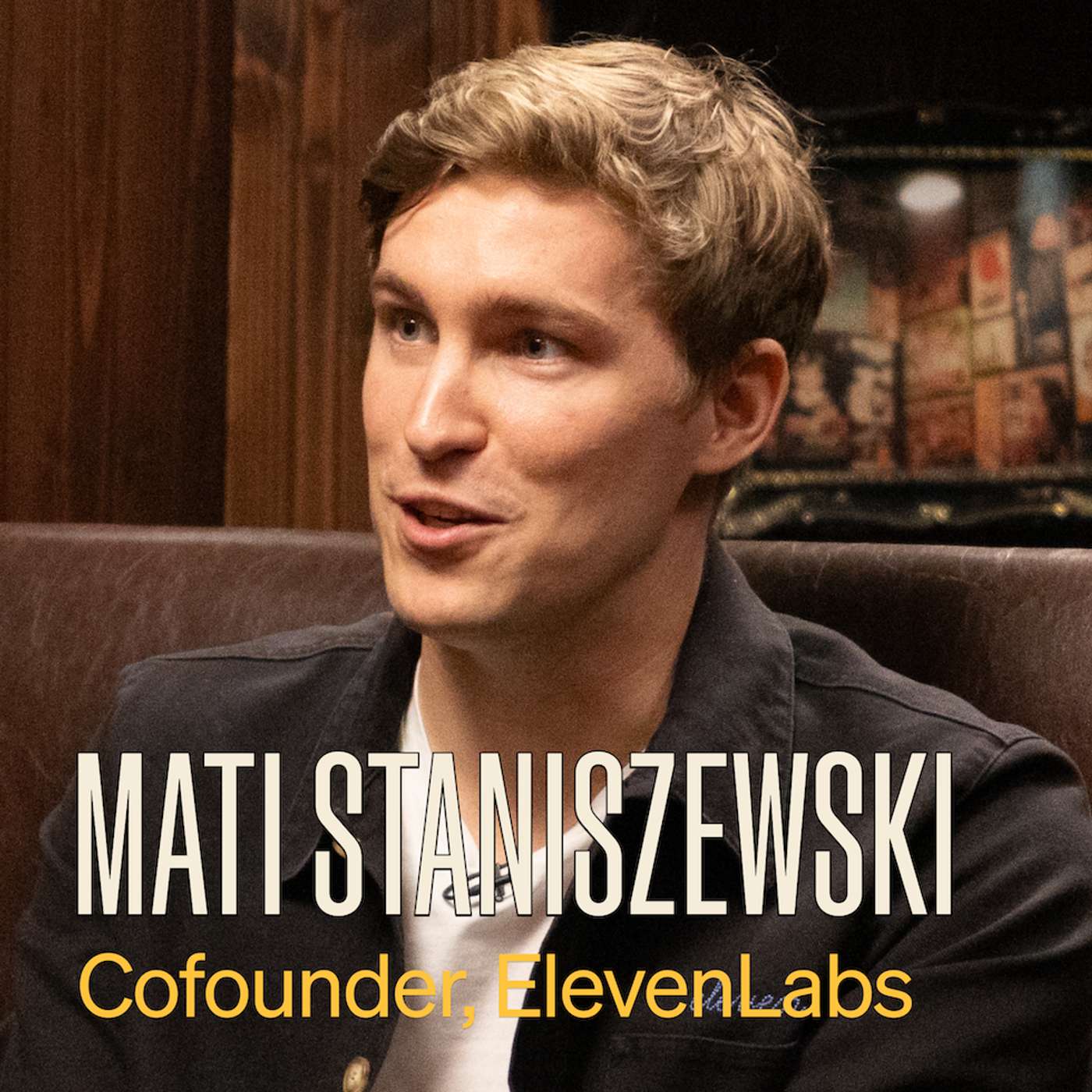
Counterintuitively, instead of charging a premium for their latest and most powerful models, ElevenLabs often makes them economically attractive, sometimes at cost. This strategy encourages widespread use, generates crucial feedback for refinement, and showcases what's possible, creating a powerful distribution and learning mechanism.
Amplitude's CEO explains how incumbents counter "feature-not-company" AI startups. They rapidly build the startup's core functionality, give it away for free, and leverage it as a powerful lead generation tool for their existing business, commoditizing the startup's value proposition overnight.