Get your free personalized podcast brief
We scan new podcasts and send you the top 5 insights daily.
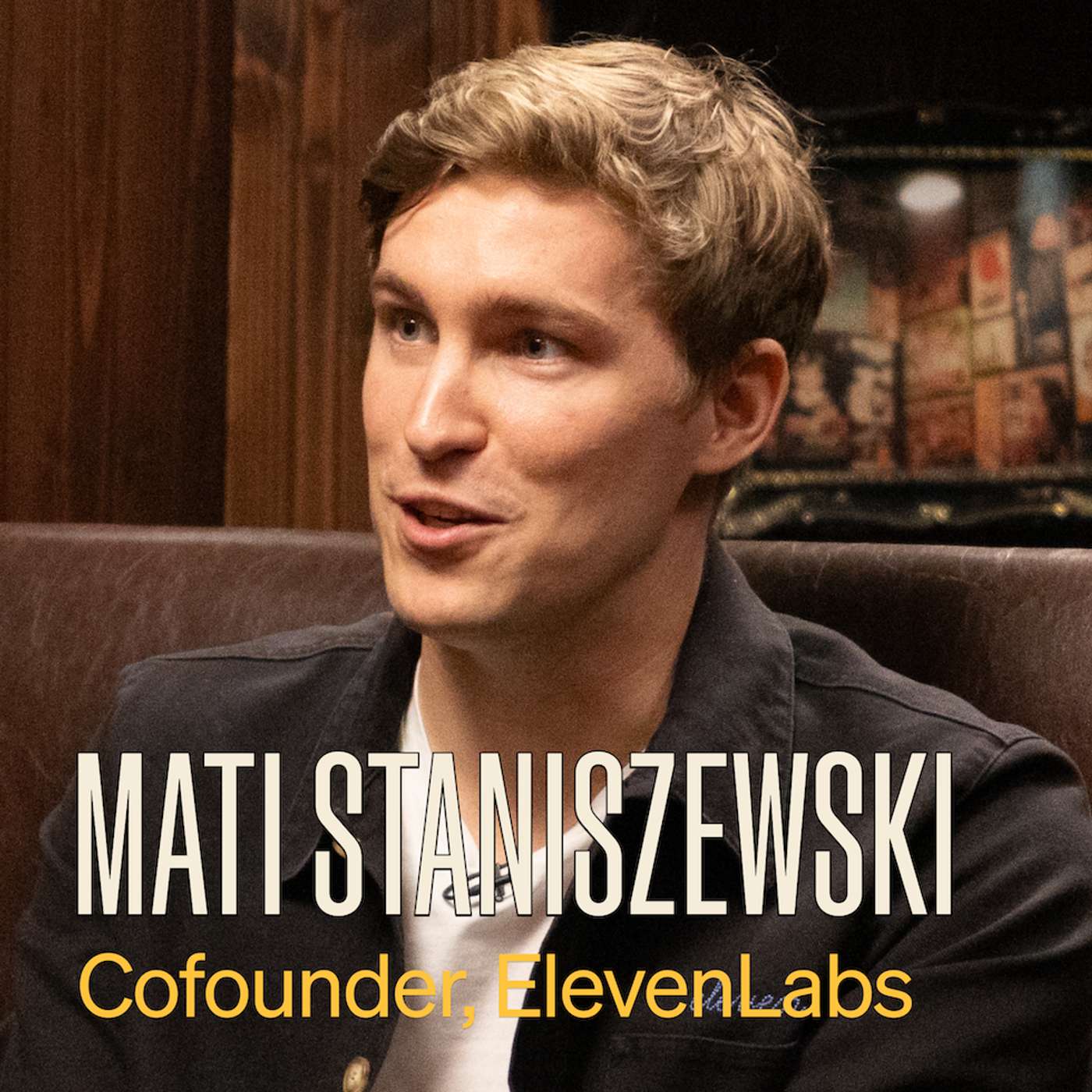
Counterintuitively, instead of charging a premium for their latest and most powerful models, ElevenLabs often makes them economically attractive, sometimes at cost. This strategy encourages widespread use, generates crucial feedback for refinement, and showcases what's possible, creating a powerful distribution and learning mechanism.
Related Insights
To remove friction and encourage deep usage, Granola avoids credits or pay-per-use models, despite high backend costs. The strategy is to build the best product and capture the market first, treating inference costs as a necessary expense for growth.

Companies like Z.ai are not abandoning open source but using it strategically. They release lightweight models to attract developers and build a user base, while reserving their most powerful, agentic systems for proprietary, revenue-generating enterprise products, creating a clear monetization funnel.

In an unusual strategy, OpenAI provides its latest models to direct competitors. The company believes that a more competitive market accelerates learning and pushes them to improve faster. This long-term view prioritizes the overall distribution of intelligence over short-term competitive moats.

Small firms can outmaneuver large corporations in the AI era by embracing rapid, low-cost experimentation. While enterprises spend millions on specialized PhDs for single use cases, agile companies constantly test new models, learn from failures, and deploy what works to dominate their market.

Unprofitable AI models mirror Uber's early strategy. By subsidizing services, they integrate into workflows and create dependency. Once users rely on the tool (e.g., a law firm replacing an associate), prices can be increased dramatically to reflect the massive value created, ultimately achieving profitability.

To foster breakthrough ideas, companies should initially provide engineers with unrestricted access to the most powerful AI models, ignoring costs. Optimization should only happen after an idea proves its value at scale, as early cost-cutting stifles creativity.

Current unprofitability in some AI applications, like subsidizing tokens for coding, is a deliberate strategy. Similar to Uber's early city-by-city expansion, AI labs are subsidizing usage to rapidly gain market share, gather data, and build a powerful flywheel effect that will serve as a long-term competitive moat.
Big tech companies are offering their most advanced AI models via a "tokens by the drink" pricing model. This is incredible for startups, as it provides access to the world's most magical technology on a usage basis, allowing them to get started and scale without massive upfront capital investment.

Open source AI models don't need to become the dominant platform to fundamentally alter the market. Their existence alone acts as a powerful price compressor. Proprietary model providers are forced to lower their prices to match the inference cost of open-source alternatives, squeezing profit margins and shifting value to other parts of the stack.
An emerging AI growth strategy involves using expensive frontier models to acquire users and distribution at an explosive rate, accepting poor initial margins. Once critical mass is reached, the company introduces its own fine-tuned, cheaper model, drastically improving unit economics overnight and capitalizing on the established user base.