Get your free personalized podcast brief
We scan new podcasts and send you the top 5 insights daily.
Most companies claiming to train proprietary in-house models simply apply domain-specific data and fine-tuning onto existing open-weight foundations. Without proprietary raw data and continuous price-performance advantages, generalized foundational models eventually surpass these bespoke models.

Related Insights
Companies like Intercom and Cursor are proving that fine-tuning open-weight models on specific, "last-mile" user interaction data creates cheaper, faster, and more accurate models for vertical tasks (like customer service or coding) than general-purpose frontier models from labs like OpenAI.

As base AI models become commoditized, true competitive advantage lies in creating proprietary "weights." By training an open-source model on your unique data behind your firewall, you create a version of AI that "thinks" differently, generating unique and defensible outputs.

Early-stage AI startups should resist spending heavily on fine-tuning foundational models. With base models improving so rapidly, the defensible value lies in building the application layer, workflow integrations, and enterprise-grade software that makes the AI useful, allowing the startup to ride the wave of general model improvement.

A vertical AI startup is extremely vulnerable if its core offering can be easily replicated by the foundational model it's built upon. True defensibility comes from integrating unique, proprietary data sources or solving non-obvious workflow problems that the base model cannot simply be prompted to do.

Instead of relying on major lab APIs, Harvey created its own model by post-training an open-weight foundation (Kimi K3) on legal data. This strategy resulted in a specialized model that outperformed the base model significantly on legal benchmarks while running at less than a quarter of the cost of leading proprietary models.

Contrary to past momentum, the most advanced AI startups are increasingly adopting and fine-tuning open-source models. This shift is driven by the need for cost-effective speed and deep customization as their workloads mature and scale.
Enterprises using generic closed-source models fail to leverage their unique, domain-specific data collected over decades. Mistral argues that fine-tuning an open-weight model on this private data creates a significant competitive advantage that simply providing context at inference time cannot replicate.
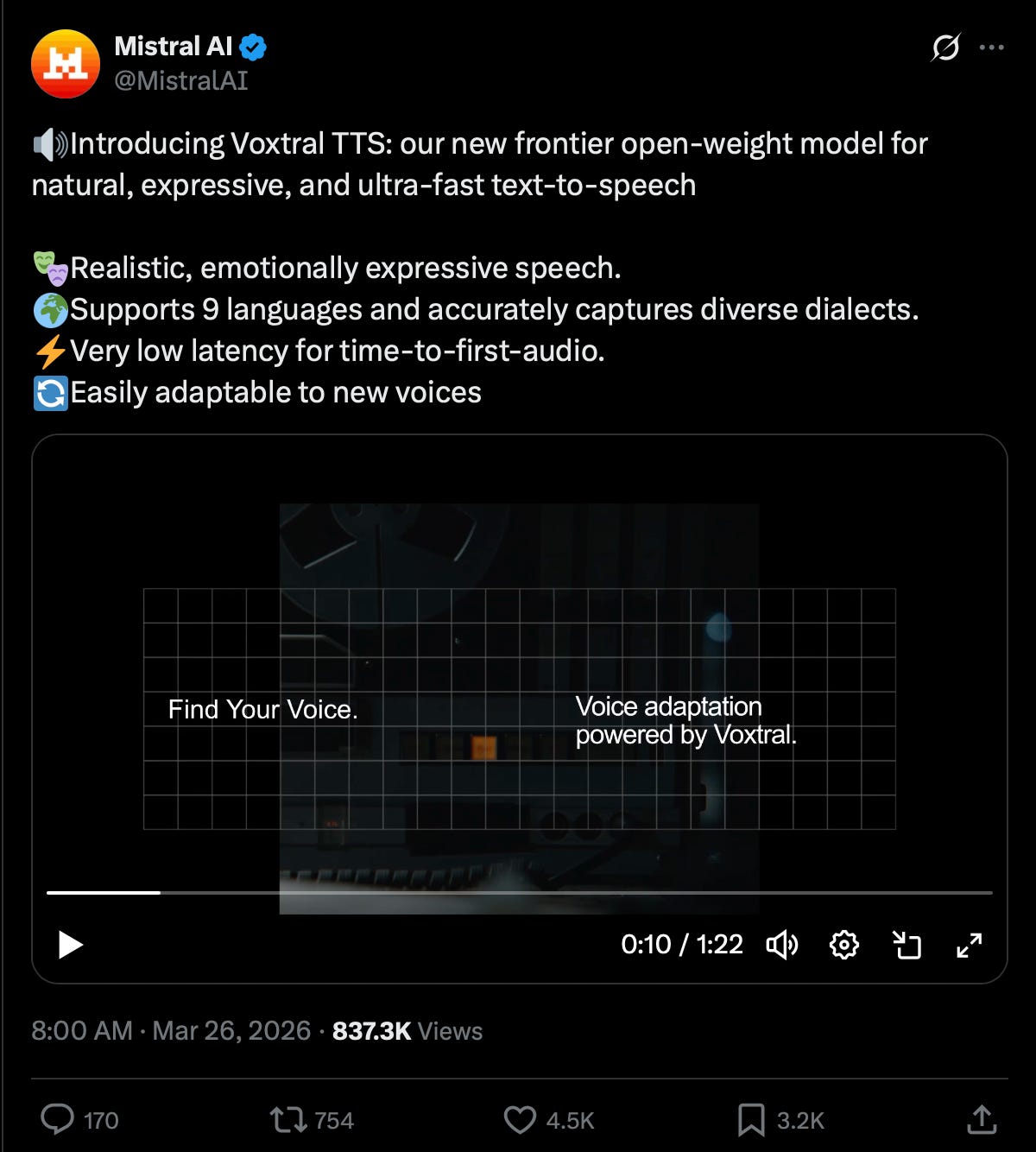
Many Chinese companies bypass the race for frontier models. They strategically use open-source models and fine-tune them with proprietary data for specific applications. They don't need the biggest model, but the *best* model for their particular use case, creating a practical path to value.

Startups are learning that spending significant time and money fine-tuning a specific open-weight model is a bad strategy. The rapid pace of AI progress means a new, superior model will be released within weeks, rendering the fine-tuning effort obsolete and a waste of precious engineering resources.

Companies adopt open-weight AI models not just for cost savings, but for strategic advantage. By self-hosting and fine-tuning these models, they can create unique, defensible AI capabilities without exposing their proprietary data or innovations to third-party providers like OpenAI.