Get your free personalized podcast brief
We scan new podcasts and send you the top 5 insights daily.
Former Biogen R&D head Al Sandrock defines the agility of a small company not just as speed, but as the ability to make decisions by informally gathering key people in the hallway, bypassing the need to schedule formal meetings. This contrasts with large organizations where many more people and committees are necessarily involved.

Related Insights
Gumroad's CEO credits their rapid development to his role as a solo decision-maker. This structure eliminates the lengthy processes of gaining internal buy-in and creating extensive documentation (PRDs, specs) common in larger organizations, which are often more about alignment than execution.

Gamma's CEO resists the pressure to scale headcount aggressively, arguing that doubling the team size does not guarantee double the speed. He believes a smaller, more agile team can change direction faster, which is more valuable than raw speed in a rapidly evolving market.

Small firms can outmaneuver large corporations in the AI era by embracing rapid, low-cost experimentation. While enterprises spend millions on specialized PhDs for single use cases, agile companies constantly test new models, learn from failures, and deploy what works to dominate their market.
While startups must be nimble, analytical processes from large corporations are invaluable. The key is applying the same rigorous thinking to decision-making but compressing the timeline. Having prior experience with similar situations allows leaders to make informed choices more quickly.

In fast-paced environments like AI, the opportunity cost of lengthy internal debates over good-enough options is enormous. A founder mindset prioritizes rapid execution and learning over achieving perfect consensus, creating a significant competitive advantage through speed.

To match the pace of AI startups, large companies require explicit, top-down cultural mandates. At Amplitude, the CEO banned 'decisions by committee' to empower individuals and accelerate shipping. This leadership action is crucial because ICs cannot unilaterally adopt such a culture.
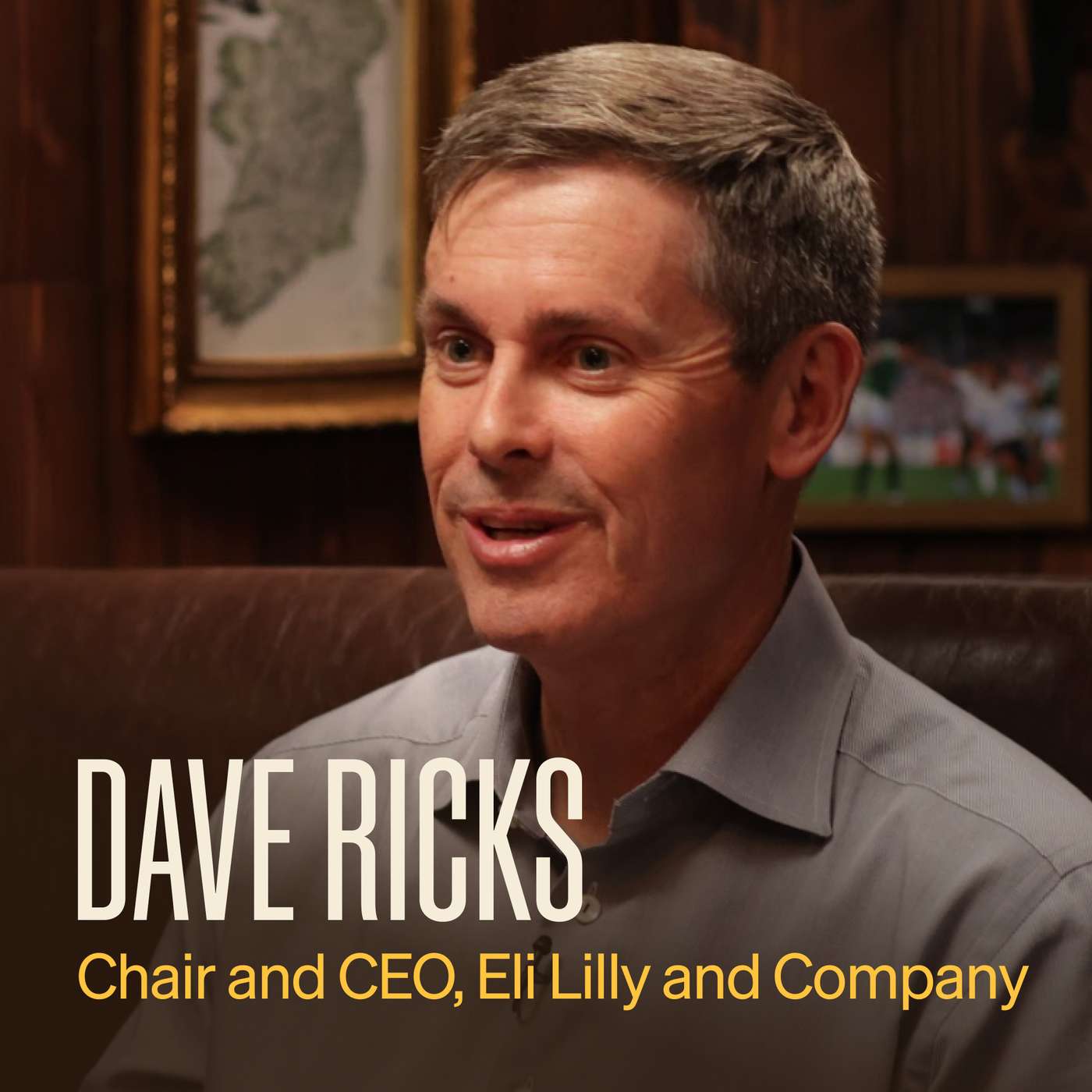
To avoid the pitfalls of scale in R&D, Eli Lilly operates small, focused labs of 300-400 people. These 'internal biotechs' have mission focus and autonomy, while leveraging the parent company's scale for clinical trials and distribution.
To avoid bureaucratic slowdown, LEGO's CEO broke his leadership team into smaller, empowered subgroups like a "commercial triangle" (CCO, COO, CMO). These groups handle operational decisions, only escalating disagreements. This has cut full executive meetings to just one hour a month plus quarterly strategy sessions.

CZI's Biohub model fosters cross-disciplinary breakthroughs by physically sitting engineers and biologists together. This simple organizational tactic encourages informal communication and collaboration, proving more effective at solving complex problems than formal structures and reporting lines.

Gamma scaled to a $2B valuation with only 50 people by innovating on org design, not just product. They prioritize hiring generalists over specialists and use a 'player-coach' model instead of a traditional management layer. This keeps the team lean, agile, and close to the actual work.
