Get your free personalized podcast brief
We scan new podcasts and send you the top 5 insights daily.
Instead of competing with LLM providers like OpenAI, Palantir integrates with them. This model-agnostic approach is a key advantage, offering customers flexibility and preventing vendor lock-in. Their value lies in applying any model to the client's unique data context via the ontology.

Related Insights
The future of enterprise AI isn't choosing one provider. Instead, companies will use a "composable model" approach, routing queries to a combination of powerful frontier models and their own fine-tuned open-source models. This strategy, dubbed the "council of LLMs," optimizes for cost, performance, and specialization on proprietary data.

A key value proposition for vertical AI applications is being model-agnostic. They act as a strategic layer for enterprises, allowing them to route tasks to the best available LLM at any given time. This de-risks enterprise AI strategy from being locked into a single model provider whose performance may be surpassed.

Palantir argues that enterprises going directly to LLM providers like OpenAI face high costs and vendor lock-in. Its strategy is to act as an intermediary, building custom, model-agnostic applications on client data, promising better business outcomes despite its own premium price tag.

Once a point of criticism from investors, Palantir's deep integration with clients via services and forward-deployed engineers (FDEs) is now essential for AI. Karp argues this hands-on implementation and understanding of "tribal knowledge" is a moat that pure-play software models cannot replicate.

Cursor positions itself as a model-agnostic platform, turning potential competitors like OpenAI and Anthropic into partners. By being the "Snowflake for SDLC" on top of the "hyperscaler" models, they create a differentiated value layer focused on a vertical use case.

Enterprises will shift from relying on a single large language model to using orchestration platforms. These platforms will allow them to 'hot swap' various models—including smaller, specialized ones—for different tasks within a single system, optimizing for performance, cost, and use case without being locked into one provider.
Palantir’s software creates a comprehensive "ontology" layer, a real-time map of an organization’s assets, people, and processes. This deep integration serves as a powerful digital twin, making it incredibly difficult for clients to switch providers and forming a strong competitive moat.
Instead of building its own models, Razer's strategy is to be model-agnostic. It selects different best-in-class LLMs for specific use cases (Grok for conversation, ChatGPT for reasoning) and focuses its R&D on the integration layer that provides context and persistence.

Perplexity's core advantage is its model-agnostic orchestration. Unlike vertically integrated competitors (Google, OpenAI), it can select the best model for any task—whether from GPT, Claude, or open-source alternatives—to offer a superior, specialized "orchestra" of AI capabilities.

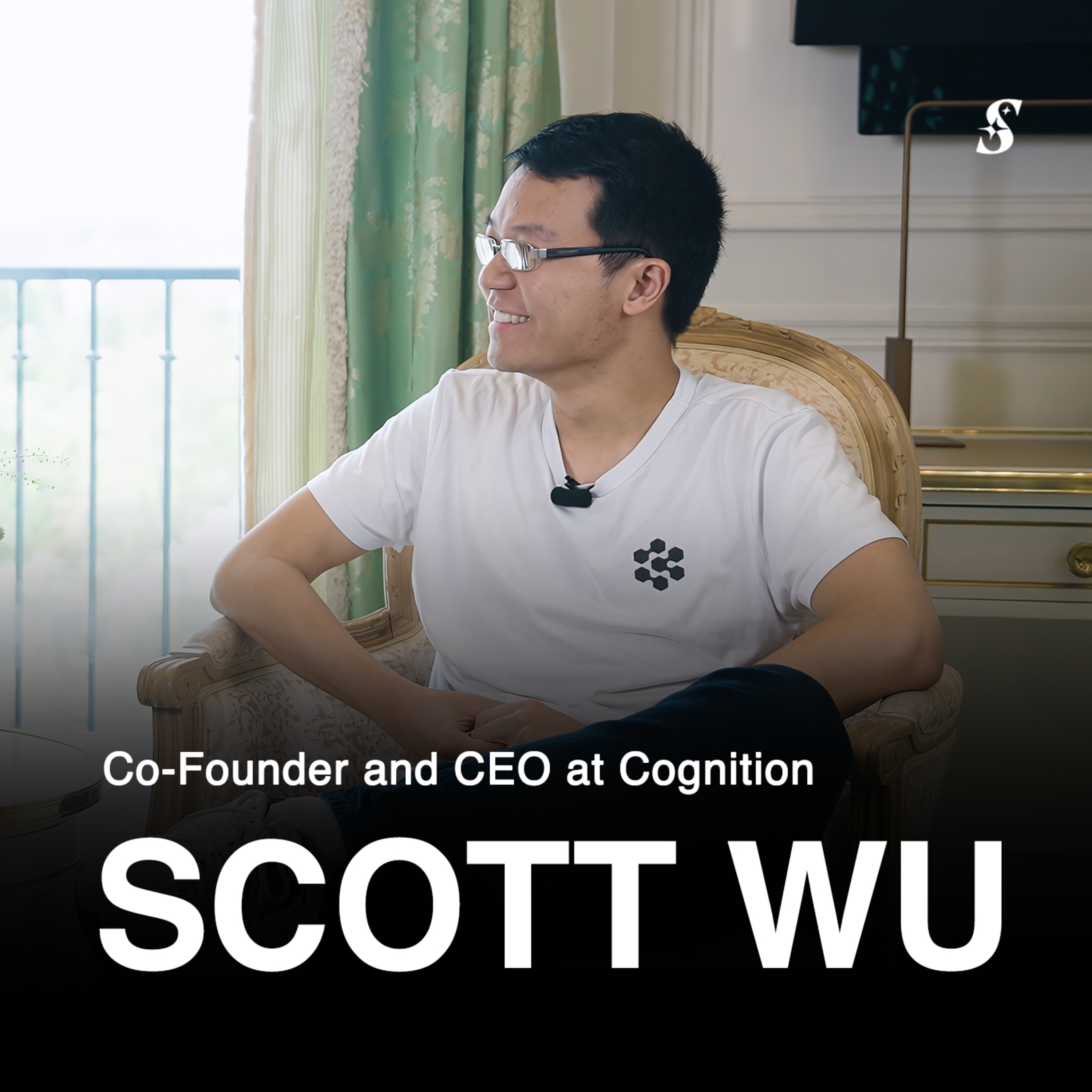
Cognition intentionally remains independent from major AI labs (like OpenAI, Google, Anthropic) to offer a model-neutral platform. This strategy reassures enterprise customers who want long-term partnerships without being locked into a single, potentially superseded, AI model ecosystem, providing flexibility and future-proofing.