Get your free personalized podcast brief
We scan new podcasts and send you the top 5 insights daily.
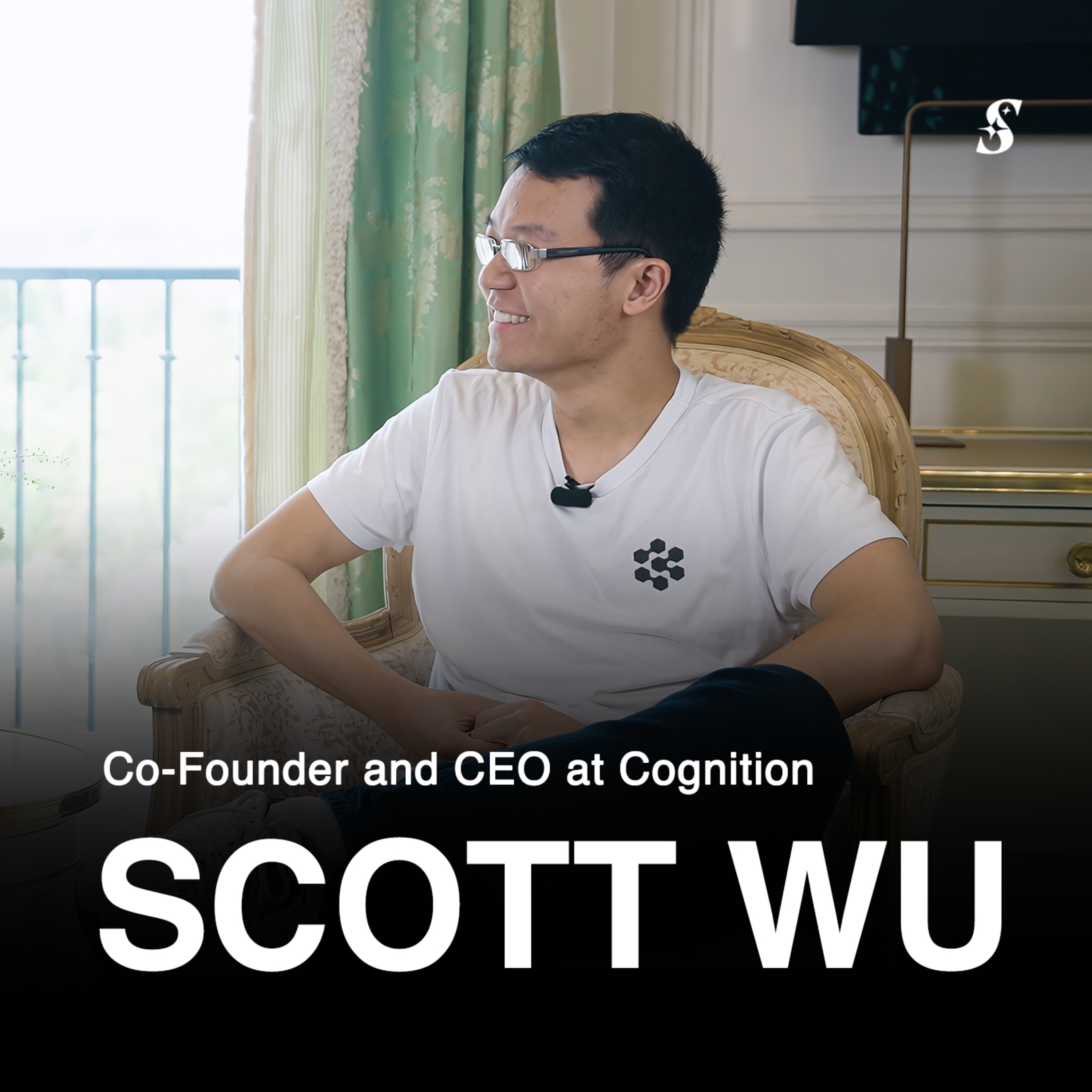
Cognition intentionally remains independent from major AI labs (like OpenAI, Google, Anthropic) to offer a model-neutral platform. This strategy reassures enterprise customers who want long-term partnerships without being locked into a single, potentially superseded, AI model ecosystem, providing flexibility and future-proofing.
Related Insights
Rather than betting on a single winning AI model like OpenAI or Gemini, Lenovo is building an "orchestration layer." This software allows users to access the best model for a given task, positioning Lenovo as a flexible, platform-agnostic enabler instead of tying its fate to one ecosystem in a rapidly evolving market.

The future of enterprise AI isn't choosing one provider. Instead, companies will use a "composable model" approach, routing queries to a combination of powerful frontier models and their own fine-tuned open-source models. This strategy, dubbed the "council of LLMs," optimizes for cost, performance, and specialization on proprietary data.

To defend against large model providers, AI coding startups like Cognition are moving from being "model neutral" to "agent neutral." They now integrate competing coding agents (e.g., Claude Code) into their platforms, shifting their value proposition to being the essential workflow and orchestration layer for developers.

As major AI players like SpaceX/Cursor and Anthropic build closed ecosystems and change pricing, companies face significant vendor lock-in risk. An open IDE layer that supports multiple AI models becomes a strategic asset, allowing teams to avoid price hikes and switch to better models without overhauling workflows.

As noted by Chamath Palihapitiya, businesses fear deploying major AI models directly, seeing it as letting the 'fox into the henhouse' where their usage data could train a future competitor. This creates a strategic opening for 'harness-first' companies that offer enterprises control and choice over underlying models.

Frontier model providers like OpenAI are not incentivized to reduce your token costs, creating lock-in. Independent agent labs (e.g., Cognition) act like brokers, routing tasks to the most efficient models, which is a more sustainable and affordable long-term strategy for building your company.

Enterprise platform ServiceNow is offering customers access to models from both major AI labs. This "model choice" strategy directly addresses a primary enterprise fear of being locked into a single AI provider, allowing them to use the best model for each specific job.
Cursor positions itself as a model-agnostic platform, turning potential competitors like OpenAI and Anthropic into partners. By being the "Snowflake for SDLC" on top of the "hyperscaler" models, they create a differentiated value layer focused on a vertical use case.

Large enterprises are avoiding commitment to a single AI provider like OpenAI or Anthropic. Instead, they're building control planes and abstraction layers that allow them to hot-swap the underlying models, mitigating technology risk and preventing dependence on one provider's terms of service.

For many companies, 'AI sovereignty' is less about building their own models and more about strategic resilience. It means having multiple model providers to benchmark, avoid vendor lock-in, and ensure continuous access if one service is cut off or becomes too expensive.
