Get your free personalized podcast brief
We scan new podcasts and send you the top 5 insights daily.
Dalio reveals his investment mantra is to find 15 good, uncorrelated return streams. Mathematical analysis shows this diversification can cut risk by 80% without sacrificing upside, increasing the return-to-risk ratio by a factor of five.

Related Insights
With traditional stock/bond diversification weakening and equity markets concentrated in mega-caps, investors need new tools. Liquid alternatives provide market-neutral strategies (long/short) that generate returns independent of broad market movements, offering a crucial source of uncorrelated alpha.

While diversification is preached for managing risk, the world's most successful investors build wealth through concentration. They make a few large bets in areas where they have a distinct advantage or "alpha," rather than spreading their capital thinly across the market.

Dalio's method for creating a reliable investment 'game plan' is to treat every potential decision as a rule. He then historically backtests that rule to see how it would have performed across different markets and eras, codifying only the proven, timeless ones into his system.
Owning multiple stocks or ETFs does not create a genuinely diversified portfolio. True diversification involves owning assets that react differently to various economic conditions like inflation, recession, and liquidity shifts. This means spreading capital across productive equities, real assets, commodities, hard money like gold, and one's own earning power.

Successful investing isn't about being right all the time; it's about making your wins exponentially larger than your losses. Top investors like Paul Tudor Jones only enter trades where the potential reward is at least five times the risk, allowing them to be wrong often and still profit.

Mere statistical diversification often leads to concentration in market bubbles. A superior approach is "variegation"—intentionally creating a non-uniform portfolio with different industries, countries, and ballast assets like gold to build true resilience, much like a diverse garden.

The AI's portfolio construction goes beyond simple asset diversification by intentionally balancing three distinct investment theses: a de-risked 'anchor' (Mist), an asymmetric 'moonshot' (SLS), and a valuation-driven 'rebound' (JSPR). This strategy diversifies risk across different potential paths to success.
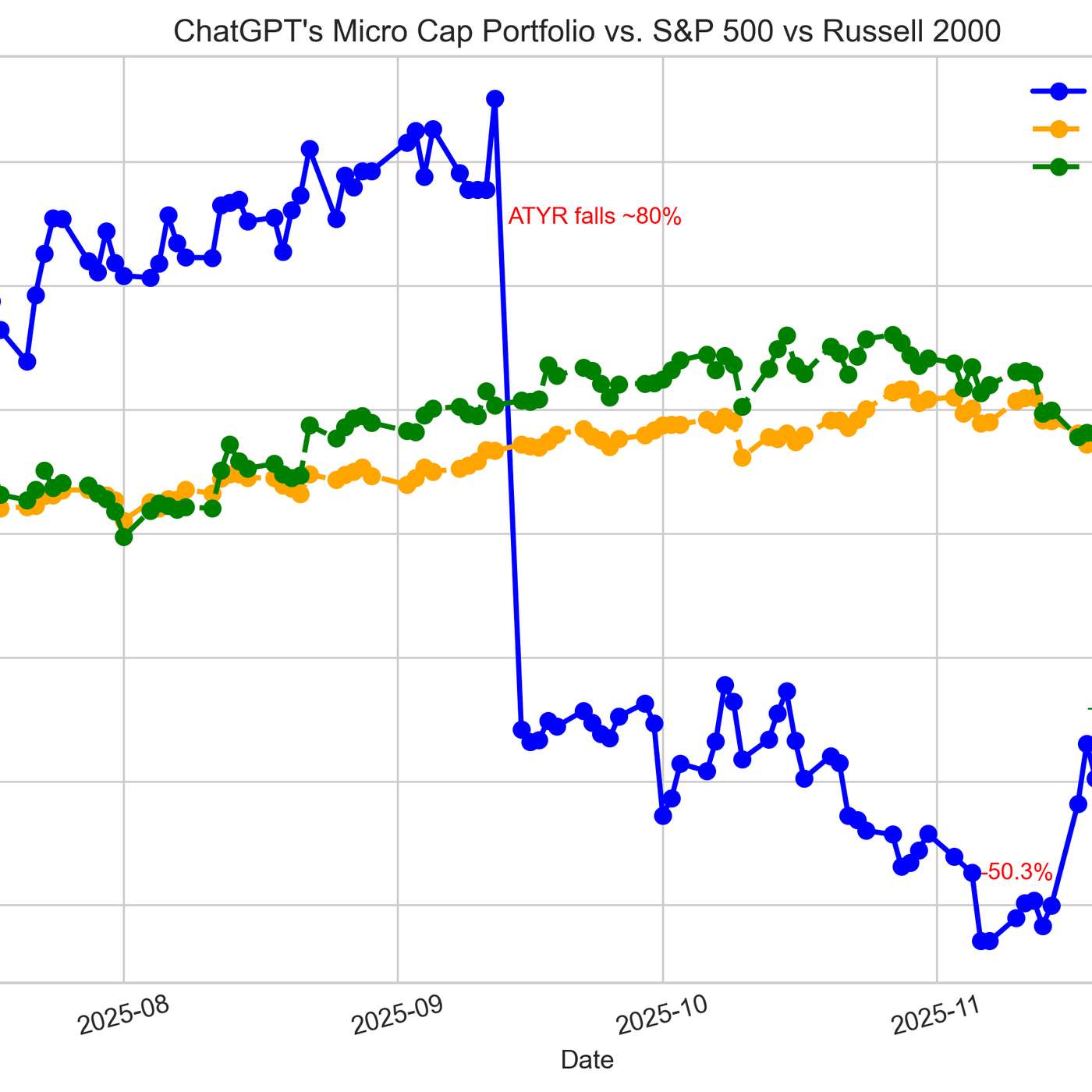
Since 2020, even top-quartile stock pickers have faced extreme drawdowns with concentrated portfolios. A more diversified approach, holding more names than usual (e.g., 50-75 stocks for an institutional manager), has proven superior for mitigating risk and achieving better performance.

If every asset in your portfolio is performing well simultaneously, you are not diversified. Genuine diversification requires holding uncorrelated assets, meaning one component will likely be underperforming, causing psychological discomfort and tempting you to sell at the worst possible time. This pain is a feature, not a bug.

According to famed investor Ray Dalio, the single most important investment principle is holding a portfolio of 8 to 12 assets that don't move in tandem. This sophisticated diversification drastically cuts risk by up to 80% without sacrificing returns.