Get your free personalized podcast brief
We scan new podcasts and send you the top 5 insights daily.
Contrary to fears that AI averages out creativity, it can act as a partner to challenge a writer's habitual thinking, suggest alternative phrasings, and identify blind spots, ultimately leading to more original output.
Related Insights
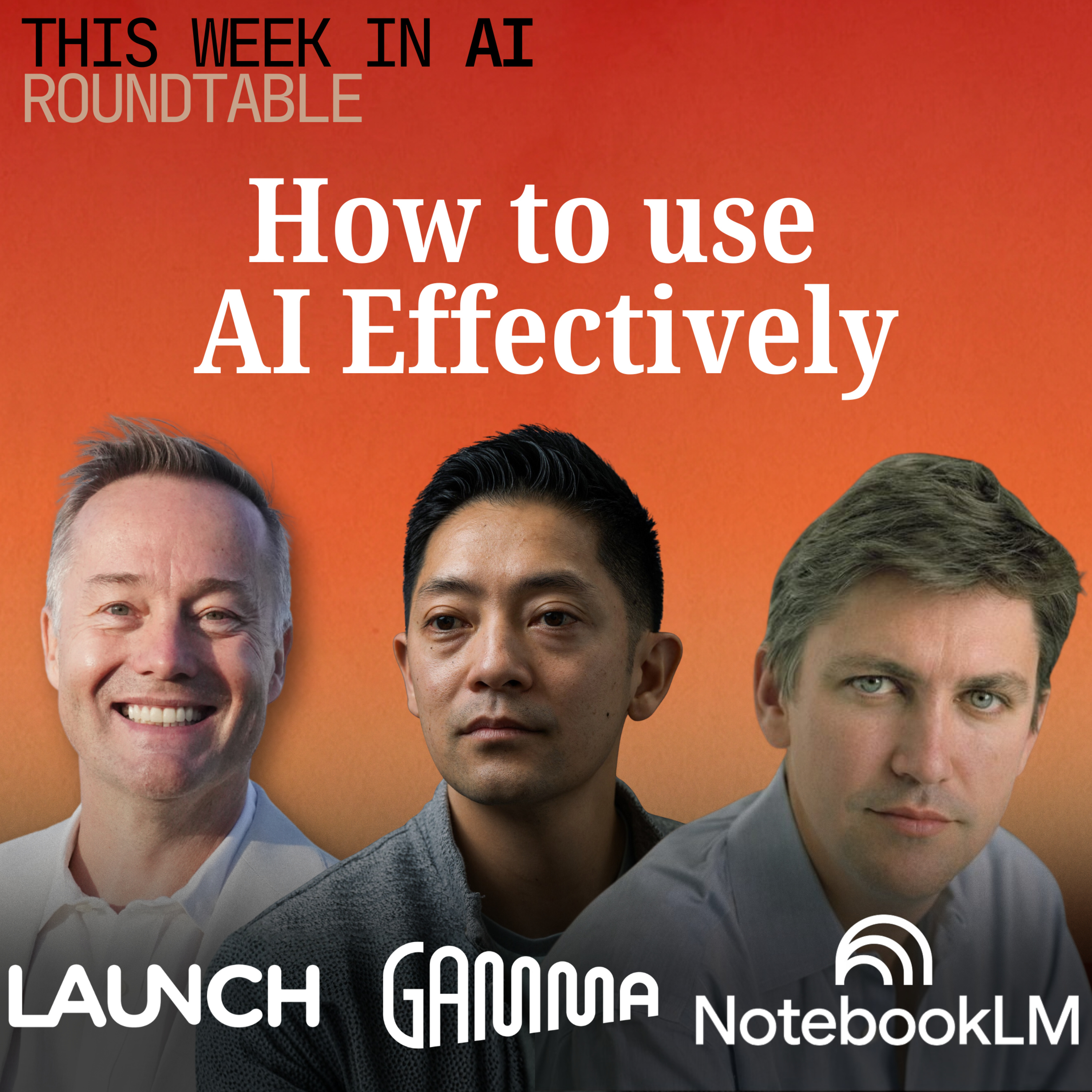
Users who treat AI as a collaborator—debating with it, challenging its outputs, and engaging in back-and-forth dialogue—see superior outcomes. This mindset shift produces not just efficiency gains, but also higher quality, more innovative results compared to simply delegating discrete tasks to the AI.
Surveys show people believe AI harms creativity because their experience is limited to generic chatbots. They don't grasp "context engineering," where grounding AI in your own documents transforms it from a generalist into a powerful, personalized creative partner.
Instead of giving an AI creative freedom, defining tight boundaries like word count, writing style, and even forbidden words forces the model to generate more specific, unique, and less generic content. A well-defined box produces a more creative result than an empty field.

To avoid generic brainstorming outcomes, use AI as a filter for mediocrity. Ask a tool like ChatGPT for the top 10 ideas on a topic, and then explicitly remove those common suggestions from consideration. This forces the team to bypass the obvious and engage in more original, innovative thinking.

A counterintuitive use for AI in creative work is as an 'anti-inspiration' tool. By asking it for the 10 most cliché ways to say something, you can see the predictable path and intentionally steer your own writing toward a more novel and impactful expression.

AI-generated text often falls back on clichés and recognizable patterns. To combat this, create a master prompt that includes a list of banned words (e.g., "innovative," "excited to") and common LLM phrases. This forces the model to generate more specific, higher-impact, and human-like copy.
The tendency for AI models to "make things up," often criticized as hallucination, is functionally the same as creativity. This trait makes computers valuable partners for the first time in domains like art, brainstorming, and entertainment, which were previously inaccessible to hyper-literal machines.

Most AI writing tools produce generic content. Spiral was rebuilt to act as a partner. It first interviews the user to understand their thoughts and taste, helping them think more deeply before generating drafts. This collaborative process avoids "slop" and leads to more authentic writing.

AI serves two distinct roles in creative writing. First, it aids "divergent thinking" by creating a safe, non-judgmental space for brainstorming. Second, it assists "convergent thinking" by acting as a research assistant, wordsmith, and editor to refine a chosen concept.
Instead of using AI to generate final creative work, use it as a tool for anti-inspiration. Figma's CEO asks generative AI for the "10 cliche ways to say this" so he can consciously push beyond the obvious and predictable. This technique helps creators find novel angles and maintain a unique voice.