Get your free personalized podcast brief
We scan new podcasts and send you the top 5 insights daily.
The classic seed strategy of investing in a founder in a small market and hoping they "stair-step" into a larger Total Addressable Market (TAM) is no longer viable. With entry valuations at $60M+, investors must believe the opportunity is already massive enough to justify a $20B+ outcome to make the math work.

Related Insights
The static size of a Total Addressable Market (TAM) is a misleading metric for big ideas. A better evaluation framework focuses on two questions: Will the product's innovation cause the existing TAM to grow multiple times over? Can the company layer on additional, new TAMs over its lifetime?

At the seed stage, if you're right about a truly exceptional company, the entry valuation hardly matters. Gokul cites a 200x return on an expensive seed deal. However, by Series B, a high price can crush your multiple, even if the company continues to perform well.

Y Combinator's model pushes companies to raise at high valuations, often bypassing traditional seed rounds. Simultaneously, mega-funds cherry-pick the most proven founders at prices seed funds cannot compete with. This leaves traditional seed funds fighting for a narrowing and less attractive middle ground.
Founders in deep tech and space are moving beyond traditional TAM analysis. They justify high valuations by pitching narratives of creating entirely new markets, like interplanetary humanity or space-based data centers. This shifts the conversation from 'what is the market?' to 'what could the market become?'.

The early-stage venture market has split into two extremes, eliminating the middle ground. Deals are either priced for hype at massive valuations (e.g., a $50M pre-seed round) or are considered bargains at very low valuations (e.g., $2-5M), forcing investors to choose a side.

Venture rounds are compressing and conflating, with massive "seed" rounds of $30M+ essentially combining a seed and Series A. This sets a dangerous trap: the expectations for your next funding round will be equivalent to those of a traditional Series B company, dramatically raising the bar for growth.

The standard VC heuristic—that each investment must potentially return the entire fund—is strained by hyper-valuations. For a company raising at ~$200M, a typical fund needs a 60x return, meaning a $12 billion exit is the minimum for the investment to be a success, not a grand slam.
For venture capitalists investing in AI, the primary success indicator is massive Total Addressable Market (TAM) expansion. Traditional concerns like entry price become secondary when a company is fundamentally redefining its market size. Without this expansion, the investment is not worthwhile in the current AI landscape.
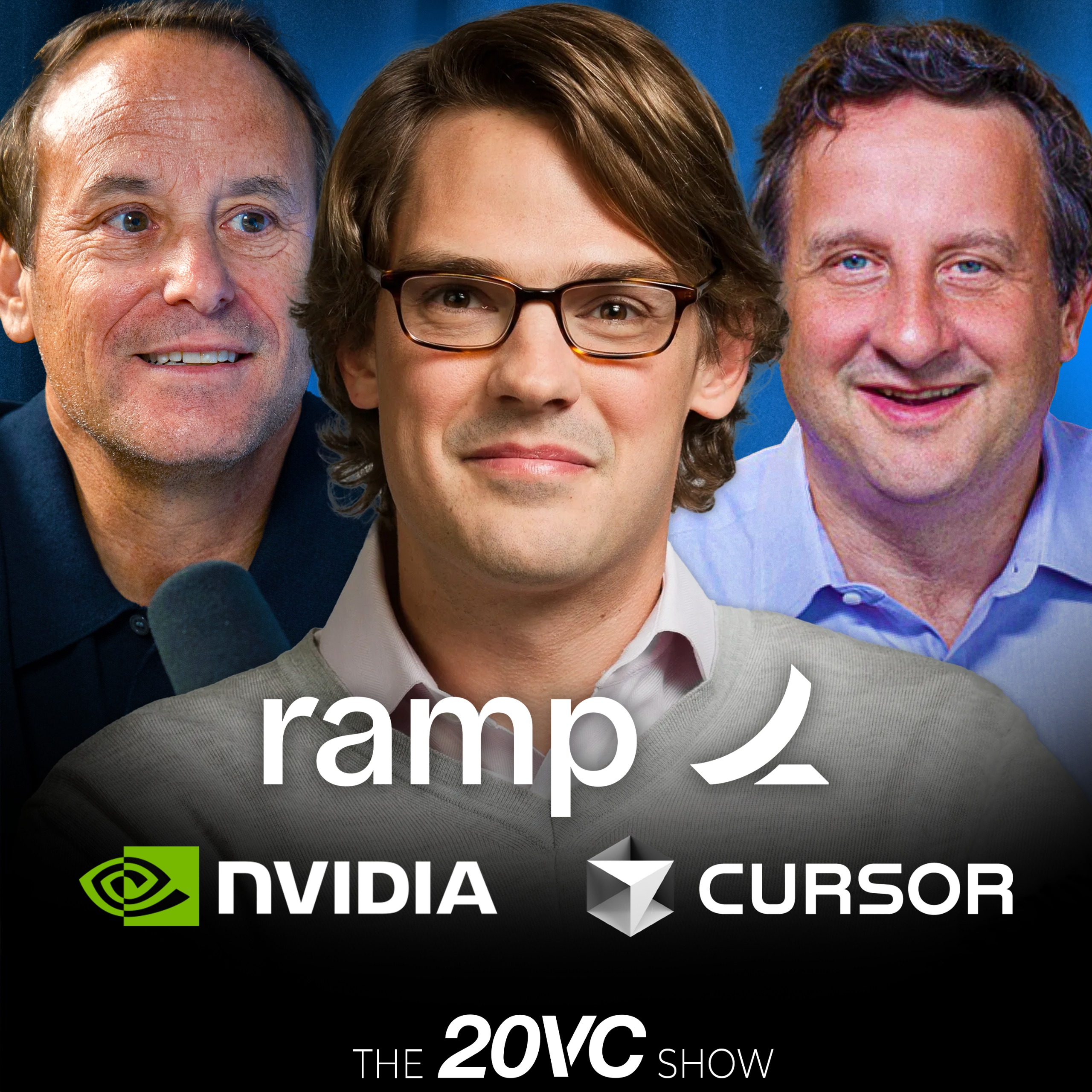
This provides a simple but powerful framework for venture investing. For companies in markets with demonstrably huge TAMs (e.g., AI coding), valuation is secondary to backing the winner. For markets with a more uncertain or constrained TAM (e.g., vertical SaaS), traditional valuation discipline and entry price matter significantly.
With trillion-dollar IPOs likely, the old model where early VCs win by having later-stage VCs "mark up" their deals is obsolete. The new math dictates that significant ownership in a category winner is immensely valuable at any stage, fundamentally changing investment strategy for the entire industry.
