Get your free personalized podcast brief
We scan new podcasts and send you the top 5 insights daily.
To scale their new notebook platform, "Bento," at a rapidly growing Meta, the team focused on making it the default for all new hires in boot camp. This created network effects by capturing users with no legacy habits, bypassing the difficulty of converting entrenched employees.

Related Insights
To drive adoption for an internal tool, identify the teams most frustrated with the existing solution by scraping support channels. Then, schedule small, bespoke tech talks directly for those teams. This targeted approach generates highly engaged and grateful early adopters.
For internal tools, don't rely solely on product-led growth. A hybrid approach combines a frictionless product experience with a proactive "sales" strategy of advocating for the tool's potential, constantly proving its value to leadership, and removing friction for users.
To encourage widespread use of new AI tools, Qualcomm identifies key people to become 'super users'. As these evangelists demonstrate the tool's value and efficiency, they create a Fear Of Missing Out (FOMO) effect, generating organic demand and pulling the rest of the organization toward adoption rather than pushing it on them.

Directly approaching large organizations is often ineffective. Instead, emulate Slack's growth model by getting individual employees to use and love the product. This creates internal champions who advocate for wider organizational adoption, pulling the product in rather than pushing it from the outside.

The biggest scaling mistake is focusing on running up numbers while ignoring the underlying mindset. During its peak growth, Facebook put every new engineer through a six-week bootcamp not for immediate productivity, but to instill the company's culture. This investment in a shared mindset is what enables sustainable scaling, preventing the chaos that comes from rapid headcount growth.
When rolling out the Odin platform at Uber, the team intentionally avoided a big-bang launch. They started with their own systems, then expanded to friendly teams, using an incremental approach to build momentum and prove value before approaching more resistant groups.
Webflow drove weekly Cursor adoption from 0% to 30% in its design team after one 'builder day' where every participant was required to demo a project. This combination of hands-on practice, peer support from champions, and clear expectations creates rapid, tangible adoption of new AI tools.
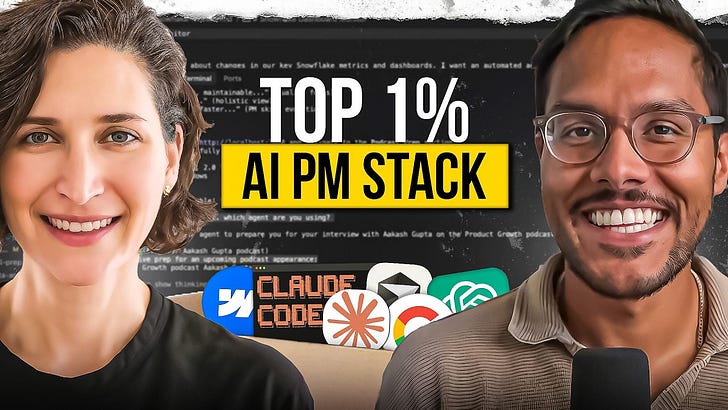
To transform a product organization, first provide universal access to AI tools. Second, support teams with training and 'builder days' led by internal champions. Finally, embed AI proficiency into career ladders to create lasting incentives and institutionalize the change.
When Facebook's growth stalled due to new engineers breaking the codebase, Zuckerberg instituted a mandatory, two-month bootcamp for all new engineers and PMs. This systemically solved the knowledge gap, allowing the team to scale effectively.

In 2007, Facebook's traffic flattened after doubling its engineering team because new hires didn't understand the system architecture. This taught a young Zuckerberg a crucial lesson: at scale, knowledge must be taught explicitly. He then created a mandatory two-month bootcamp for all new product and engineering hires.
