Get your free personalized podcast brief
We scan new podcasts and send you the top 5 insights daily.
Experts deeply embedded in a field can struggle to communicate the big picture to laypeople. Advocates from outside disciplines, like politics, can be more effective because they've learned the subject in a way that is already translatable and can distill complex ideas for policymakers.

Related Insights
When working in complex organizations like the UN or federal government, don't try to master their internal language. Instead, find and partner with internal experts who can translate your goals into the organization's native operating system to achieve impact.

"Expertitis" is a form of the curse of knowledge where one knows too much about a subject to explain it simply to a newcomer. The cure is communication empathy: deliberately stepping out of your own expertise to see and frame the message from the fresh, uninitiated perspective of the audience.
To get buy-in from non-scientists, complex topics like aging biology must be distilled into relatable concepts. Comparing the human body to a car that requires maintenance is an effective way to communicate the value of preventative health to lawmakers.
Dr. Saav Solanki argues that effective communication is more than half the battle in science. He believes the best scientists are those who can explain complex topics, like how a T-cell engager works, with enough clarity for a high school student to understand, which is essential for fostering collaboration and broader support.
A major focus of the National Security Commission on Emerging Biotechnology is on improving "bioliteracy"—a fundamental understanding of biology's importance. This gap among policymakers and the public is seen as a larger obstacle than technical innovation, as it impacts funding, regulation, and public acceptance.

Economist Michael Greenstone recounts how his academic communication style, efficient among peers, was perceived as abrasive and exclusionary in government, nearly getting him fired. To have real-world impact, experts must translate specialized jargon into accessible ideas, a skill academia doesn't teach or reward.

The biotech industry's messaging to legislators often fails because it focuses on economic contributions. To gain support and combat negative narratives, leaders must shift to "plain speak," using patient stories to humanize their work and focus on their core mission of improving health.

Darwin communicated his theory in plain, persuasive English, accelerating its acceptance. In contrast, Newton wrote in Latin and was secretive, slowing his ideas' spread. This highlights that exposition and narrative are critical, non-technical skills for driving scientific progress and convincing others to invest in a new idea.
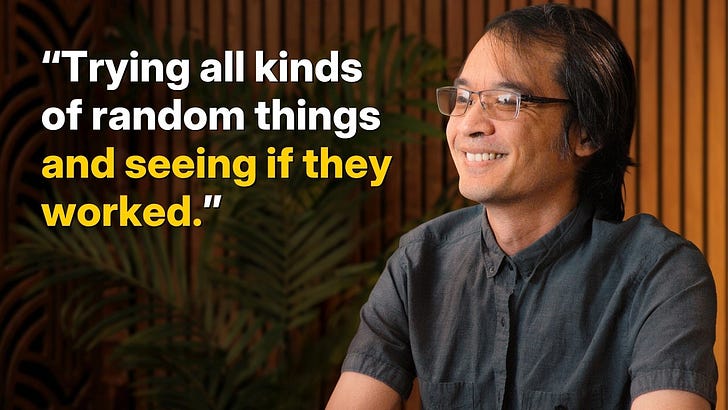
Effective citizen assemblies require experts, but not in their traditional, top-down authoritative role. Experts must learn to be "on tap, not on top"—simplifying their language and responding to citizens' needs rather than dictating solutions. This creates a difficult but necessary learning curve, shifting the expert's role from a leader to a service provider.

To establish biotech's importance at the Department of Defense, Titus focused on empowering and publicizing the work of existing scientists in Army, Navy, and Air Force labs. Instead of seeking credit, he acted as a megaphone for their successes, which accelerated his mission.