Get your free personalized podcast brief
We scan new podcasts and send you the top 5 insights daily.
The optimal way to use decision models like Jev is to break large problems into many small, independent questions. This contrasts with stuffing everything into a single LLM prompt. This decomposition makes each AI-driven step verifiable, measurable, and debuggable, leading to more reliable and maintainable software.

Related Insights
Don't give LLMs full control. Use deterministic code for core logic, validation, and enforcing rules. Delegate only tasks requiring flexibility or understanding of unstructured input to the LLM, treating it as a specialized component, not the entire system.
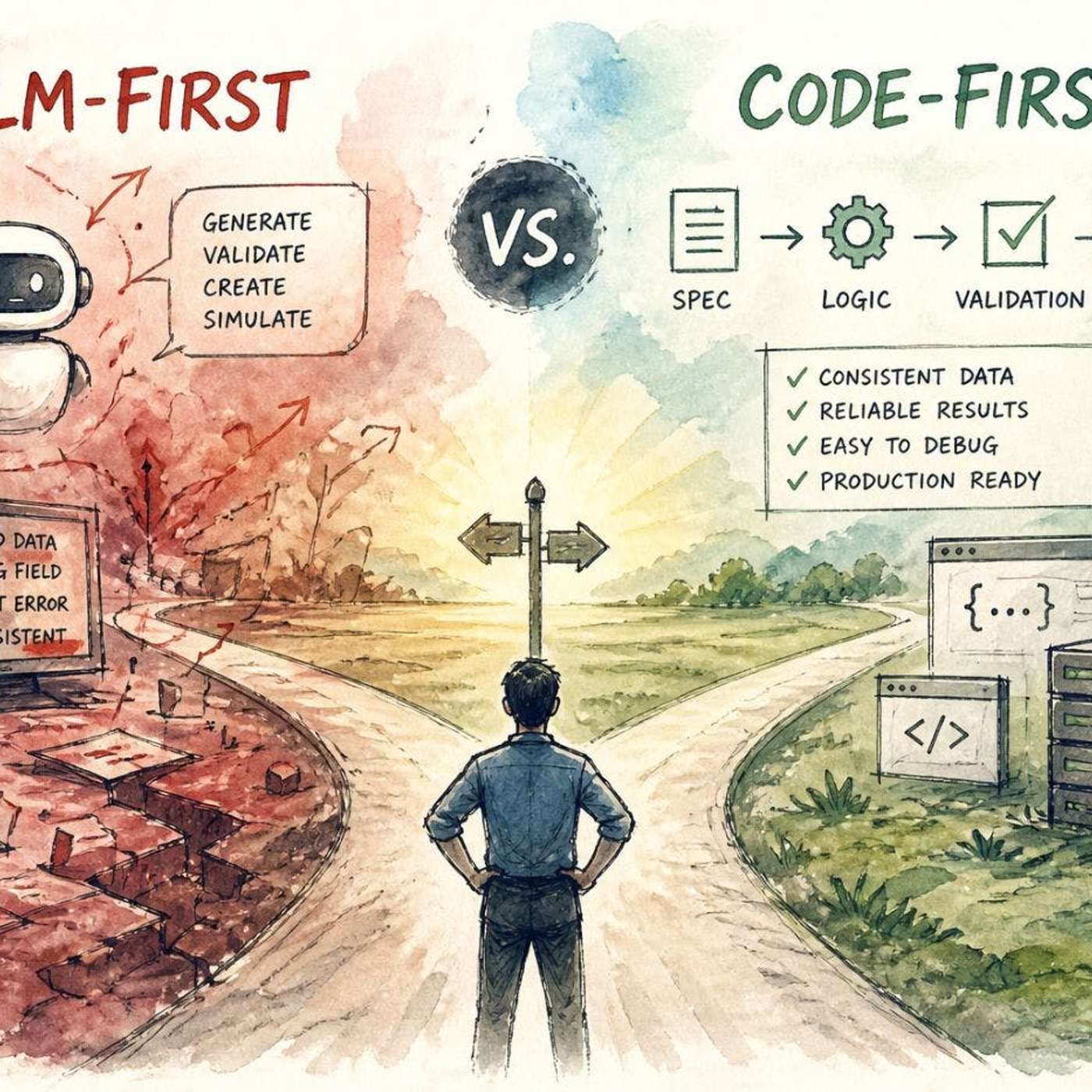
Breaking down the software development lifecycle into small, well-defined subtasks is not just for improving AI success rates. It creates a significant cost-saving opportunity by allowing teams to use cheaper, specialized AI models for most steps, reserving expensive frontier models only for high-complexity tasks like architectural design.
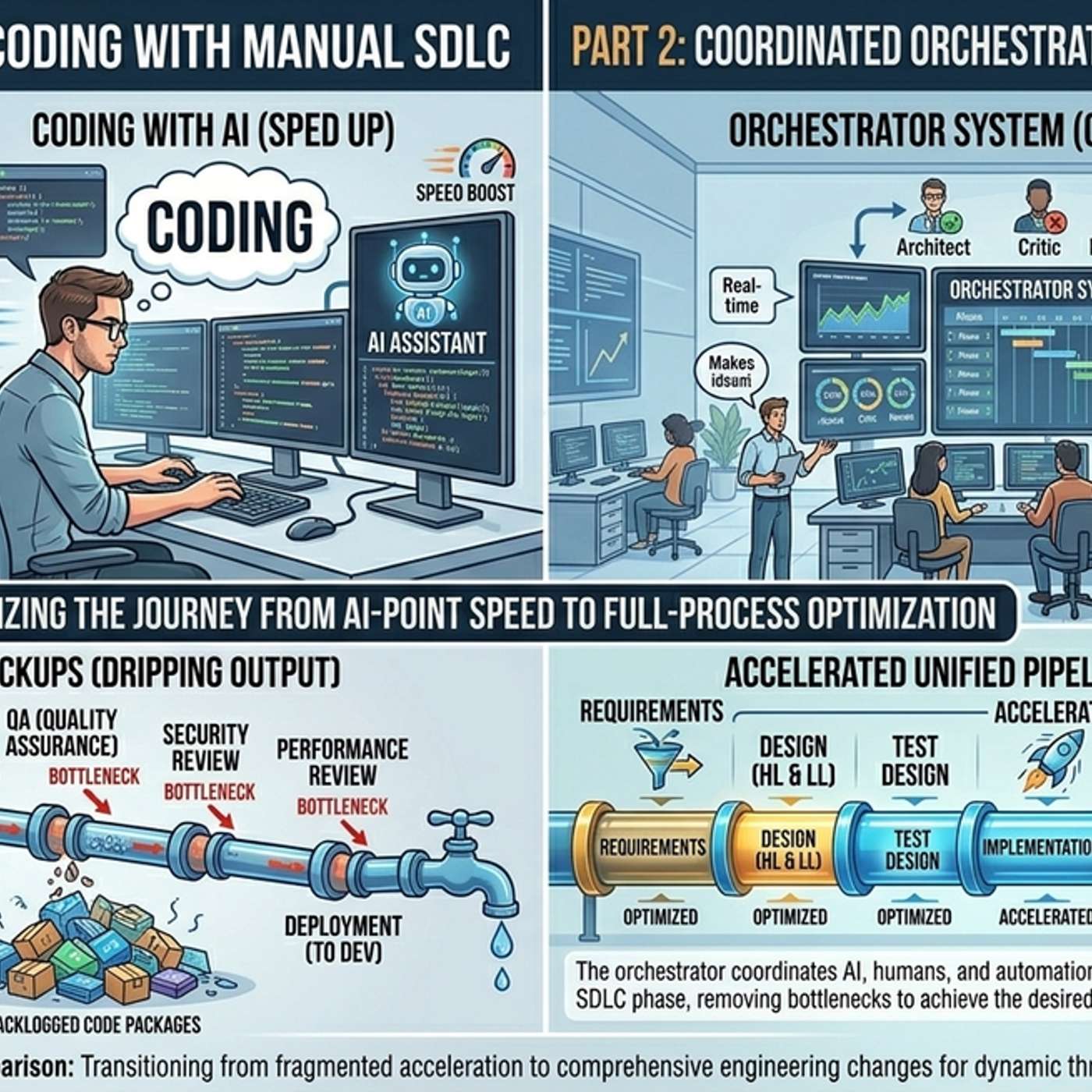
Getting high-quality results from AI doesn't come from a single complex command. The key is "harness engineering"—designing structured interaction patterns between specialized agents, such as creating a workflow where an engineer agent hands off work to a separate QA agent for verification.

High productivity isn't about using AI for everything. It's a disciplined workflow: breaking a task into sub-problems, using an LLM for high-leverage parts like scaffolding and tests, and reserving human focus for the core implementation. This avoids the sunk cost of forcing AI on unsuitable tasks.

The path to robust AI applications isn't a single, all-powerful model. It's a system of specialized "sub-agents," each handling a narrow task like context retrieval or debugging. This architecture allows for using smaller, faster, fine-tuned models for each task, improving overall system performance and efficiency.

Instead of a single massive prompt, construct complex AI agents using a series of smaller, distinct steps or 'nodes' (e.g., research, synthesis, writing). This 'chunking' makes it significantly easier to isolate and troubleshoot failures in the workflow.

Instead of treating a complex AI system like an LLM as a single black box, build it in a componentized way by separating functions like retrieval, analysis, and output. This allows for isolated testing of each part, limiting the surface area for bias and simplifying debugging.

An agent's effectiveness is limited by its ability to validate its own output. By building in rigorous, continuous validation—using linters, tests, and even visual QA via browser dev tools—the agent follows a 'measure twice, cut once' principle, leading to much higher quality results than agents that simply generate and iterate.

Jev's output isn't a single definitive answer but a probability score for each possible choice (e.g., "80% confident this is a high-priority lead"). This structured, "type-safe" data allows developers to set thresholds and build complex, nuanced business logic directly in their code without parsing text.
Instead of building a monolithic agentic system, a more reliable approach is to orchestrate a collection of smaller, well-scoped, and thoroughly tested AI agents. This modular design reduces risk and improves system predictability.
