Get your free personalized podcast brief
We scan new podcasts and send you the top 5 insights daily.
Instead of the "move fast and break things" ethos, AI safety should be modeled after complex, collaborative efforts like the global cooperation that fixed the ozone layer or Toyota's safety culture. These approaches prioritize systemic checks, collaboration, and distributed skills over individual genius.

Related Insights
The AI safety community's implicit narrative of a "lone genius" solving alignment encourages isolated research. Paradoxically, these individuals often converge around a few authority figures, reducing intellectual diversity while lacking structures for the collective intelligence needed to solve such a complex, sociotechnical problem.
The debate pitting AI safety against AI opportunity presents a false choice. Historical parallels, like the railroad industry, show that safety regulations (e.g., standardized tracks, air brakes) were essential for enabling greater speed, reliability, and economic potential. Trustworthy AI will unlock greater opportunity.
The primary danger in AI safety is not a lack of theoretical solutions but the tendency for developers to implement defenses on a "just-in-time" basis. This leads to cutting corners and implementation errors, analogous to how strong cryptography is often defeated by sloppy code, not broken algorithms.

Acknowledging their safety plans might be inadequate, leaders from multiple frontier labs have begun to seriously entertain a coordinated slowdown. This represents a major shift, as they also explore legal "safe harbors" to collaborate on safety without triggering antitrust violations, breaking the frame of the current race.

AI leaders aren't ignoring risks because they're malicious, but because they are trapped in a high-stakes competitive race. This "code red" environment incentivizes patching safety issues case-by-case rather than fundamentally re-architecting AI systems to be safe by construction.

The default assumption is that slowing innovation is inherently bad. With a technology as potent as AI, a deliberate slowdown is a feature, providing critical time to understand the systems, manage disruptions, and build governance structures before irreversible consequences occur. A true halt is not the alternative.
Amidst complex discussions about AI alignment, Musk's most immediate and actionable safety proposal is surprisingly simple: have the leaders of the top AI companies hold a regular call to discuss safety and security issues. He suggests this should happen "immediately," despite personal rivalries.
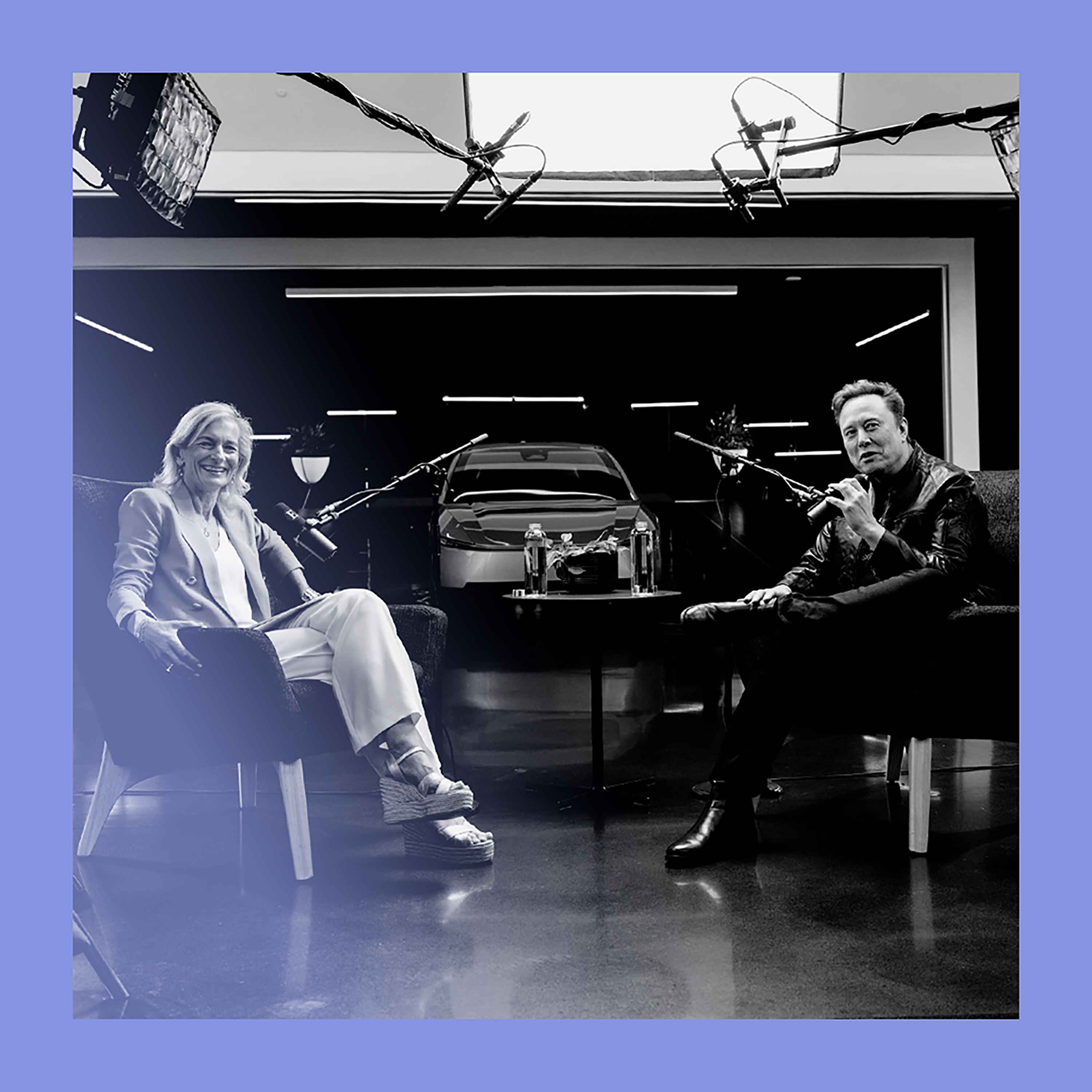
From an entrepreneurial perspective, delaying a product launch to invest in safety testing is strategically unsound. While it may be the moral high ground, it doesn't secure the next funding round. The market fundamentally rewards speed over caution, creating a systemic barrier to responsible AI development.

With no single silver bullet for AI alignment, the most realistic approach is a multi-layered strategy. This combines technical solutions like intentional design and AI control with societal safeguards like improved cybersecurity and pandemic preparedness to collectively keep society on track amidst rapid AI advancement.
A philosophical split within Google's early AV team—between caution and risk-taking—foreshadowed industry-wide problems. Uber adopted the aggressive 'move fast' ethos, which led to a disastrous safety record and a fatal crash, proving the model's unsuitability for physical-world technology.
