Get your free personalized podcast brief
We scan new podcasts and send you the top 5 insights daily.
When students can build functional self-driving vehicles, it indicates the core technology is becoming commoditized. The real competitive moat for companies like Waymo and Tesla is no longer just the tech itself, but their ability to manufacture at scale, manage fleets, and successfully navigate complex regulations.

Related Insights
Tesla's camera-only system gives it a significant cost advantage over Waymo's LiDAR-equipped vehicles. However, current data shows a Waymo vehicle crashes every 400,000 miles, while Tesla's crashes every 50,000. Tesla's ability to scale hinges entirely on proving its cheaper technology can become as safe.

Autonomous vehicle technology will likely become a commodity layer, with most manufacturers providing their cars to existing ride-sharing networks like Uber and Lyft. Only a few companies like Tesla have the brand and scale to pursue a vertically-integrated, closed-network strategy.
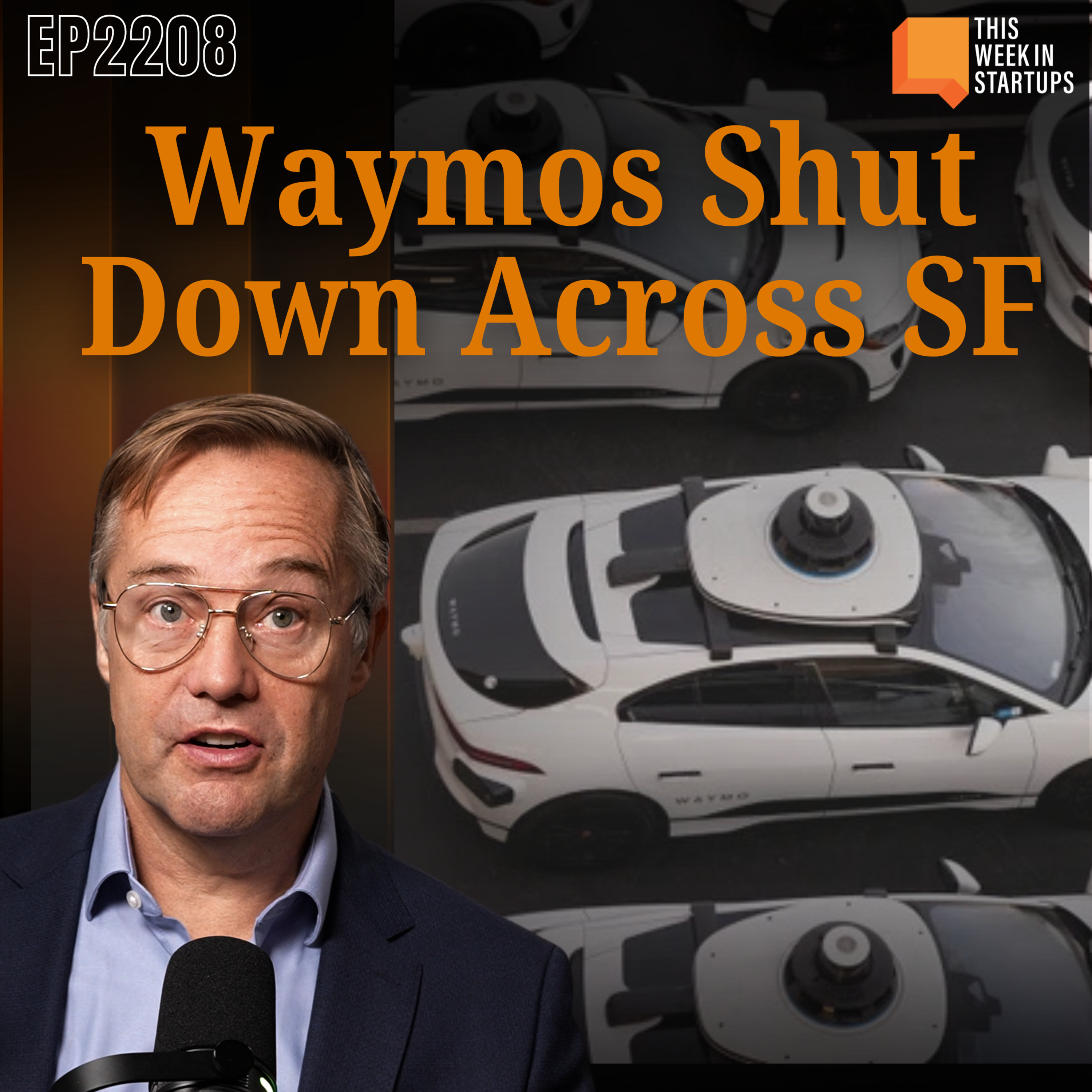
According to its co-CEO, Waymo has moved beyond fundamental research and development. The company believes its core technology is sufficient to handle all aspects of driving. The current work is an engineering challenge of specialization, validation, and data collection for new environments like London, signaling a shift to commercial deployment.
The belief that autonomous driving is an unbreachable technological moat for one company is likely wrong. The technology is commoditizing at a pace similar to LLMs. It is not an impossible breakthrough, but rather a feature that will be implemented across most vehicle manufacturers, much like chatbots are now common.
By eschewing expensive LiDAR, Tesla lowers production costs, enabling massive fleet deployment. This scale generates exponentially more real-world driving data than competitors like Waymo, creating a data advantage that will likely lead to market dominance in autonomous intelligence.
As tech giants like Google and Amazon assemble the key components of the autonomy stack (compute, software, connectivity), the real differentiator becomes the ability to manufacture cars at scale. Tesla's established manufacturing prowess is a massive advantage that others must acquire or build to compete.
Lyft's CEO highlights a critical, overlooked challenge in scaling autonomous vehicles: they will have zero resale value. Unlike traditional cars, a high-mileage AV with outdated technology is worthless. This fundamentally alters the depreciation and financing models for large fleets, creating a significant economic hurdle that must be solved for mass adoption.

Wave's CEO asserts that the core scientific challenges of self-driving are solved. The remaining hurdles are engineering execution, product integration, and economic scaling. This marks a maturation point where the problem moves from a question of 'if' to 'how'—a predictable, albeit difficult, path of scaling data, compute, and validation.

Legacy automakers' slow adoption of self-driving technology isn't due to technical ignorance but to harsh economic realities. Their business model cannot support the current cost per vehicle. Once the all-in cost for an L2++ system drops to around $500, they will rapidly make it a standard feature.

Dara Khosrowshahi observes that the "magic" of a new technology, like on-demand rides or autonomous vehicles, wears off almost instantly. The initial awe is fleeting. Therefore, the sustainable competitive moat is not the novelty but operational excellence in safety, efficiency, and affordability, which is where companies must focus.
![Dara Khosrowshahi - Uber's Bet on AVs, AI, and Building a Super-App - [Invest Like the Best, EP.476] thumbnail](https://megaphone.imgix.net/podcasts/ef669774-cccd-11ed-889b-c36caad6646f/image/158efdddfb983d2678b3530d484e8aa2.jpg?ixlib=rails-4.3.1&max-w=3000&max-h=3000&fit=crop&auto=format,compress)