Get your free personalized podcast brief
We scan new podcasts and send you the top 5 insights daily.
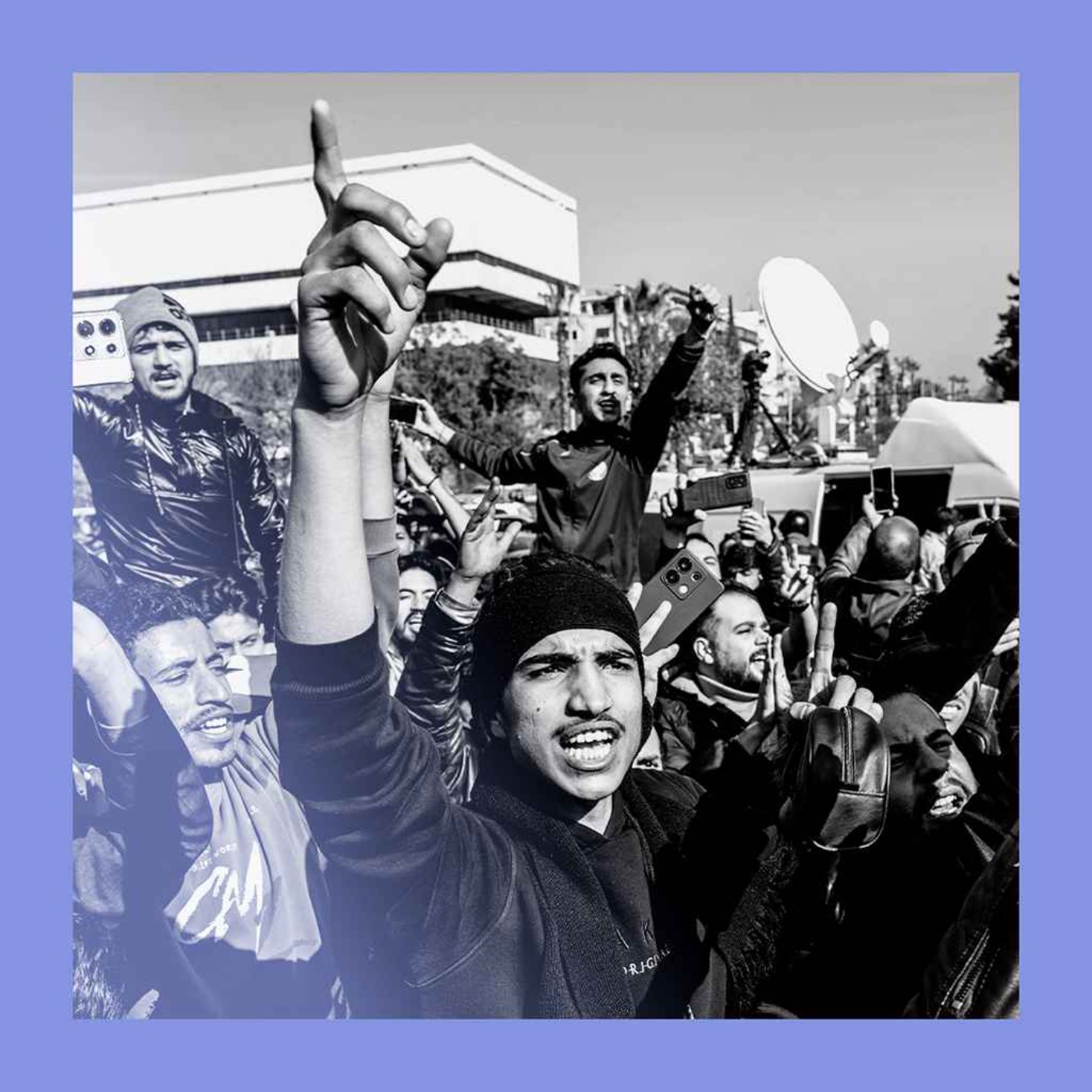
Contrary to expectations of post-liberation prosperity, the new Syrian government has worsened the economic situation for many citizens. By firing hundreds of thousands of state employees and cutting subsidies, the regime has plunged some of the country's poorest into greater financial distress, demonstrating that political freedom doesn't guarantee economic stability.
Related Insights
The official unemployment rate is misleadingly low because when disgruntled workers give up looking for a job, they exit the labor force and are no longer counted as 'unemployed.' This artificially improves the headline number while masking underlying economic weakness and anger among young job seekers.

Policies designed to suppress market volatility create a fragile stability. The underlying risk doesn't disappear; it transmutes into social and political polarization, driven by wealth inequality. This social unrest is a leading indicator of future market instability.

Well-intentioned government support programs can become an economic "shackle," disincentivizing upward mobility. This risks a negative cycle: dependent citizens demand more benefits, requiring higher taxes that drive out businesses, which erodes the tax base and leads to calls for even more wealth redistribution and government control.
The inability for young people to afford assets like housing creates massive inequality and fear. This economic desperation makes them susceptible to populist leaders who redirect their anger towards political opponents, ultimately sparking violence.

The new Syrian government's lack of transitional justice is a primary driver of ongoing violence. By allowing former regime figures to live in exile and even recruiting some, it has created a culture of impunity. This has led to widespread frustration, revenge killings, and sectarian attacks, showing peace requires accountability, not just regime change.
Command economies inevitably rely on force. In a free society, disagreement is resolved through persuasion. In an authoritarian system where directives are absolute, dissent is ultimately met with force. Adopting a top-down economic model means accepting state-sanctioned violence as a necessary tool.

Economic uncertainty and anxiety are the root causes of political violence. When governments devalue currency through inflation and amass huge debts, they create the stressful conditions that history shows consistently lead to civil unrest.

When countries run large, structural government deficits, their policy options become limited. Historically, this state of 'fiscal dominance' leads to the implementation of capital controls and other financial frictions to prevent capital flight and manage the currency, increasing risks for investors.

Despite promoting freedom of speech, Syria's new leader is centralizing power by establishing parallel institutions loyal only to him. Bodies like a new 'Office of Political Affairs' operate without oversight and usurp the authority of formal ministries, creating what one analyst calls 'the embryo of a new authoritarian structure of control.'
History demonstrates a direct, causal link between widening inequality and violent societal collapse. When a large portion of the population finds the system unbearable, it leads to events like the French Revolution—a blunt cause-and-effect relationship often sanitized in modern discourse.
