Get your free personalized podcast brief
We scan new podcasts and send you the top 5 insights daily.
The era of developers reviewing every line of code is over. AI agents are now writing and shipping code to production, with quality assurance shifting from manual inspection to automated guardrails. This includes AI-generated tests and 'friendly' adversarial models designed to find exploits before malicious ones do.

Related Insights
A futuristic software development model is being tested where humans only provide high-level direction. AI agents write, test, and deploy code without human review, similar to an automated factory that can run with the lights off. This relies heavily on sophisticated, AI-driven QA processes.

The focus of "code review" is shifting from line-by-line checks to validating an AI's initial architectural plan. After plan approval, AI agents like OpenAI's Codex can effectively review their own generated code, a capability they have been explicitly trained for, making human code review obsolete.
As AI generates more code than humans can review, the validation bottleneck emerges. The solution is providing agents with dedicated, sandboxed environments to run tests and verify functionality before a human sees the code, shifting review from process to outcome.

With AI agents capable of generating code and designs at an unprecedented rate, the new chokepoint in workflows is human review. The primary challenge is no longer production but scaling the evaluation process to ensure AI-generated output aligns with quality standards and company values.

Inspired by fully automated manufacturing, this approach mandates that no human ever writes or reviews code. AI agents handle the entire development lifecycle from spec to deployment, driven by the declining cost of tokens and increasingly capable models.

AI agents can generate and merge code at a rate that far outstrips human review. While this offers unprecedented velocity, it creates a critical challenge: ensuring quality, security, and correctness. Developing trust and automated validation for this new paradigm is the industry's next major hurdle.
Moving beyond AI-generated code, the next leap is deploying that code without any human review. This concept, termed "Dark Factories," forces a radical shift in the SDLC towards automated verification and testing as the primary quality gate.
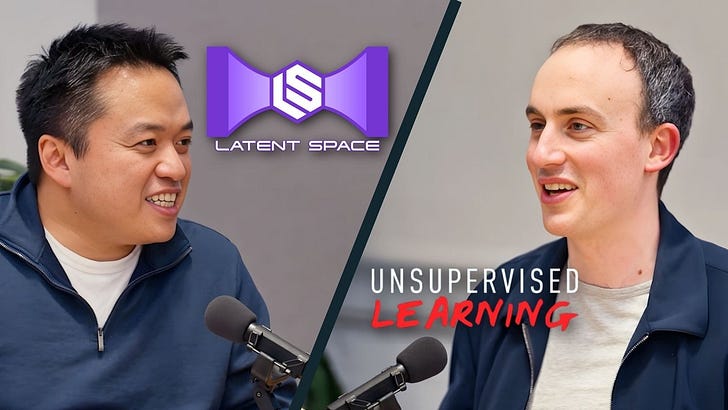
Chris Fregley argues that manually reviewing AI-generated code is slow and ineffective. He has replaced traditional code reviews and unit tests with a focus on robust, continuous evaluation frameworks ("evals") and correctness checks that run in the background, allowing for faster and safer code deployment.

A new paradigm for AI-driven development is emerging where developers shift from meticulously reviewing every line of generated code to trusting robust systems they've built. By focusing on automated testing and review loops, they manage outcomes rather than micromanaging implementation.

It's infeasible for humans to manually review thousands of lines of AI-generated code. The abstraction of review is moving up the stack. Instead of checking syntax, developers will validate high-level plans, two-sentence summaries, and behavioral outcomes in a testing environment.