Get your free personalized podcast brief
We scan new podcasts and send you the top 5 insights daily.
Microsoft is proactively paying higher electricity rates to cover its data centers' power consumption, preventing costs from being passed to consumers. This PR move, timed with political pressure, positions them as a responsible leader and mitigates the growing "not in my backyard" backlash against AI infrastructure, giving them a first-mover advantage.
Related Insights
To overcome local opposition, tech giants should use their massive balance sheets to provide tangible economic benefits to host communities. Subsidizing local electricity bills or funding renewable energy projects can turn residents into supporters, clearing the path for essential AI infrastructure development.
To overcome energy bottlenecks, political opposition, and grid reliability issues, AI data center developers are building their own dedicated, 'behind-the-meter' power plants. This strategy, typically using natural gas, ensures a stable power supply for their massive operations without relying on the public grid.

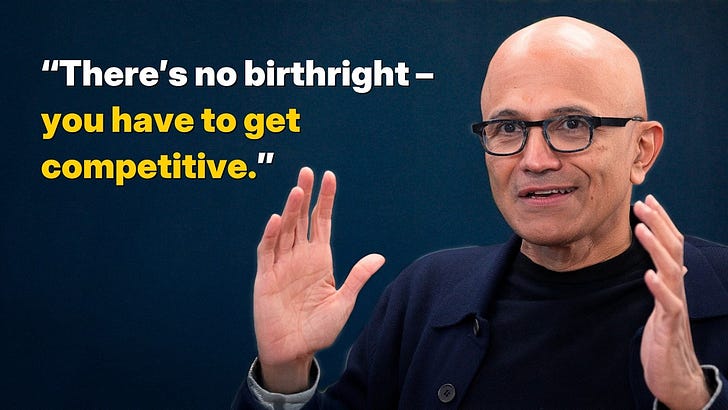
To navigate the massive capital requirements of AI, Nadella reframes the investment in cutting-edge training infrastructure. Instead of being purely reactive to customer demand, a significant portion is considered R&D, allowing for sustained, order-of-magnitude scaling necessary for breakthroughs.
The massive energy demand from AI data centers is causing electricity bills for average Americans to rise significantly. This is fostering a growing public backlash against the technology, regardless of personal use, as evidenced by widespread negative sentiment on social media.

Rather than viewing the massive energy demand of AI as just a problem, it's an opportunity. Politician Alex Boris argues governments should require the private capital building data centers to also pay for necessary upgrades to the aging electrical grid, instead of passing those costs on to public ratepayers.
The massive energy requirements for AI data centers are causing electricity prices to rise, creating public resentment. To counter this, governments are increasingly investing in nuclear power as a clean, stable energy source, viewing it as critical infrastructure to win the global AI race without alienating consumers.
Pundit Sagar Enjeti predicts a major political backlash against the AI industry, not over job loss, but over tangible consumer pain points. Data centers are causing electricity prices to spike in rural areas, creating a potent, bipartisan issue that will lead to congressional hearings and intense public scrutiny.

To combat political attacks linking AI data centers to rising consumer electricity costs, Microsoft launched a five-part community plan. This is a strategic move to preempt regulation and public backlash by proactively funding infrastructure and local initiatives, effectively buying political and social goodwill.

Satya Nadella clarifies that the primary constraint on scaling AI compute is not the availability of GPUs, but the lack of power and physical data center infrastructure ("warm shelves") to install them. This highlights a critical, often overlooked dependency in the AI race: energy and real estate development speed.

Microsoft is addressing the political and public relations fallout from AI data centers driving up local electricity prices. By committing to cover these increased costs, they aim to appease local communities and politicians, gaining a first-mover advantage in managing this growing negative narrative and framing themselves as a responsible partner.