Get your free personalized podcast brief
We scan new podcasts and send you the top 5 insights daily.
Hastings expresses skepticism that middle-power nations can meaningfully compete in AI, even with dedicated national strategies. He compares it to Argentina trying to industrialize against the British Empire, suggesting the power imbalance is too great. Their best bet is to align and hope for favorable treaties.

Related Insights
The US believes a 10x increase in training compute will make its proprietary models 'twice as capable.' This widening performance gap is a strategic lever intended to make aligning with the American AI stack an unavoidable choice for nations seeking competitive advantages, forcing them to overlook sovereignty concerns.

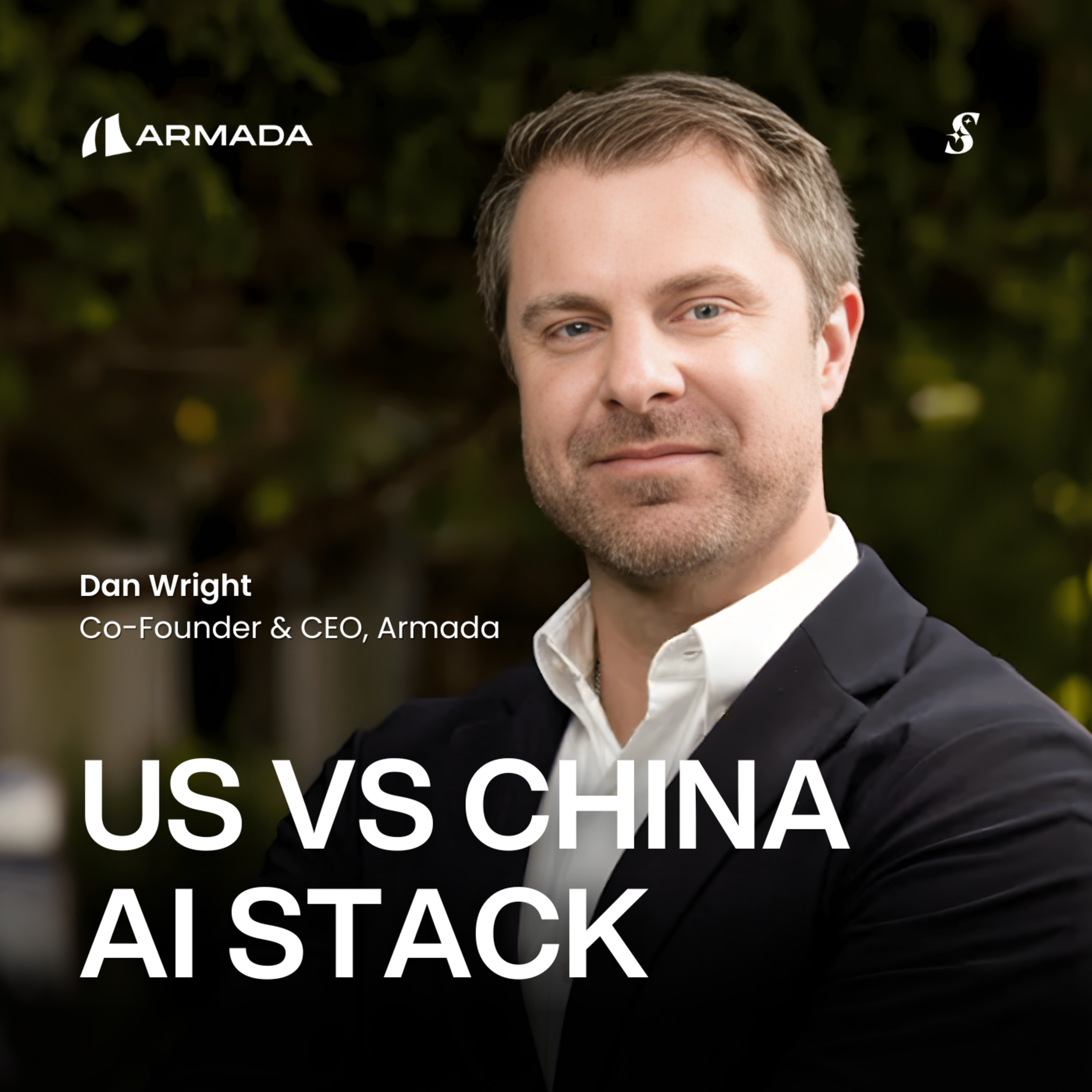
The competition in AI infrastructure is framed as a binary, geopolitical choice. The future will be dominated by either a US-led AI stack or a Chinese one. This perspective positions edge infrastructure companies as critical players in national security and technological dominance.
The White House warns of a "great divergence" where AI-leading nations accelerate growth far beyond others. This same principle applies at a corporate level, creating a massive competitive gap between companies that effectively adopt AI and those that lag behind.
Pausing or regulating AI development domestically is futile. Because AI offers a winner-take-all advantage, competing nations like China will inevitably lie about slowing down while developing it in secret. Unilateral restraint is therefore a form of self-sabotage.

Securing a lead in computing power over rivals is not a victory in itself; it is a temporary advantage. If that time isn't used to master national security adoption and win global markets, the lead becomes worthless. Victory is not guaranteed by simply having more data centers.

The competition for AI supremacy is a two-country race between the US and China, with all other nations playing peripheral roles. This singular dynamic is so powerful that it will consume global capital and force all other geopolitical issues to align around it, defining the next era of international relations.

The US and China have divergent AI strategies. The US is pouring capital into massive compute clusters to build dominant global platforms like ChatGPT (aggregation theory). China is focusing its capital on building a self-sufficient, domestic semiconductor and AI supply chain to ensure technological independence.
![Dylan Patel - Inside the Trillion-Dollar AI Buildout - [Invest Like the Best, EP.442] thumbnail](https://megaphone.imgix.net/podcasts/799253cc-9de9-11f0-8661-ab7b8e3cb4c1/image/d41d3a6f422989dc957ef10da7ad4551.jpg?ixlib=rails-4.3.1&max-w=3000&max-h=3000&fit=crop&auto=format,compress)
The AI competition is not a race to develop the most powerful technology, but a race to see which nation is better at steering and governing that power. Developing an uncontrollable 'AI bazooka' first is not a win; true advantage comes from creating systems that strengthen, rather than weaken, one's own society.

The US is betting on winning the AI race by building the smartest models. However, China has strategically mastered the entire "electric stack"—energy generation, batteries, grids, and manufacturing. Beijing offers the world the 21st-century infrastructure needed to power AI, while Washington focuses on 20th-century energy sources.

Alex Karp argues that while tech companies like to believe in positive-sum outcomes, the geopolitical reality of AI is a zero-sum competition between the U.S., China, and Russia. He highlights the hypocrisy that these same companies operate in a ruthless, zero-sum fashion against their direct competitors.
