Get your free personalized podcast brief
We scan new podcasts and send you the top 5 insights daily.
Unlike early mobile phones which competed against inconvenient payphones, new devices like smart glasses must compete with the smartphone. The bar for adoption is now incredibly high, requiring a breakthrough capability, not just incremental benefits like slightly faster photo-taking or less intrusive audio.

Related Insights
The failure of devices like the Humane Pin demonstrates that mainstream AI wearables must be multi-functional. To succeed, they need to integrate AI into products that already offer core value, such as glasses that take photos or earbuds that play music, rather than being standalone AI gadgets.

The primary obstacle for new AI hardware, from the Humane Pin to OpenAI's upcoming smart speaker, isn't technology but utility. The smartphone is an exceptionally good, all-in-one device. Any new gadget faces an immense challenge in providing enough unique value to justify its existence and persuade users to adopt a new form factor.

The current wave of AI hardware (smartwatches, glasses) is compared to the early 'Internet of Things' era, which was criticized as just 'putting iPads on things.' This suggests a lack of first-principles innovation, with companies embedding AI into existing form factors rather than creating new ones.

The 'Most Advanced Yet Acceptable' (MAYA) principle dictates that successful innovation requires familiarity. Google Glass failed by being too futuristic. Ray-Ban Metas succeed by being 80% familiar (a classic Ray-Ban design) and only 20% surprising (embedded tech), hitting the sweet spot of consumer acceptance.

OpenAI's browser 'Atlas' might only be a 1.1x improvement over Chrome. This marginal gain is insufficient to drive mass adoption, as users require a 5-10x better experience—like ChatGPT was over Google Search—to switch established habits.
Demis Hassabis claims previous smart glasses failed not just due to clunky hardware but because they lacked a compelling use case. He argues that a powerful, seamless AI assistant, integrated into daily life, is the "killer app" that will finally drive adoption for this form factor.

OpenAI's ambition to create an AI device faces the same challenge that defeated Windows Phone: ecosystem lock-in. Without seamless integration of essential apps like Gmail and Instagram, a new device cannot realistically replace the smartphone for consumers, regardless of its AI capabilities.

Snap's core product investment rule is that a new idea must be '10 times better than the next best alternative.' Spiegel cites their early camera glasses as a failure of this principle; they weren't a significant enough improvement over a smartphone or GoPro to justify their existence or command a high price.
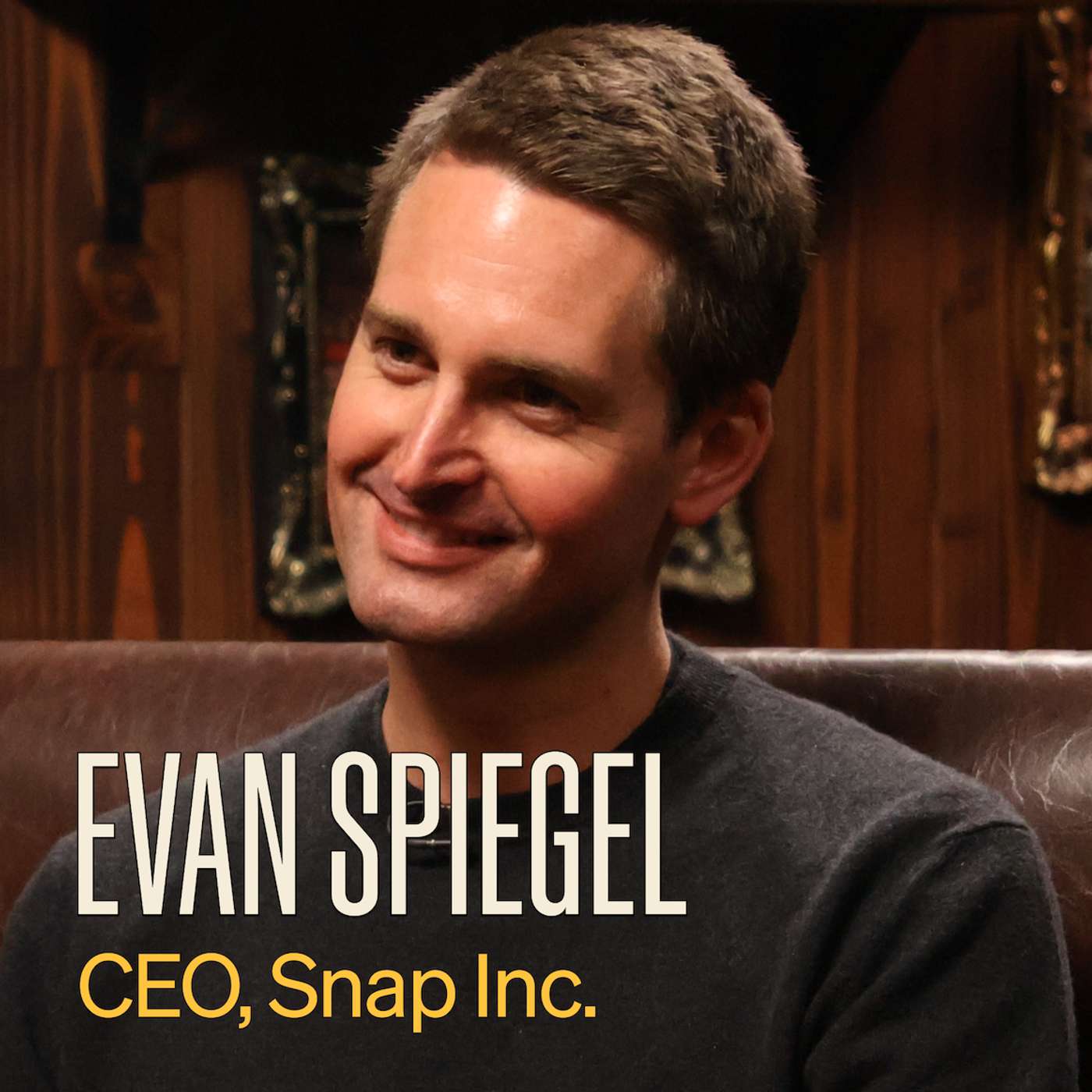
While voice interfaces will grow, the next truly seismic platform shift will be the adoption of AR glasses. This change will be as profound as the transition from television to the smartphone, fundamentally altering how we consume content and interact with the digital world.

While wearable tech like Meta's Ray-Ban glasses has compelling niche applications, it requires an overwhelming number of diverse, practical use cases to shift consumer behavior from entrenched devices like the iPhone. A single 'killer app' or niche purpose is insufficient for mass adoption.
