Get your free personalized podcast brief
We scan new podcasts and send you the top 5 insights daily.
Startups like Anduril are no longer willing to use venture capital to 'work at risk' on government projects while awaiting contracts. As they mature and eye IPOs, they require upfront payment, challenging the Pentagon's recent model of leveraging private funds to accelerate development.

Related Insights
Trae Stephens notes that while pathways for defense startups to get initial R&D funding have improved dramatically, a new valley of death has emerged. The critical challenge is now graduating from smaller, R&D-funded projects to being integrated into the military's massive, multi-billion dollar production and acquisition programs.

Defense tech startup Anduril is disrupting incumbents not with untested technology, but with a novel business model. It uses VC funds to build manufacturing capacity *before* winning large contracts and sources commercial parts to reduce cost and supply chain risk, effectively prioritizing execution over pure tech risk.

The DoD's global R&D share has plummeted from 36% to under 1%, so it can no longer dictate cutting-edge specs. Anduril funds its own R&D to solve a mission, then sells the finished capability, flipping the traditional government-funded, built-to-spec model on its head.

The future IPO of Anduril, a private defense tech firm, is viewed as a critical test for the entire sector. Its performance will signal Wall Street's appetite for a new class of defense startups that have been heavily funded by venture capital with speculative, low-revenue profiles.
Unlike traditional contractors paid for hours, Anduril invests its own capital to build products it believes the government needs. This model incentivizes speed and effectiveness, as profit is tied to successful products, not billable hours. This shifts the financial risk from the taxpayer to the company.
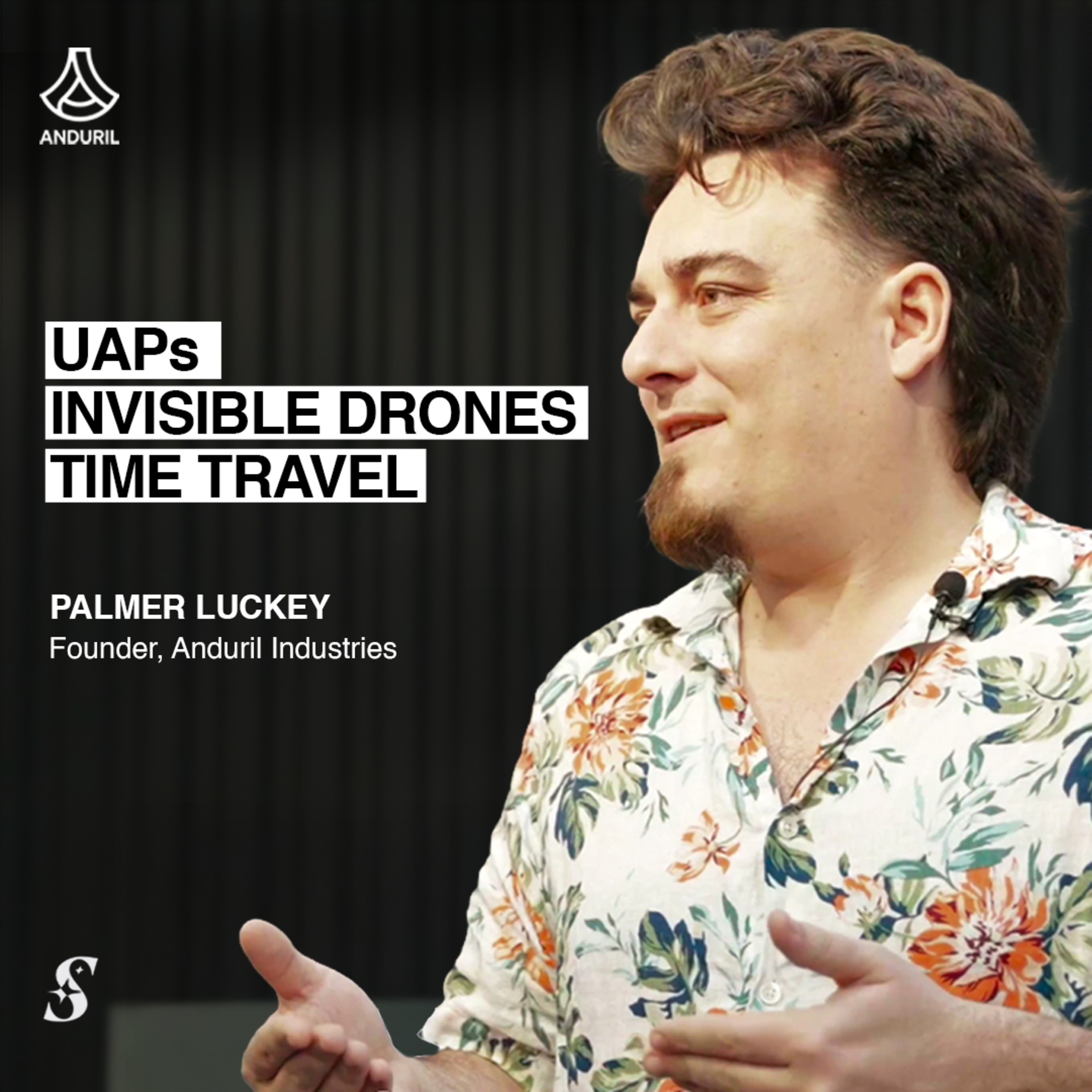
The problem with large defense contractors isn't the companies themselves but an acquisition system that awards contracts before a product is built. This shifts all development risk to the government. The solution is to force companies to invest their own risk capital first.

Unlike traditional contractors paid for time and materials, Anduril invests its own capital to develop products first. This 'defense product company' model aligns incentives with the government's need for speed and effectiveness, as profits are tied to rapid, successful delivery, not prolonged development cycles.

New defense firms like Saronic and Castellion use private capital to build and demonstrate capabilities before a government contract exists. This de-risks new technology and forces engagement from the Department of Defense, moving much faster than traditional procurement cycles allow.

Defense tech firm Anduril's talks to raise funds at a $60 billion valuation reflect its ambition to become a "prime" contractor. The company is no longer just a disruptive upstart; it's actively trying to join the exclusive group of legacy giants like Raytheon and Lockheed that dominate government contracts.
The go-to-market strategy for defense startups has evolved. While the first wave (e.g., Anduril) had to compete directly with incumbents, the 'Defense 2.0' cohort can grow much faster. They act as suppliers and partners to legacy prime contractors, who are now actively seeking to integrate their advanced technology.