Get your free personalized podcast brief
We scan new podcasts and send you the top 5 insights daily.
The antibody-drug conjugate datopotamab deruxtecan (Dato-DXd) has an accelerated FDA approval that extends beyond common EGFR mutations. Its label includes activity in patients with uncommon mutations and exon 20 insertions, based on data from the TREPION-Lung studies, broadening its clinical applicability.

Related Insights
Emerging data indicates that Tarlatamab, a DLL3-targeted therapy, has inferior performance in small cell lung cancer (SCLC) that transformed from EGFR-mutant NSCLC compared to its efficacy in de novo SCLC. This suggests the biological context of transformation impacts treatment response, a critical nuance for this new therapy.

The pharmaceutical industry's focus on rare diseases has intensified, with 57% of all novel drugs approved in 2025 designated as orphan treatments. This is a continued increase from prior years, indicating a strategic shift towards smaller patient populations with high unmet needs, as exemplified by three different drugs for Hereditary Angioedema (HAE) being approved within ten weeks.

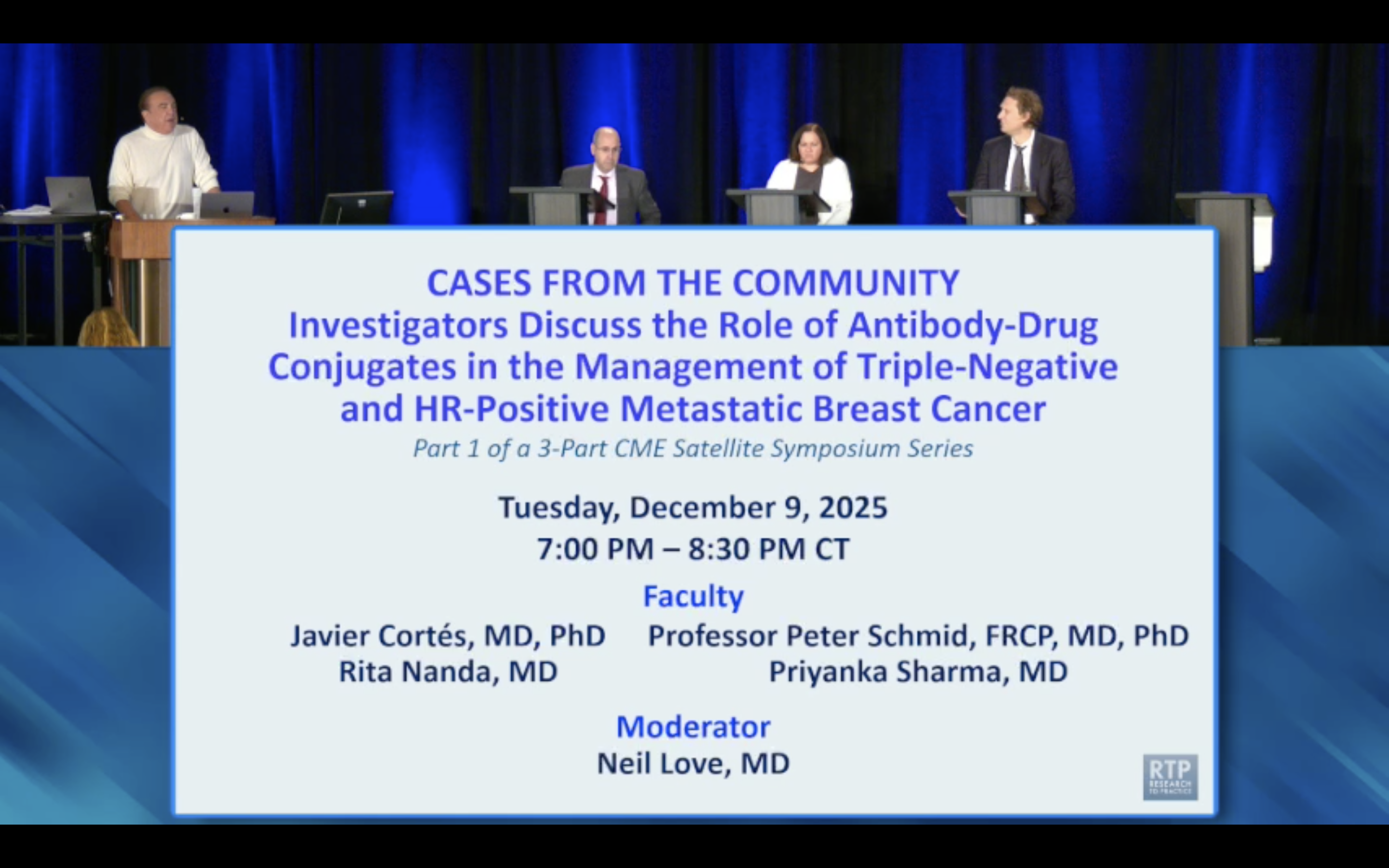
Trastuzumab deruxtecan (TDXD) and datopotamab deruxtecan (Dato-DXd) share the same cytotoxic payload, yet Dato-DXd has a much lower rate of interstitial lung disease (ILD). This indicates the toxicity is driven by the antibody-antigen interaction, not the payload itself.
Data from the ADAURA trial suggests that EGFR-mutated lung cancer patients with detectable ctDNA before starting adjuvant osimertinib are at very high risk of recurrence. This finding supports considering indefinite, lifelong osimertinib for this subgroup, deviating from the standard three-year duration.

In the HARMONY A study, Ivanesimab plus chemotherapy significantly improved progression-free survival in EGFR-mutant non-small cell lung cancer patients. This is notable because prior trials showed that adding standard PD-1 inhibitors to chemotherapy was ineffective for this specific patient population.

Before the LAURA trial, oncologists had strong data for using EGFR TKIs in metastatic and resectable settings but lacked evidence for the unresectable Stage 3 population receiving chemoradiation. LAURA filled this "awkward gap," confirming a long-held suspicion and harmonizing treatment strategy across disease stages.

The new treatment paradigm for HER2-positive lung cancer will likely involve sequencing a TKI like zongertinib first, followed by an antibody-drug conjugate (ADC). Early data suggests that the efficacy of TKIs is significantly reduced when used after an ADC, making the TKI-first approach critical for maximizing patient outcomes.
While TROP2-ADCs are currently approved for later-line lung cancer treatment, active clinical trials are already evaluating them as a potential replacement for traditional chemotherapy in the first-line setting. This represents a significant strategic ambition to shift the entire treatment paradigm for newly diagnosed patients with both non-small cell and small cell lung cancer.
While research pursues mechanism-based strategies (e.g., 4th-gen TKIs) for acquired resistance, recent practical breakthroughs are mechanism-agnostic, like ADCs or chemotherapy combinations. This highlights a pragmatic, broad-spectrum approach to treating progression after frontline osimertinib.

A key strategy for Iterion is combining its Wnt-beta-catenin inhibitor with existing therapies like EGFR-TKIs. Research shows the Wnt pathway is often upregulated as a resistance mechanism to these primary treatments. By blocking this escape route, the combination therapy aims to prevent resistance and improve patient outcomes.
