Get your free personalized podcast brief
We scan new podcasts and send you the top 5 insights daily.
While TROP2-ADCs are currently approved for later-line lung cancer treatment, active clinical trials are already evaluating them as a potential replacement for traditional chemotherapy in the first-line setting. This represents a significant strategic ambition to shift the entire treatment paradigm for newly diagnosed patients with both non-small cell and small cell lung cancer.

Related Insights
Beyond overall response rates, a critical area of excitement for new ADCs in lung cancer is their potential to treat brain metastases. Early data showing hints of intracranial efficacy is a significant point of interest, as this addresses a common and difficult-to-treat site of disease progression, offering a potential advantage over other therapies.
The failure of the concurrent chemo-immuno-radiation approach has not stalled progress. Instead, new clinical trials are actively exploring novel strategies like SBRT boosts, dual checkpoint inhibitors, radiosensitizing nanoparticles, and induction immunotherapy to improve upon the current standard of care.

The panel reviews advanced, second-line ADC trials in China using novel targets and payloads. An expert remarks that these are the drugs and questions the US and Europe may only begin to study in two to three years, signaling a significant shift in the global oncology R&D landscape.

The TROPION-PanTumor01 study showed that patients who progressed on the TROP2-ADC sacituzumab govitecan still achieved responses to a second TROP2-ADC, Dato-DXD. This suggests that targeting the same antigen with a different payload can overcome initial resistance, informing future treatment sequencing.
Rather than moving through distinct lines of therapy, a future strategy could involve an "ADC switch." When a patient progresses on an ADC-IO combination, the IO backbone would remain while the ADC is swapped for one with a different, non-cross-resistant mechanism, adapting the treatment in real-time.
While immunotherapy was a massive leap forward, Dr. Saav Solanki states the next innovation frontier is combining it with newer modalities. Antibody-drug conjugates (ADCs) and T-cell engagers are being used to recruit the immune system into the tumor microenvironment, helping patients who don't respond to current immunotherapies.

The long-standing platinum doublet backbone for frontline SCLC may soon be challenged. The high efficacy of novel agents like antibody-drug conjugates and bispecific antibodies in later lines is prompting trials that consider moving them into the first-line setting, a strategy previously considered "unthinkable."
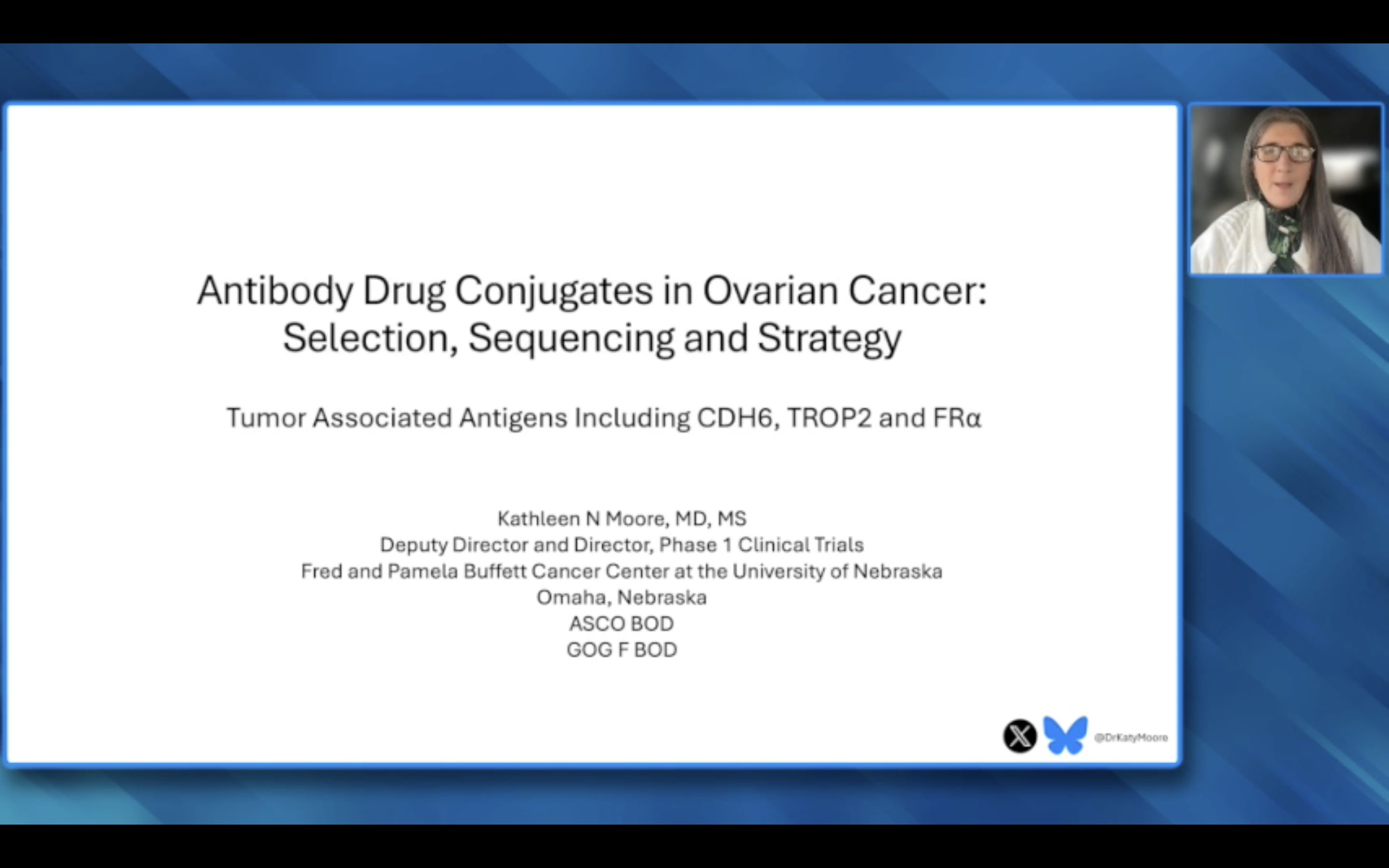
As multiple effective Antibody-Drug Conjugates (ADCs) become available, the primary clinical challenge is no longer *if* they work, but *how* to use them best. Key unanswered questions involve optimal sequencing, dosing for treatment versus maintenance, and overall length of therapy, mirroring issues already seen in breast cancer.
In notoriously hard-to-treat small cell lung cancer (SCLC), ADCs are emerging as a crucial next step. They hold promise for patients who progress after chemoimmunotherapy and newer targeted agents like tarlatamab, a setting where treatment options are currently scarce. ADCs could provide meaningful responses in this significant unmet need.
Despite being advanced targeted therapies, TROP2-directed ADCs present complex safety profiles. Oncologists must manage classic chemotherapy side effects like nausea and cytopenias alongside unique, serious toxicities including stomatitis, ocular issues, and potentially fatal interstitial lung disease, requiring specialized patient monitoring and counseling.