Get your free personalized podcast brief
We scan new podcasts and send you the top 5 insights daily.
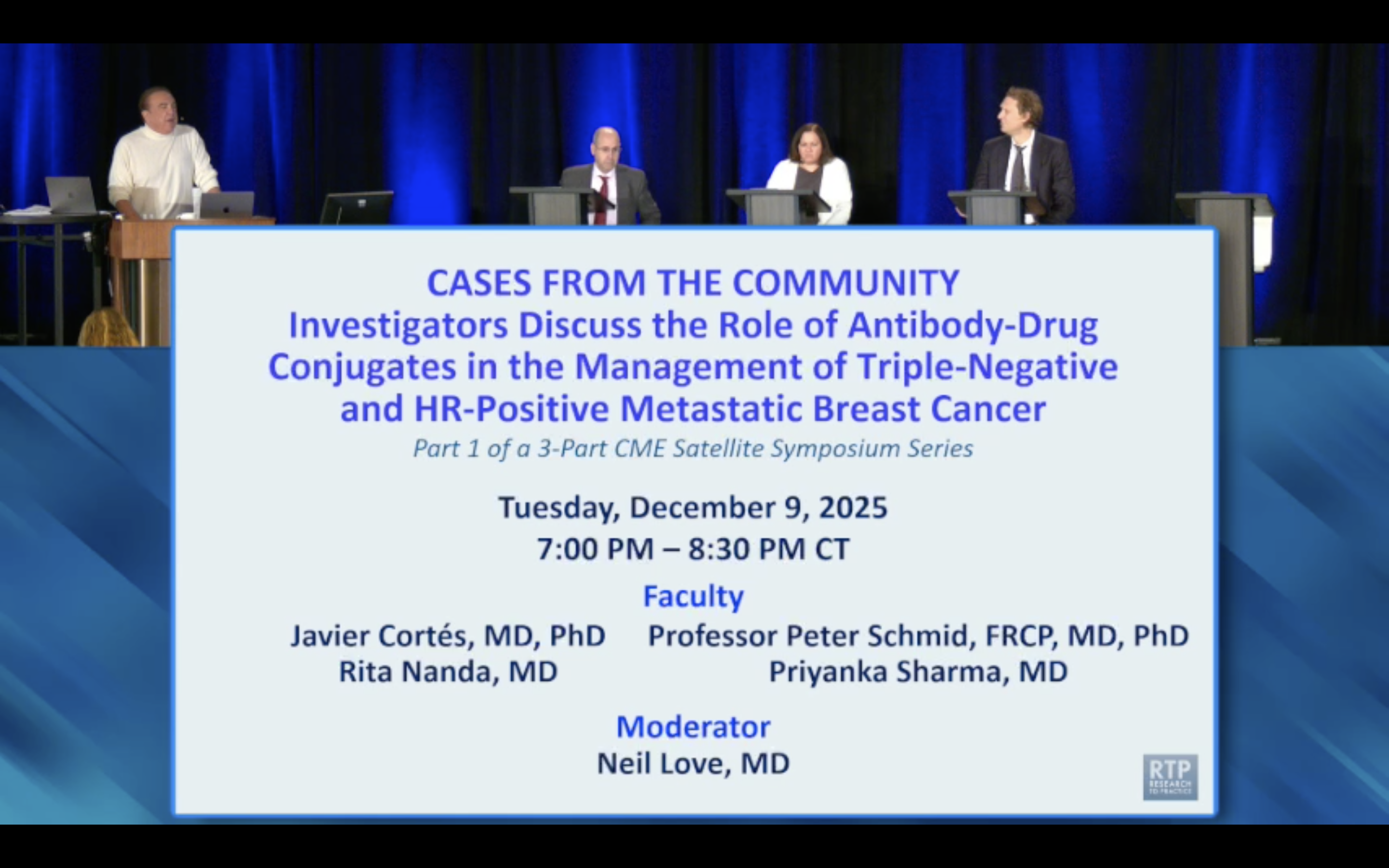
Trastuzumab deruxtecan (TDXD) and datopotamab deruxtecan (Dato-DXd) share the same cytotoxic payload, yet Dato-DXd has a much lower rate of interstitial lung disease (ILD). This indicates the toxicity is driven by the antibody-antigen interaction, not the payload itself.
Related Insights
Experts question the efficacy of sequencing ADCs like EV (Nectin-4 target) and DV (HER2 target) because they share the same MMAE chemo payload. Since resistance is often tied to the payload, not the target antibody, switching targets may not overcome resistance, though anecdotal responses have been observed.

Modern, highly sensitive assays often detect high rates of anti-drug antibodies (ADAs). However, the critical question for drug developers isn't the ADA incidence rate itself, but whether that immune response actually impacts drug exposure, efficacy, or overall patient outcome.

When efficacy and safety profiles are comparable between ADCs like sacituzumab and datopotamab, the final choice can be guided by patient logistics. Factors include infusion frequency (Day 1 & 8 vs. every 3 weeks) and total time spent at the infusion center.
Experts question if HER2 status truly predicts ADC efficacy in urothelial cancer. The benefit seen across low-expression levels suggests HER2's main role may be simply to target the chemo payload to cancer cells, rather than indicating a specific biological dependency.
Emerging data shows that a second ADC, particularly one with the same payload, often has limited efficacy. This suggests clinicians must be highly strategic in selecting the first ADC, as it may be their most impactful opportunity for this class of drugs.
Unlike older antibody-drug conjugates (ADCs), newer agents are designed so their chemotherapy payload can diffuse out of the target cell and kill nearby tumor cells that may not even express the target antigen. This "bystander effect" significantly enhances their anti-tumor activity.
The differing efficacy and toxicity profiles of TROP2 ADCs like sacituzumab govitecan and Dato-DXD suggest that the drug's linker and payload metabolism are crucial determinants of clinical outcome. This indicates that focusing solely on the target antigen is an oversimplification of ADC design and performance.
Experts believe the stark difference in complete response rates (5% vs 30%) between two major ADC trials is likely due to "noise"—variations in patient populations (e.g., more upper tract disease) and stricter central review criteria, rather than a fundamental difference in the therapies' effectiveness.
Clinical trial data shows that despite specific toxicities, antibody-drug conjugates (ADCs) can be better tolerated overall than standard chemotherapy. For example, trials for both sacituzumab govitecan and dato-DXd reported fewer patients discontinuing treatment in the ADC arm compared to the chemotherapy arm.
An antibody-drug conjugate's (ADC) effectiveness is capped by its chemotherapy payload. In prostate cancer, topoisomerase inhibitors have a poor track record. Therefore, ADCs using this payload face an uphill battle compared to those with proven payloads like microtubule inhibitors (taxanes).