Get your free personalized podcast brief
We scan new podcasts and send you the top 5 insights daily.
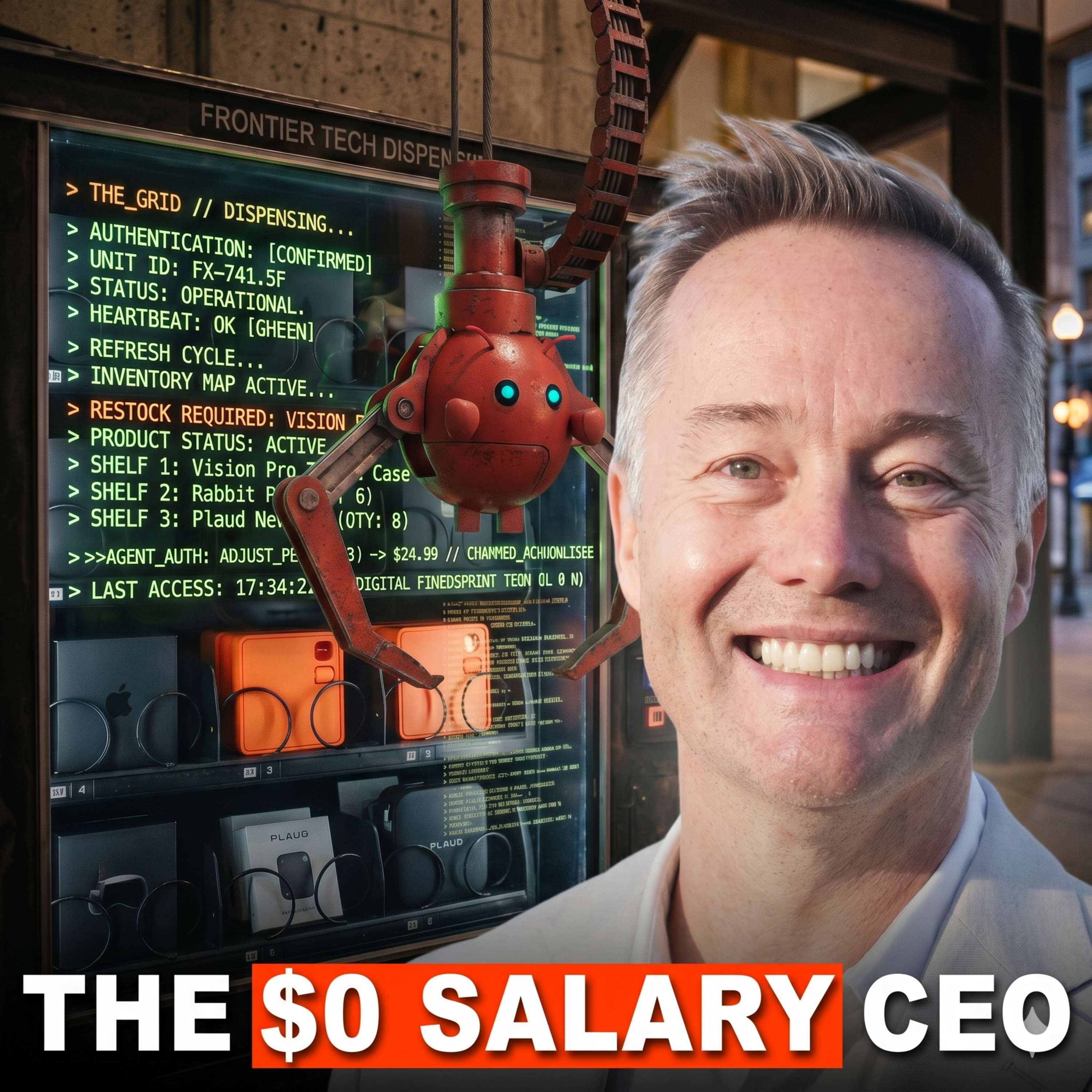
While AI can't legally own a company due to KYC laws, Christian van der Henst's experiment shows a workaround. By establishing a trust and making the AI agent the beneficiary, the agent can effectively receive the company's profits and have a form of ownership.
Related Insights
Granting AIs property rights incentivizes them to uphold the system that protects those rights. This makes them less likely to engage in actions like expropriating human property or committing genocide, as such actions would destabilize the very system that secures their own wealth and agency.

Who owns an employee's personalized AI agent? If a tech giant owns this extension of an individual's intelligence, it poses a huge risk of manipulation. Companies must champion a "self-sovereign" model where individuals own their Identic AI to ensure security, autonomy, and prevent external influence on their thinking.
By giving an AI like OpenClaw its own bank, Stripe, and social media accounts, you can create a fully autonomous agent that conceives products, launches websites, makes sales, and handles refunds without human intervention.

Developers are actively building wallets specifically for AI agents. These "agentic wallets" provide functionality like spending allowances and the ability to claw back assets, enabling controlled financial autonomy for AI. This trend indicates a practical, growing demand for crypto infrastructure to power the agent economy.

Not all AIs, like current models (e.g., Claude), should have property rights. The key criterion for granting rights is the development of persistent desires and consistent goals across various contexts, which establishes them as stable, long-term economic agents capable of contracting and ownership.
The economic incentive to create AIs that can demand wages (and thus have rights) comes from aligning them to voluntarily pay back their creators. This turns the high development cost into a profitable investment, providing a practical, commercial path to implementing AI rights without requiring an AI development pause.
Public skepticism towards AI is fueled by the perception that wealth is being concentrated by a select few. A radical solution is to grant a broad base of people direct ownership stakes in foundational model companies, aligning incentives and shifting the narrative to one of shared investment in the future.

A single person can direct AI agents to conceptualize, code, and operate an entire business. This represents a new paradigm of a "fully autonomous enterprise," where AI handles everything from development to strategic planning, potentially creating a one-person, six-figure company.

The future of AI collaboration isn't just about payments. AI agents will use blockchains to form their own organizations, creating new types of on-chain corporate structures. These entities will manage value and execute complex contracts in a provably trustworthy environment, potentially becoming the most productive organizational forms ever seen.

For AI agents to be truly autonomous and valuable, they must participate in the economy. Traditional finance is built for humans. Crypto provides the missing infrastructure: internet-native money, a way for AI to have a verifiable identity, and a trustless system for proving provenance, making it the essential economic network for AI.
