Get your free personalized podcast brief
We scan new podcasts and send you the top 5 insights daily.
After the Cold War, the Navy prioritized efficiency with a standardized Super Hornet air wing, sacrificing the specialized long-range capabilities of aircraft like the A-6. To counter modern threats, it's now diversifying again, using unmanned aircraft like the MQ-25 refueler and combat drones to restore range and relevance.

Related Insights
Warfare has evolved to a "sixth domain" where cyber becomes physical. Mass drone swarms act like a distributed software attack, requiring one-to-many defense systems analogous to antivirus software, rather than traditional one-missile-per-target defenses which cannot scale.

The conflict in Ukraine exposed the vulnerability of expensive, "exquisite" military platforms (like tanks) to inexpensive technologies (like drones). This has shifted defense priorities toward cheap, mass-producible, "attritable" systems. This fundamental change in product and economics creates a massive opportunity for startups to innovate outside the traditional defense prime model.

The removal of Maduro was a technological showcase, employing cyber tools to knock out power and air defenses, communications jamming, and suicide drones. This demonstrates a significant evolution in U.S. military capabilities beyond conventional special operations.

The proliferation of drones is fueled by consumer electronics. Companies like Qualcomm and Nvidia provide powerful "system on a chip" components and even reference designs, making it easy for non-state actors and smaller nations to build and deploy advanced military hardware that was previously inaccessible.
Aircraft carriers replaced battleships as the centerpiece of naval power because their planes could strike targets from farther away than any ship's guns. This "range advantage" principle is now being challenged by land-based anti-ship ballistic missiles that can outrange carrier air wings, questioning the carrier's modern relevance.
Russia's use of cheap drones creates a significant economic and strategic challenge for NATO. The current defensive approach is financially unsustainable, as seen when Poland used a million-dollar missile on a cheap drone. This asymmetry is forcing Europe to develop new, low-cost interception methods, such as a continent-wide "drone wall".
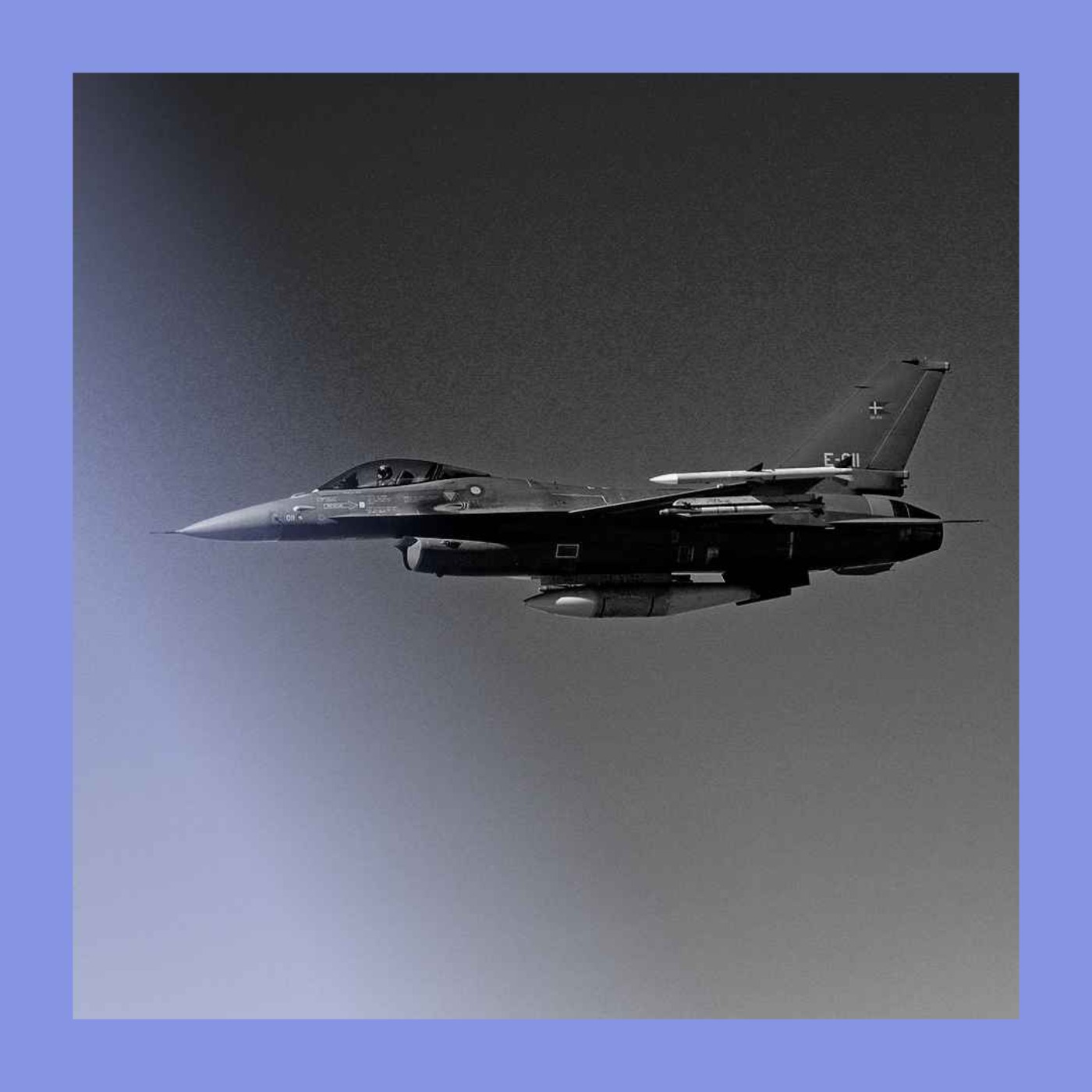
The DoD's critical tech priorities, like hypersonics and directed energy, focus on scaling. The goal is to transform expensive, "exquisite" systems into cheaper, mass-producible assets, shifting the cost-benefit analysis of modern warfare.

Military balloons, a technology from the 1700s, are making a high-tech comeback. Armed forces are developing them as cost-effective platforms for surveillance, guiding munitions, and even deploying armed drones behind enemy lines. They fill a strategic gap between traditional aircraft and satellites, especially for persistent, low-altitude surveillance.

The war in Ukraine has evolved from a traditional territorial conflict into a "robot war," with drones dominating the front lines. This real-world battlefield is accelerating innovation at an "unbelievable" pace, driving new solutions for secure communications and autonomous targeting, providing critical lessons for US drone strategy.

The rise of drones is more than an incremental improvement; it's a paradigm shift. Warfare is moving from human-manned systems where lives are always at risk to autonomous ones where mission success hinges on technological reliability. This changes cost-benefit analyses and reduces direct human exposure in conflict.