Get your free personalized podcast brief
We scan new podcasts and send you the top 5 insights daily.
Hedge fund titan Greg Jensen proposes a stringent regulatory framework for AI. He suggests treating companies that control significant compute resources (e.g., over 5%) like major banks, subjecting them to intense oversight and caps to mitigate systemic risk.

Related Insights
PwC expects US government efforts to regulate AI will focus on tangible, physical infrastructure like computer chips and energy production. This approach is more practical and easier to enforce than attempting to regulate software and models themselves, which are harder to track and control globally.
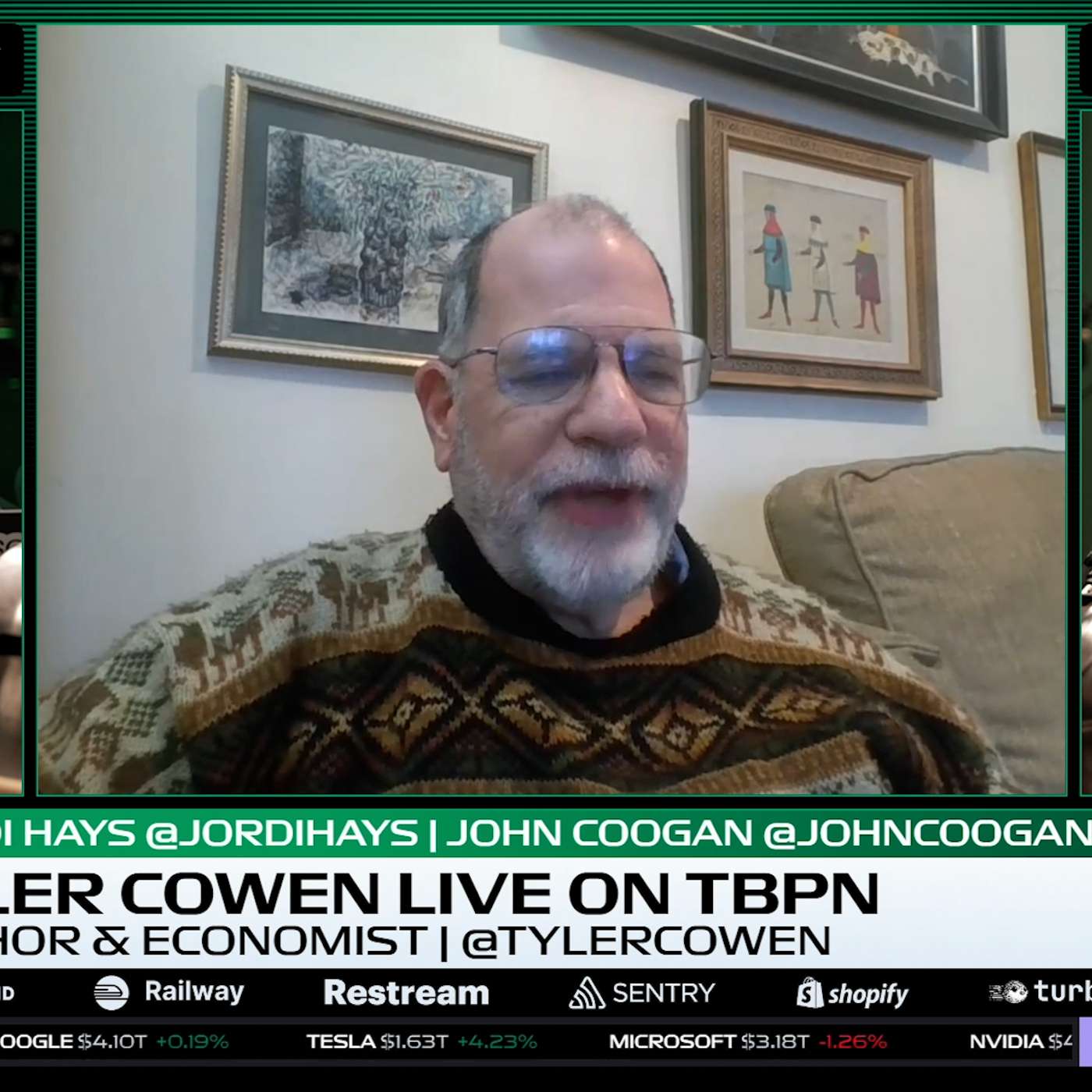
The Fed's most critical future task is not traditional monetary policy but prudential supervision of AI in finance. The Fed chair must lead the effort to understand and create oversight for novel systemic risks emerging from AI adoption by financial institutions, rather than getting distracted by unrelated political issues like green energy.
Socher argues against regulating AI by limiting computational power (flops), comparing it to slowing the internet to prevent illegal content sharing. He advocates for regulating specific harmful applications (like an uncertified AI surgeon) rather than the underlying technology of intelligence itself.

The massive CapEx driving the entire AI, semiconductor, and tech economy comes from only seven firms: Google, Meta, Microsoft, Amazon, OpenAI, Anthropic, and Oracle. This extreme concentration creates a systemic risk, where the spending decisions of a few CEOs can impact the whole market.
Powerful AI models pose a systemic risk to the global economy. To manage this, the world needs a technocratic body like the Financial Stability Board to identify and respond to AI threats independently from geopolitics.

Traditional regulation is ill-equipped for AI's complexity and opacity. The podcast proposes a new model inspired by the Federal Reserve's oversight of banks: embedding technically-expert supervisors full-time inside major AI labs. This would allow for proactive monitoring of internal risk models and decisions, rather than just reacting to disasters after they occur.

According to BlackRock's CEO, AI compute power is so scarce and critical that it will evolve into a financialized asset. He foresees futures markets where companies can trade compute capacity like oil or electricity, creating a new asset class for investment, speculation, and hedging in the AI economy.

Tyler Cowen argues the Federal Reserve Chair should use their influence to focus on the prudential supervision of AI in the financial system. This involves assessing new systemic risks and updating oversight functions, a mandate more appropriate for the central bank than politically charged topics like green energy, which erode its political capital.

Unlike internet businesses with near-zero marginal costs, every AI query incurs significant compute and energy expenses. Because AI relies heavily on national infrastructure like the power grid, the government has a more defensible economic argument for demanding an equity stake.

A straightforward regulatory step would be to hold AI companies legally responsible for any crimes their models commit. This simple shift in liability would force labs to slow down and prioritize safety, as they would be unwilling to deploy models they cannot fully control.
