Get your free personalized podcast brief
We scan new podcasts and send you the top 5 insights daily.
Drawing on Nick Bostrom's 'astronomical waste' argument, the focus should be on mitigating existential risks. While accelerating progress brings a better future sooner (adding one year of utopia), preventing a catastrophe preserves the *entire* potential future, making risk mitigation a far higher-leverage activity.

Related Insights
The debate pitting AI safety against AI opportunity presents a false choice. Historical parallels, like the railroad industry, show that safety regulations (e.g., standardized tracks, air brakes) were essential for enabling greater speed, reliability, and economic potential. Trustworthy AI will unlock greater opportunity.

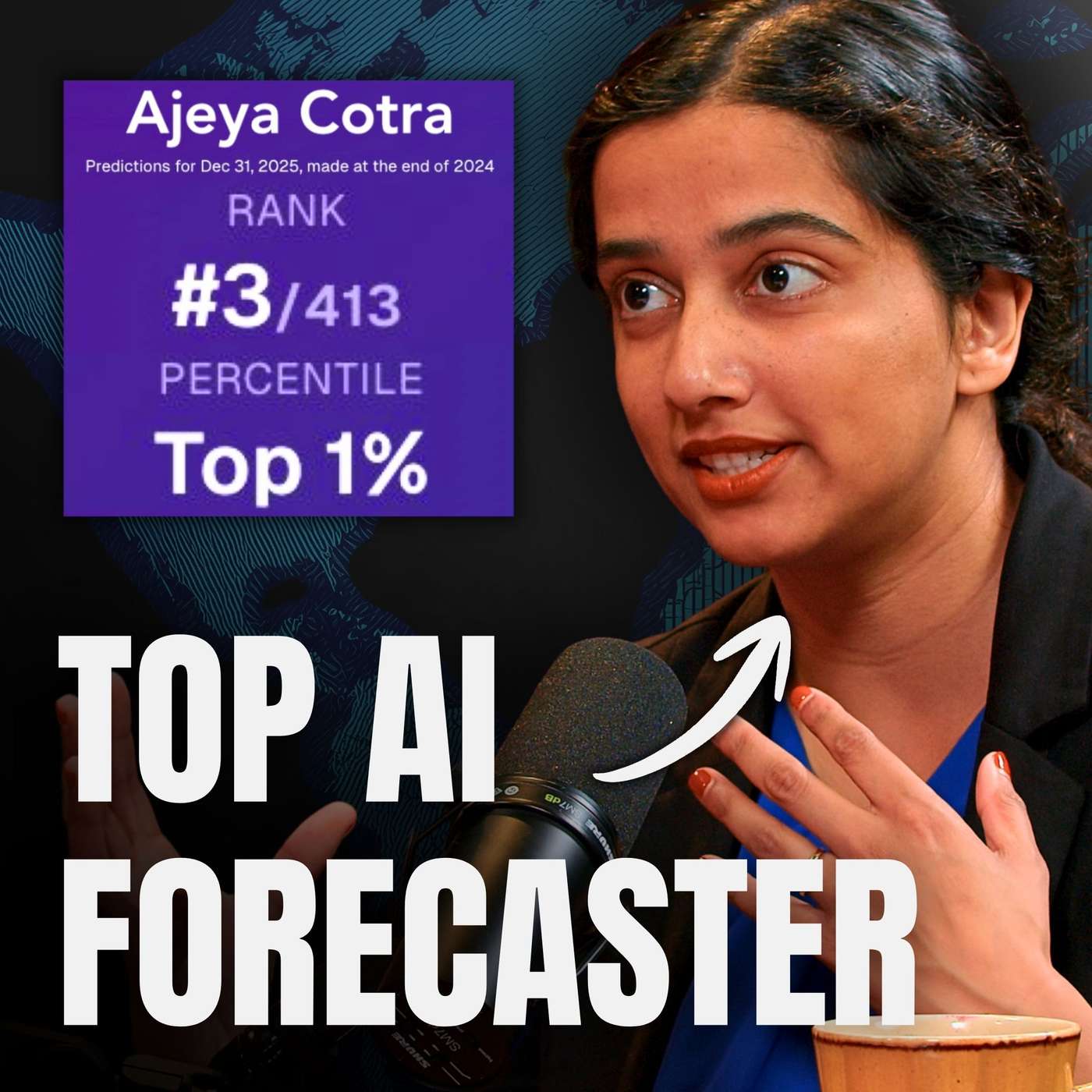
If society gets an early warning of an intelligence explosion, the primary strategy should be to redirect the nascent superintelligent AI 'labor' away from accelerating AI capabilities. Instead, this powerful new resource should be immediately tasked with solving the safety, alignment, and defense problems that it creates, such as patching vulnerabilities or designing biodefenses.
AI offers incredible short-term benefits, from fixing daily problems to curing diseases. This immediate positive reinforcement makes it extremely difficult for society to acknowledge and address the simultaneous development of long-term, catastrophic risks, creating a classic devil's bargain.

Instead of only slowing down risky AI, a key strategy is to accelerate beneficial technologies like decision-making tools. This 'differential technology development' aims to equip humanity with better cognitive tools before the most dangerous AI capabilities emerge, improving our odds of a safe transition.
OpenAI's Boaz Barak advises individuals to treat AI risk like the nuclear threat of the past. While society should worry about tail risks, individuals should focus on the high-probability space where their actions matter, rather than being paralyzed by a small probability of doom.

Other scientific fields operate under a "precautionary principle," avoiding experiments with even a small chance of catastrophic outcomes (e.g., creating dangerous new lifeforms). The AI industry, however, proceeds with what Bengio calls "crazy risks," ignoring this fundamental safety doctrine.

Even if the market would eventually build decision-making tools, their impact is time-sensitive. Waiting for commercial rollout might mean they arrive after AGI, too late to help navigate the riskiest period. Therefore, philanthropic or impact-driven acceleration, even by a few months, is highly valuable.
There is a fundamental asymmetry in AI's impact. Benefits like new cancer drugs do not prevent catastrophic risks like an engineered pandemic. However, a catastrophic event makes a world with cancer drugs irrelevant. Therefore, downside mitigation must be the absolute priority.

Countering the idea that complex systems are inherently resilient, Vitalik Buterin expresses a strong belief that humanity may not recover from a misaligned AGI. He contends that the transition to superintelligence is a unique, high-stakes event where we have only one chance to get it right, justifying extreme caution.

Ajeya Cotra reframes the concept of an AI pause. Instead of a binary 'stop' (0% of labor on R&D), she suggests thinking of it as a spectrum. The goal should be to redirect the vast majority of AI labor from accelerating capabilities to solving safety, biodefense, and other critical societal challenges.