Get your free personalized podcast brief
We scan new podcasts and send you the top 5 insights daily.
Buying best-in-class technology does not guarantee business performance if an organization lacks the operational maturity to handle it. Research benchmarking top performers by revenue per employee reveals that misalignment between technological capabilities and organizational maturity leads to overbuilt stacks. Having advanced software without the matching operational skills or processes wastes investment, proving that stacks must be aligned to the organization rather than buying for an idealized company.

Related Insights
While 85% of organizations add AI as a capability layer and 30% use it to replace SaaS functionality, doing so without solid foundational data integration creates risks. If an enterprise has data silos or poor handling of unstructured data, AI will simply scale the wrong processes faster. Achieving real gains requires fixing underlying architecture and redesigning workflows around human judgment rather than rushing into tool replacement.
Choosing a marketing platform should be driven by your team's existing skill set and ability to deploy features quickly, not by the vendor's claimed specialization in your industry. A well-utilized, simpler tool will always outperform a complex, "category-leading" platform that your team struggles to implement and adopt.

Brands switching core marketing platforms like ESPs or CRMs every few years are often mistaken. The grass is "half dead everywhere." The high hidden costs of migration, consultants, and retraining usually negate perceived benefits, as the core issues are typically with people, process, and data—not the tools themselves.
A common GTM pitfall is purchasing software before having a well-defined strategy and a clear problem to solve. This leads to underutilized tools and poor ROI, as vendors are incentivized to sell you a problem you may not have. Strategy must precede technology.

The most successful marketing teams don't just "bolt on" AI tools. They fundamentally re-examine and redesign their core processes and team structures to leverage AI for optimization. The critical skill is strategic orchestration of work, not just proficiency with a specific AI application.
Historically, the most successful technology companies, like Snowflake and MongoDB, pair the greatest technologists with the greatest sales force. In the competitive AI market, having a superior product alone is not enough. A world-class go-to-market organization is a required counterpart, not a nice-to-have.

Most brands significantly underutilize their marketing tools, tapping into only about 30% of their capabilities. This suggests that the trend of platforms consolidating to become "all-in-one" solutions is often inefficient, as teams lack the time and resources to deploy every new feature, especially when they are clunky "bolt-ons" from acquisitions.
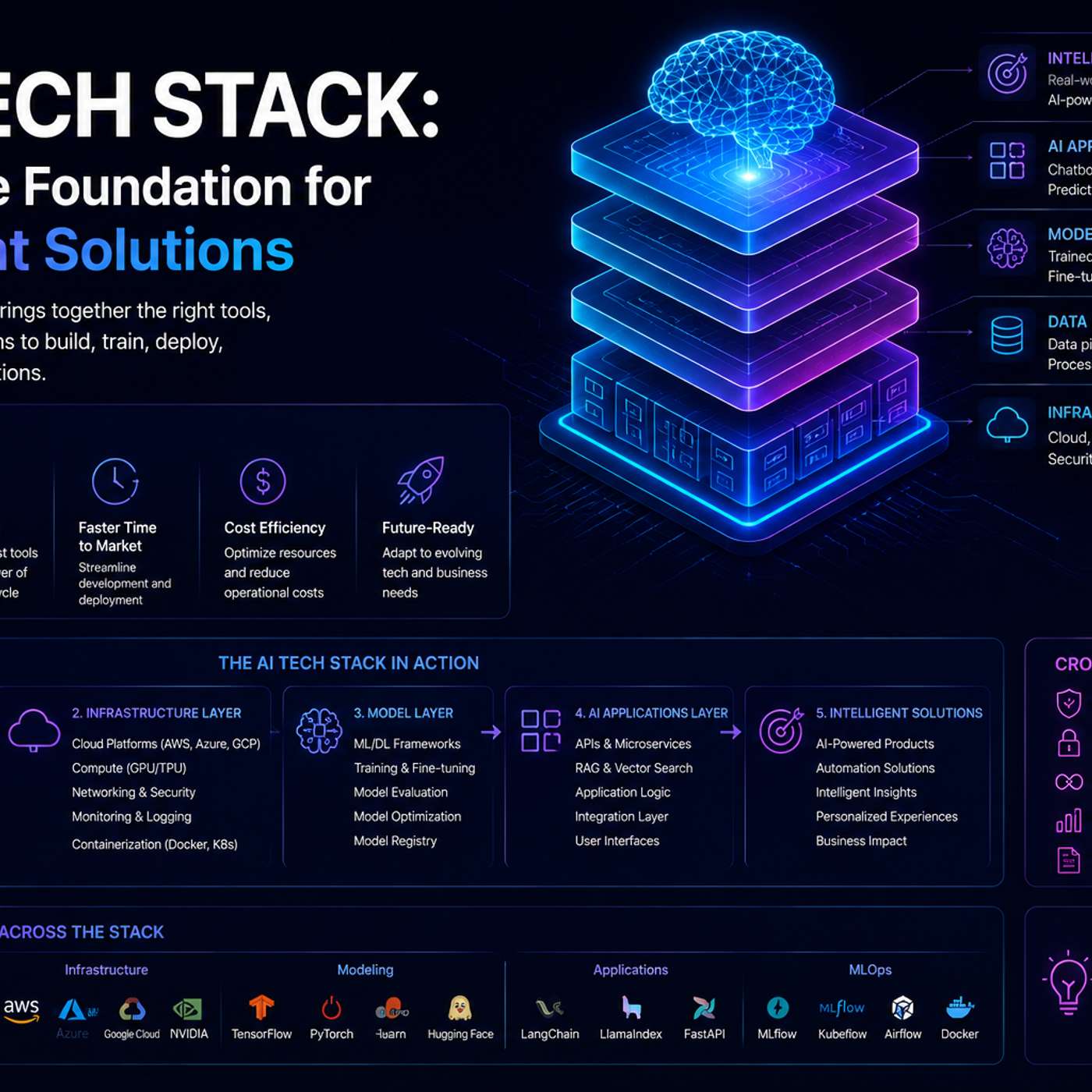
When choosing an AI tech stack, prioritize your team's existing skills over the allure of cutting-edge tools. Adopting complex new technologies without relevant expertise can create significant productivity bottlenecks, negating any potential feature advantages and stalling innovation.
The selection process for marketing technology often goes wrong when decision-makers are seduced by flashy, new features they may never use. This is exacerbated by excluding daily, hands-on users from the evaluation, leading to a tool that doesn't fit the team's actual workflow and needs.

Investing in organizational maturity does not deliver universal returns across all martech categories. In marketing automation, the software handles core tasks like segmentation and lead scoring, meaning baseline operational skills suffice while technological capability drives value. Conversely, commoditized tools like email marketing require high operational expertise in deliverability, authentication, and list hygiene to extract value. Outperforming brands selectively allocate maturity investments based on category characteristics.