Get your free personalized podcast brief
We scan new podcasts and send you the top 5 insights daily.
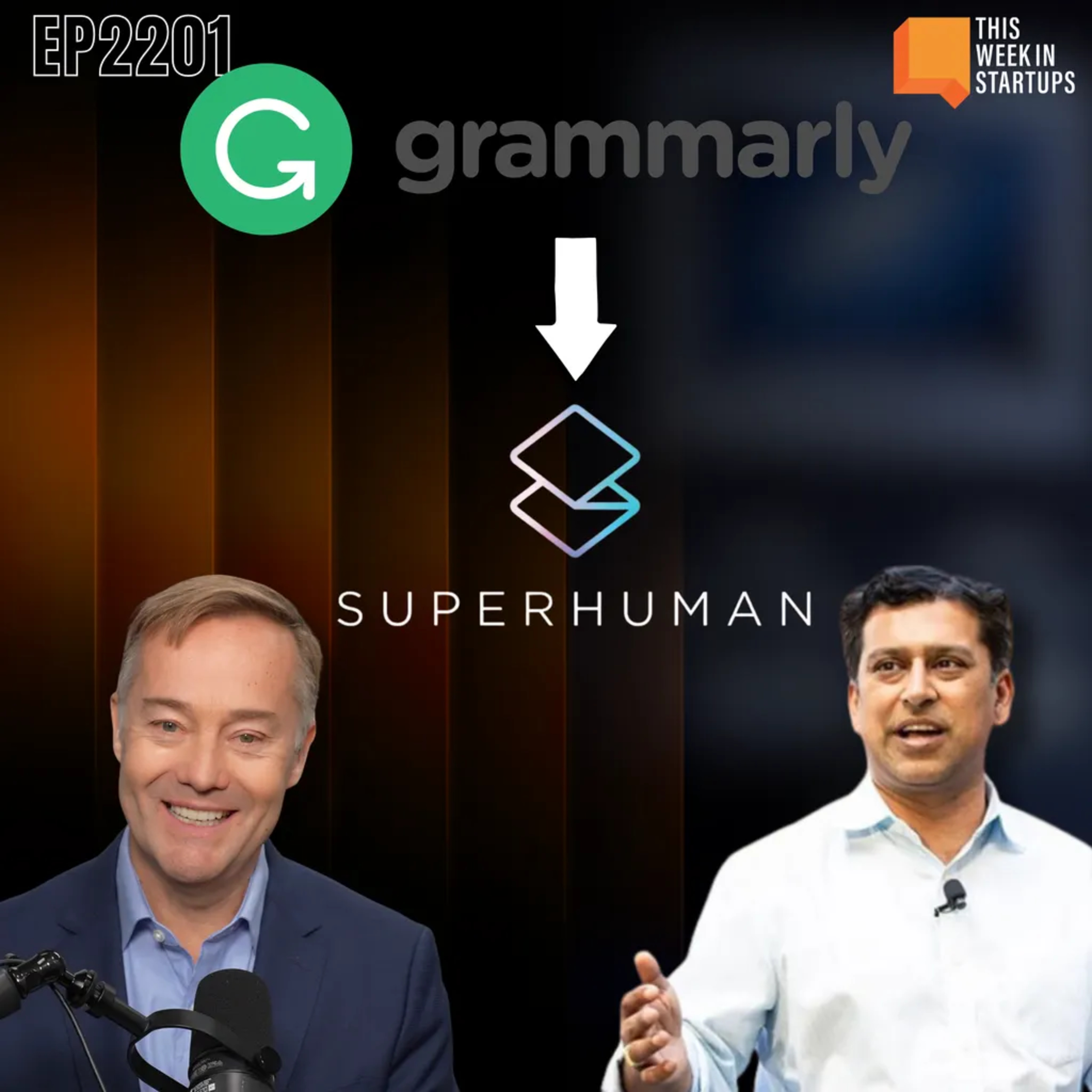
Grammarly's rebrand to Superhuman represents a strategic shift from a single-feature product to an ambitious platform. Elevating the "Superhuman" sub-brand to the parent signals a broader mission of empowering human potential across various tasks, not just correcting grammar. The key is focusing on "human" empowerment.
Related Insights
A rebrand should be viewed as building the fundamental foundation of a business. Without it, growth attempts are superficial and temporary. With a solid brand, the company has a stable base that can support significant scaling and prevent the business from hitting a growth ceiling.

Don't rebrand for the sake of it. A successful rebrand should be a deliberate move to signal a fundamental shift in your business, such as an expansion, a new mission, or a deeper commitment to core values like sustainability. It's an external reflection of an internal change.

Meta's rebrand from Facebook, much like Google's to Alphabet, was not just a name change. It was a strategic move to signal to both employees and the market that the company's ambitions extend beyond its original core product, creating the space and permission to build entirely new business lines.

Grammarly has rebranded its corporate entity to Superhuman to reflect its broader mission. It reframes its core technology as an "assist" platform that proactively embeds AI into users' workflows, contrasting with "chat" interfaces (like ChatGPT) and "do" agents. Its new 'Go' product opens this platform to any AI agent, not just writing assistants.
A successful rebrand doesn't create a new personality; it amplifies the company's true, existing identity. Just as money magnifies a person's character, a strong brand makes a company's core values—like community involvement—bigger, louder, and more public, forcing them to be more intentional.
Warp's explosive growth wasn't just about adding AI; it was about reframing their identity. The turning point came when they stopped being a "terminal with AI features" and became an "agentic development environment." This strategic repositioning made AI the core value proposition, not an add-on, which unlocked rapid market adoption.

The ultimate PLG companies are consumer brands like shampoo, which sell on brand affinity, not commoditized features. As software becomes more commoditized, B2B companies must similarly build a strong brand theme that inspires users to associate with them, creating a more durable moat than features alone.

After years of study, Grammarly's leadership concluded that the definition of "better writing" is entirely situational. The most critical first step is not grammar, but clarifying the communication's goal—whether it's to inspire action, change an opinion, or simply inform—before writing a single word.
Reposition your branding efforts away from self-glorification ("personal branding") and toward elevating your entire market ("market eminence"). This focus on industry-wide improvement attracts a wider range of stakeholders, including partners, investors, and acquirers, who are drawn to a mission larger than just you.

Branding is not just about reflecting a company's past; it can be a forward-looking tool for change. By defining a new, aspirational identity, a rebrand provides a clear path and a public commitment, guiding the organization to evolve and actively become the company it wants to be.