Get your free personalized podcast brief
We scan new podcasts and send you the top 5 insights daily.
The massive constellation of Starlink satellites, by emitting and receiving radio waves, can function as a global phased-array radar system, potentially identifying objects like stealth aircraft from an orbital vantage point.

Related Insights
A leaked Russian proposal outlines a plan to divert Starlink-equipped drones for Iranian use against US forces in the Middle East. The strategy aimed to exploit the region's lack of geofencing to cause significant disruption before SpaceX could inevitably cut off access, turning a commercial technology into a temporary, high-impact weapon.

Reliable, high-speed internet is no longer a luxury but a baseline expectation in private aviation. The introduction of Starlink has made it a "game changer" to the point where clients will turn down a flight if the aircraft isn't equipped with it, prioritizing productivity and connectivity.

Following predictions from Jeff Bezos and investments from Eric Schmidt, Elon Musk has entered the space-based data center race. He stated that SpaceX will leverage its existing Starlink V3 satellites, which already have high-speed laser links, to create an orbital cloud infrastructure, posing a significant challenge to startups in the sector.

Skepticism around orbital data centers mirrors early doubts about Starlink, which was initially deemed economically unfeasible. However, SpaceX drastically reduced satellite launch costs by 20x, turning a "pipe dream" into a valuable business. This precedent suggests a similar path to viability exists for space-based AI compute.

Starlink is considered the single most critical technology in the war, providing a resilient communication backbone that circumvents Russian electronic warfare. It enables command, control, and data streaming for nearly all of Ukraine's unmanned systems, from small reconnaissance drones to large ground and naval vehicles.

In a world with increasing government efforts to control information, a space-based communication network like Starlink is strategically vital. It serves as a 'backup for civilization,' ensuring information flow cannot be completely restricted by terrestrial governments.
Space telescopes were designed to overcome atmospheric distortion, but they are now threatened by the explosive growth of satellite mega-constellations like Starlink. The light pollution from tens of thousands of low-orbit objects is beginning to contaminate a majority of images, undermining the effectiveness of humanity's most advanced astronomical tools.

Contrary to being a new trend, AI has long been fundamental to space operations. Due to communication latency and bandwidth limits, satellites required semi-autonomous capabilities for navigation and collision avoidance from the beginning. The next evolution is AI-driven edge computing, where satellites analyze data in orbit.

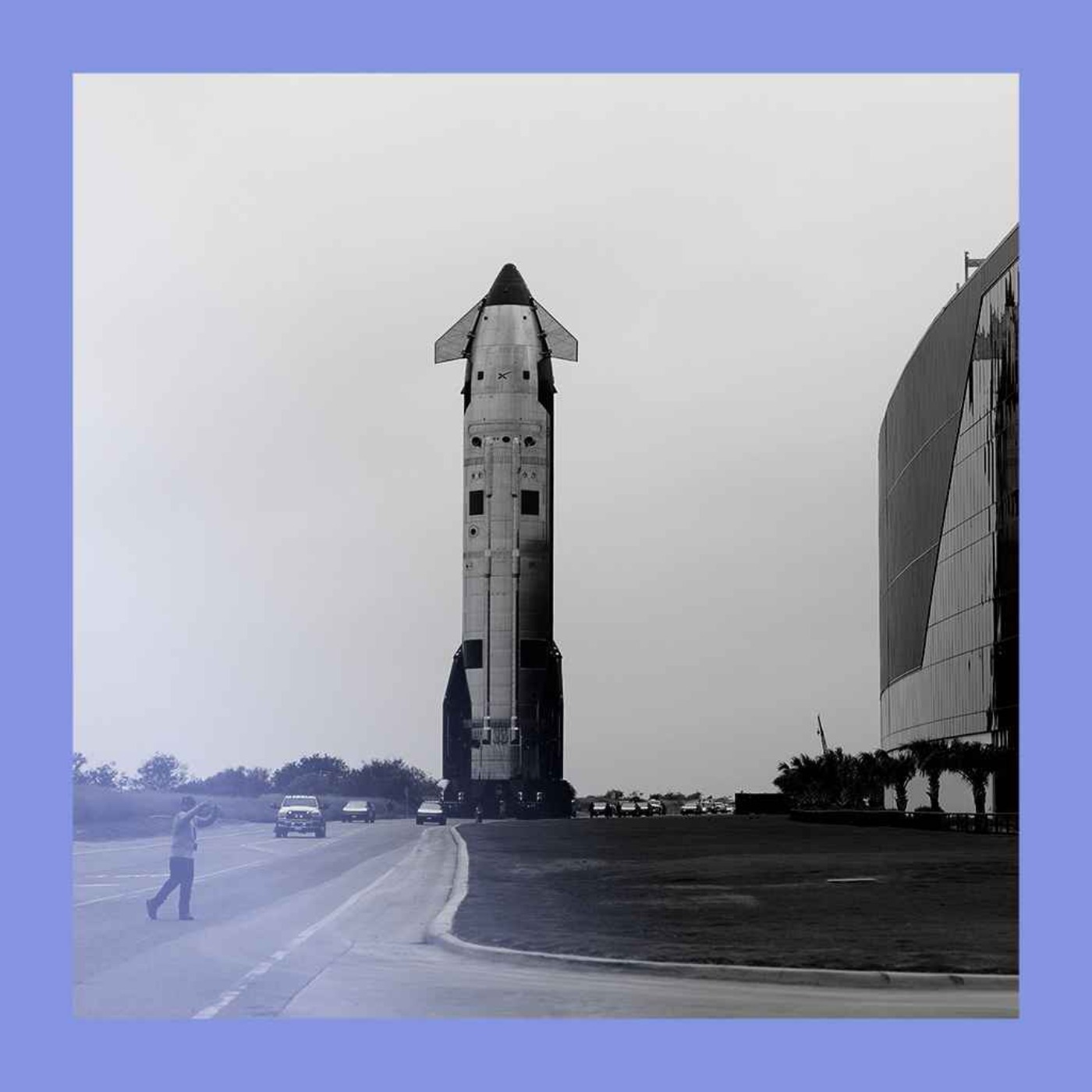
SpaceX's cash-cow, Starlink, is facing network congestion due to rapid growth. The solution requires larger satellites that are too big for the current Falcon 9 rocket. The success of the much larger, reusable Starship is therefore a critical bottleneck for unlocking Starlink's future profitability and expansion.
Beyond consumer connectivity, Starlink's satellite network and future space-based data centers are effectively building a backup internet. This extraterrestrial communication infrastructure offers a parallel system that could function independently of Earth's terrestrial cables, providing resiliency against civilizational upheaval or government collapse.
