Get your free personalized podcast brief
We scan new podcasts and send you the top 5 insights daily.
Space telescopes were designed to overcome atmospheric distortion, but they are now threatened by the explosive growth of satellite mega-constellations like Starlink. The light pollution from tens of thousands of low-orbit objects is beginning to contaminate a majority of images, undermining the effectiveness of humanity's most advanced astronomical tools.

Related Insights
By owning both the launch capability (SpaceX) and the network (Starlink), Musk could exert ultimate control over internet infrastructure. This creates a scenario where he could deny network access to rivals, like OpenAI, representing a powerful and unprecedented form of vertical integration.

Starlink's satellite beams are too broad to effectively serve dense cities. Its business model is complementary to ground-based cellular, focusing on rural and underserved areas where building fiber or cell towers is economically inefficient.

Proposed solutions to satellite streaks in astronomical images, such as data sharing and dimmer paint, are insufficient to solve the problem. These fixes cannot keep pace with the exponential growth in the number of satellites planned for launch. The only viable long-term solution—launching telescopes into much higher orbits—is prohibitively complex and expensive.
Following predictions from Jeff Bezos and investments from Eric Schmidt, Elon Musk has entered the space-based data center race. He stated that SpaceX will leverage its existing Starlink V3 satellites, which already have high-speed laser links, to create an orbital cloud infrastructure, posing a significant challenge to startups in the sector.

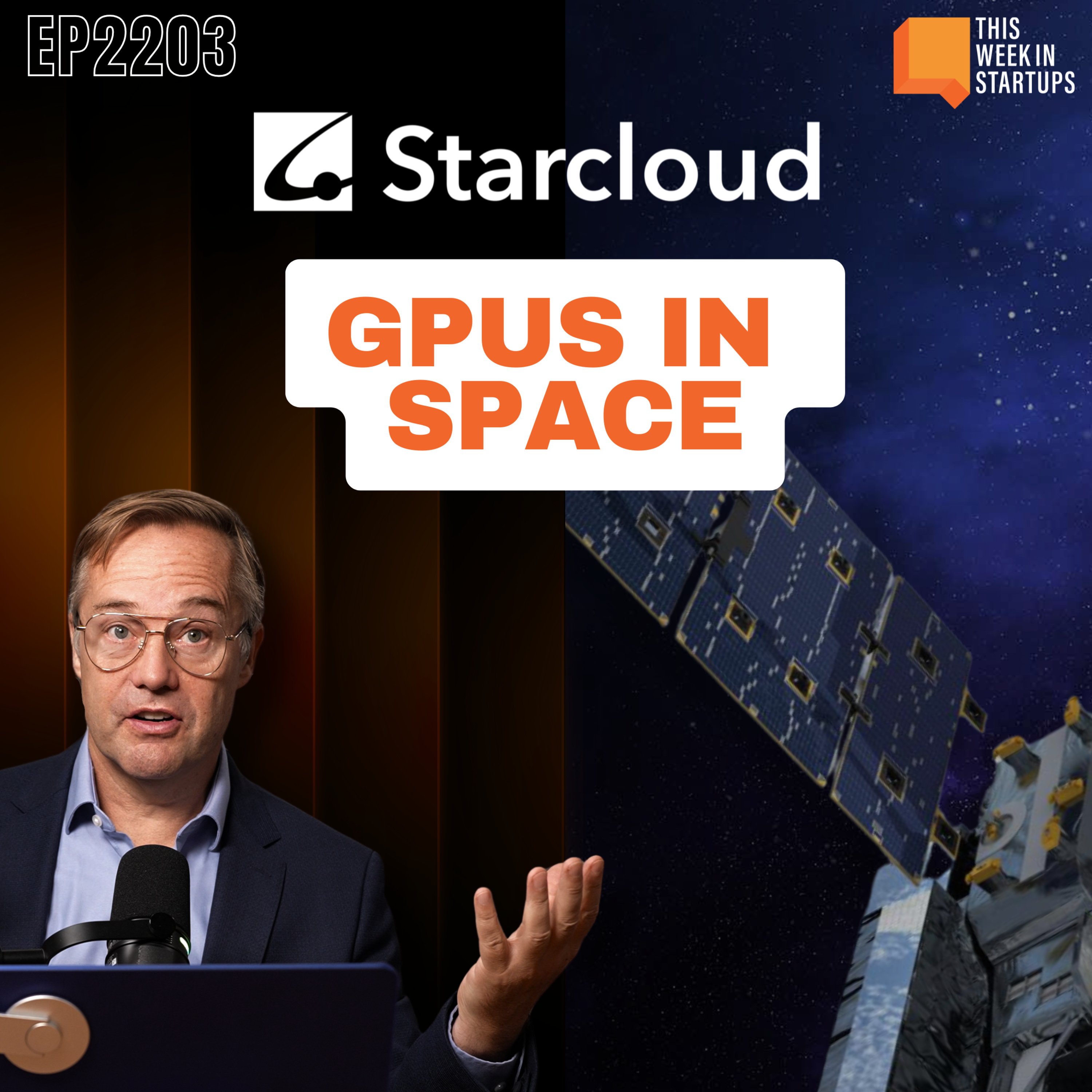
The two largest physical costs for AI data centers—power and cooling—are essentially free and unlimited in space. A satellite can receive constant, intense solar power without needing batteries and use the near-absolute zero of space for cost-free cooling. This fundamentally changes the economic and physical limits of large-scale computation.

Startups are successfully deploying infrastructure like in-orbit GPUs. However, the space economy remains self-referential, serving other space companies. It needs a major commercial application with Earth-based customers, like asteroid mining, to achieve sustainable growth.
K2 Space, now a major player in space infrastructure, began with the contrarian goal of building large telescopes, bucking the small-satellite trend. This focus forced them to solve for high power and large structures, creating a versatile platform that is now perfectly positioned for communications and compute applications.

To combat the growing problem of space junk, any new satellite launched into orbit must have a pre-approved plan for its disposal. This "deorbit plan" functions like an entry visa with a set departure date, ensuring the satellite will re-enter the atmosphere and burn up after its useful life instead of becoming permanent debris.

Leaders from Google, Nvidia, and SpaceX are proposing a shift of computational infrastructure to space. Google's Project Suncatcher aims to harness immense solar power for ML, while Elon Musk suggests lunar craters are ideal for quantum computing. Space is becoming the next frontier for core tech infrastructure, not just exploration.

The concept of space-based data centers rapidly shifted from a niche sci-fi idea to a serious initiative backed by giants like Nvidia, Google, and SpaceX. This demonstrates how quickly the Overton window can move on capital-intensive, ambitious "hard tech" projects when key industry leaders publicly commit.