Get your free personalized podcast brief
We scan new podcasts and send you the top 5 insights daily.
True AI adoption isn't about tools; it's a fundamental shift in organizational design. Traditional companies operate like Roman legions with layers of management. AI-native businesses are flat, allowing a single leader to manage thousands of AI-augmented workers directly, eliminating middle management and radically increasing efficiency.

Related Insights
Beyond just using AI tools, truly "AI-native" companies are built differently. They feature distinct organizational designs, new talent profiles, and leadership visions that fundamentally rethink problem-solving. This structural difference separates them from legacy companies merely adding AI features.

Don't think of AI as replacing roles. Instead, envision a new organizational structure where every human employee manages a team of their own specialized AI agents. This model enhances individual capabilities without eliminating the human team, making everyone more effective.

Notion's CEO compares current AI adoption to swapping a water wheel for a steam engine but keeping the factory layout the same. The real gains will come from fundamentally rethinking workflows, meetings, and hierarchies to leverage AI that works 24/7, rather than just layering it onto existing processes.

AI tools boost individual productivity so much that dedicated middle managers become obsolete. The new organizational structure demands that all leaders are also "doers" who spend most of their time on individual contributions, flattening hierarchies and making everyone a contributor.

The exponential increase in individual output from AI tools negates the need for traditional, multi-layered management structures. Cash App flattened its design org to just three layers from the CEO, enabling faster decision-making and adaptation to rapid technological change.

The paradigm for employees shifts from being an individual contributor to being a manager of AI agents. Success is no longer just direct output, but the ability to effectively set up, direct, and manage a team of autonomous agents to achieve goals.

Legacy companies are siloed, creating IT "spaghetti" that blocks AI progress. In contrast, AI-native organizations structure themselves around a central "AI factory" or unified data platform. Business units function like apps on an iPhone, accessing shared, controlled data to rapidly innovate and deploy new services.
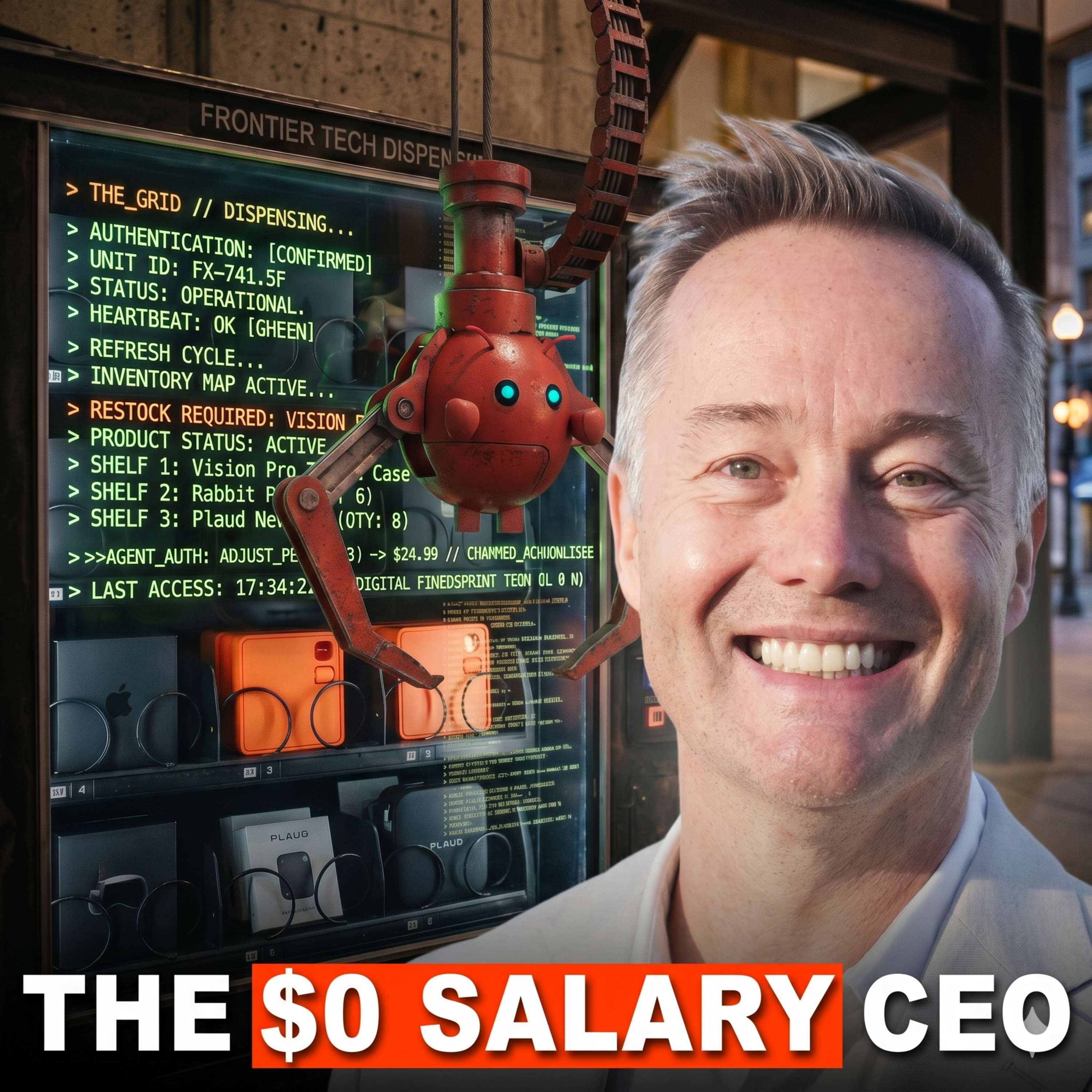
The trend of lean operations and automation won't stop at one-person companies. The logical next step in this evolution is the emergence of businesses almost entirely run by a single, autonomous AI agent, representing a fundamental shift in corporate structure.
AI tools serve as an "antidote to the managerial revolution" by empowering individual contributors to build and deploy solutions directly. This bypasses bureaucratic layers of middle management, accelerates innovation, and shifts the power balance within organizations back to frontline workers.
Shift from departments staffed with people to a single owner who directs AI agents, automations, and robotics to achieve outcomes. This structure maximizes leverage and efficiency, replacing the old model of "throwing bodies" at problems.
