Get your free personalized podcast brief
We scan new podcasts and send you the top 5 insights daily.
The real breakthrough for empowering non-developers wasn't just AI that wrote code snippets. It was the emergence of 'agentic AI' that could execute multi-step tasks autonomously, finally enabling creation without deep coding knowledge, shifting the focus from 'learning to code' to 'learning to create'.

Related Insights
The ability to code is no longer a prerequisite for software development. AI agents are democratizing creation, enabling anyone to build complex applications on demand. This flips the paradigm from a small fraction of specialized coders to a world of creators.

Agentic coding tools like Claude Code represent a new, distinct modality of AI interaction, as significant as the advent of image generation or chatbots. This shift is creating a new category of power users who integrate AI into their daily workflows not just for queries, but for proactive, complex task execution.
Unlike the early days of LLMs which required deep technical skill, the current era of agentic AI empowers non-technical generalists. The skill set required to win is no longer coding but the ability to deploy and train commercial software tools—a skill many business professionals already possess.

The key skill for building is shifting from mastering no-code tools like Webflow and Zapier to working with AI agents. This represents a new programmable layer of abstraction where proficiency is defined by prompting, context management, and systems thinking for AI, not visual development.

Claude Code can take a high-level goal, ask clarifying questions, and then independently work for over an hour to generate code and deploy a working website. This signals a shift from AI as a simple tool to AI as an autonomous agent capable of complex, multi-step projects.

Unlike generative AI (like ChatGPT) which only provides text output, agentic AI can perform actions on your behalf. It can log into accounts, click buttons, and complete multi-step tasks, shifting AI from a smart consultant to an autonomous digital assistant.

'Vibe coding' is moving beyond simple code generation. Replit's Agent four represents the next stage: a collaborative, multi-agent surface where natural language prompts build entire digital products like websites and slides. The focus is shifting from discrete coding tasks to creating any digital artifact.

According to former OpenAI founder Andre Karpathy, the default programming workflow has become unrecognizable in just the last few months. The paradigm has shifted from developers typing code into an editor to managing and orchestrating autonomous AI agents who are given goals, not step-by-step plans. The new critical skill is managing agents effectively.
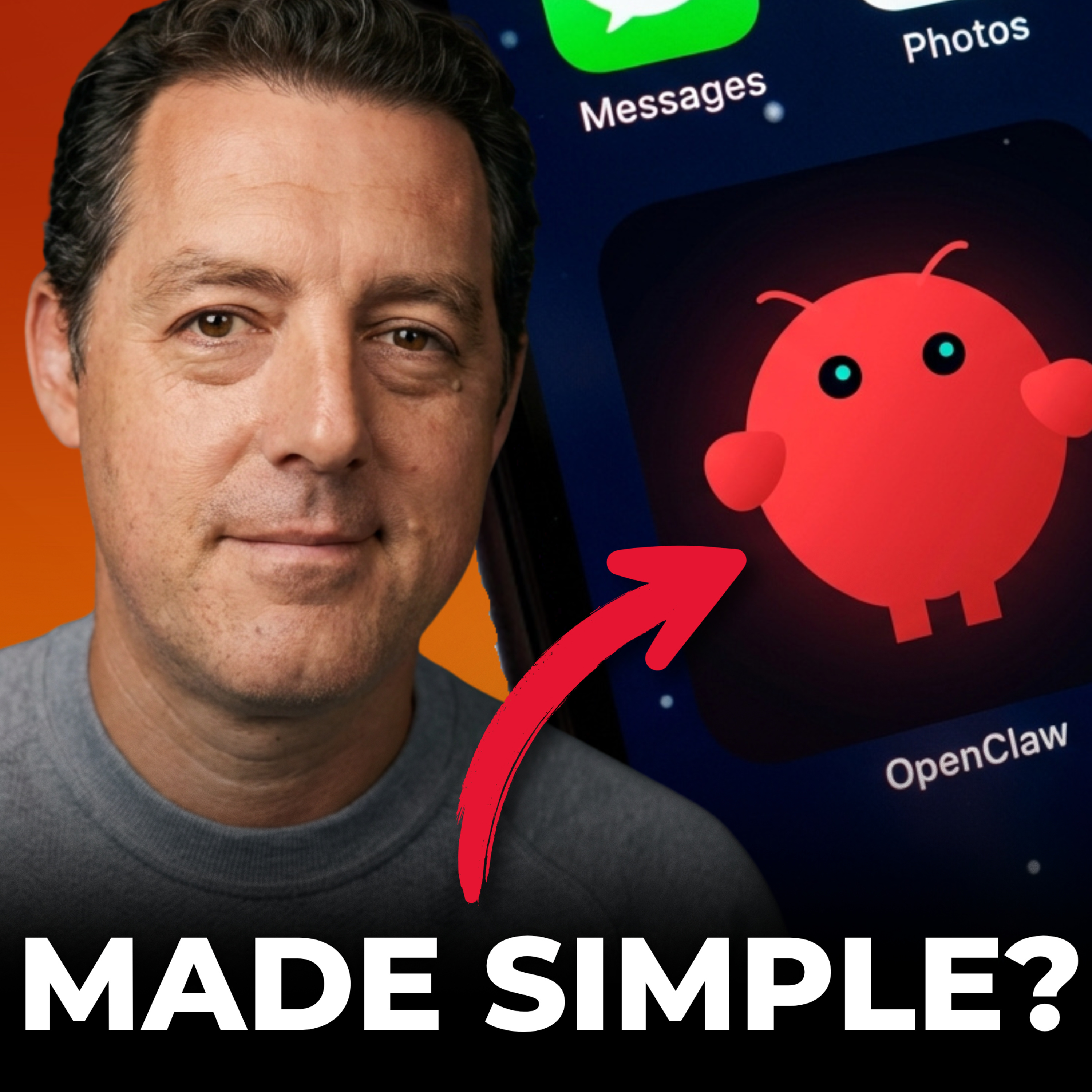
The excitement around tools like OpenClaw stems from their ability to empower non-programmers to create custom software and workflows. This replicates the feeling of creative power previously exclusive to developers, unlocking a long tail of niche, personalized applications for small businesses and individuals who could never build them before.
The next wave of AI is 'agentic,' meaning it can control a computer to execute commands and complete tasks, not just generate responses to prompts. This profound shift automates workflows like coding and administrative tasks, freeing humans for high-level creative and strategic work.
