Get your free personalized podcast brief
We scan new podcasts and send you the top 5 insights daily.
David Booth's father kept $15,000 cash in a safe deposit box. Had that amount been invested in the stock market in 1945, it would have grown to over a million by 1985, and that million would have grown to many more millions since. This illustrates the tragic opportunity cost of fearing markets.

Related Insights
Holding cash is a losing strategy because governments consistently respond to economic crises by printing money. This devalues savings, effectively forcing individuals to invest in assets like stocks simply to protect their purchasing power against inflation.

Panic selling during a market crash is disastrous beyond the immediate loss. Data shows about a third of investors who sell in a panic never get back into equities. They lock in their losses and miss the subsequent recovery and decades of compounding returns, a far worse financial outcome.

Contrary to its perceived safety, holding cash is a losing proposition over the long term. Deutsche Bank's historical data over 200 years shows a global real return of -2% per year for cash, eroding purchasing power significantly.
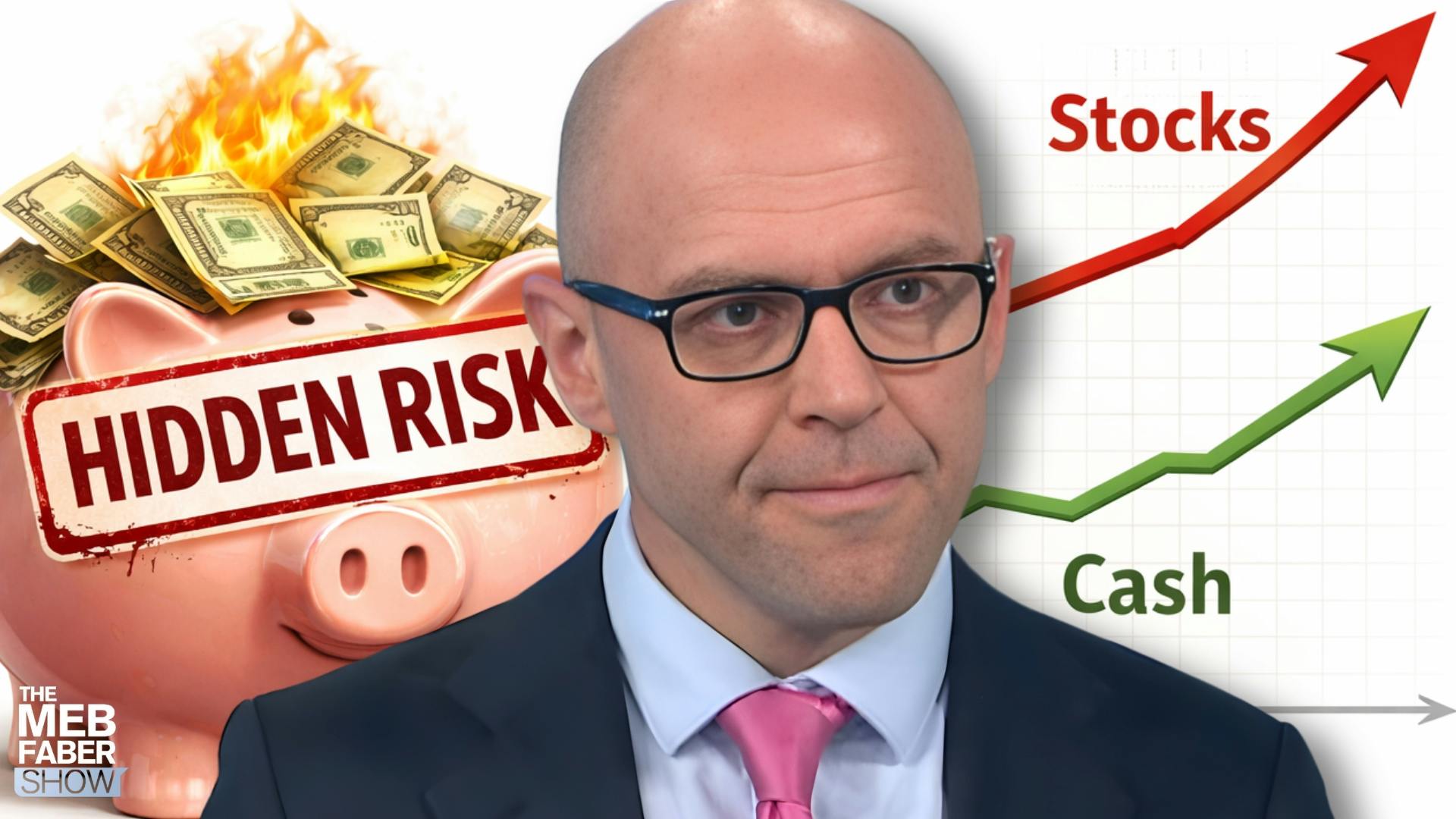
While cash seems like the safest asset, it guarantees a negative real return over time. Inflation erodes its purchasing power, and any interest earned is taxed, making it a poor choice for long-term wealth preservation compared to productive assets.

For young investors with a long time horizon, a bear market is a massive opportunity, not a crisis. It allows them to buy assets at depressed prices, leading to significantly higher long-term returns. Market declines are a feature, not a bug, for those in the accumulation phase.
Raoul Pal, a macro expert, admits he was so psychologically scarred by the 2000 and 2008 crashes that he avoided equities for over a decade, missing enormous gains. This highlights how emotional trauma, not lack of knowledge, is the biggest barrier to successful long-term investing.

The trauma of the 1929 crash created a lasting aversion to stock market investing. Andrew Ross Sorkin notes his grandfather witnessed the crash as a boy and never bought a stock in his life. This shows how crises can shatter a nation's financial psyche for generations, impacting wealth creation.

The true value of a large cash position isn't its yield but its 'hidden return.' This liquidity provides psychological stability during market downturns, preventing you from becoming a forced seller at the worst possible time. This behavioral insurance can be worth far more than any potential market gains.
While investing carries risks, holding cash guarantees a loss of purchasing power due to inflation. Therefore, the decision to abstain from investing is a far riskier financial gamble than participating in the market over the long term.

In an environment dominated by government debt and money printing, holding cash is not a neutral act of saving; it's direct exposure to inflation. As the government devalues the currency to manage its interest payments, the purchasing power of cash diminishes. The priority must shift from simply saving to owning productive or scarce assets as a defense.
