Get your free personalized podcast brief
We scan new podcasts and send you the top 5 insights daily.
While cash seems like the safest asset, it guarantees a negative real return over time. Inflation erodes its purchasing power, and any interest earned is taxed, making it a poor choice for long-term wealth preservation compared to productive assets.

Related Insights
Holding cash is a losing strategy because governments consistently respond to economic crises by printing money. This devalues savings, effectively forcing individuals to invest in assets like stocks simply to protect their purchasing power against inflation.

Contrary to its perceived safety, holding cash is a losing proposition over the long term. Deutsche Bank's historical data over 200 years shows a global real return of -2% per year for cash, eroding purchasing power significantly.
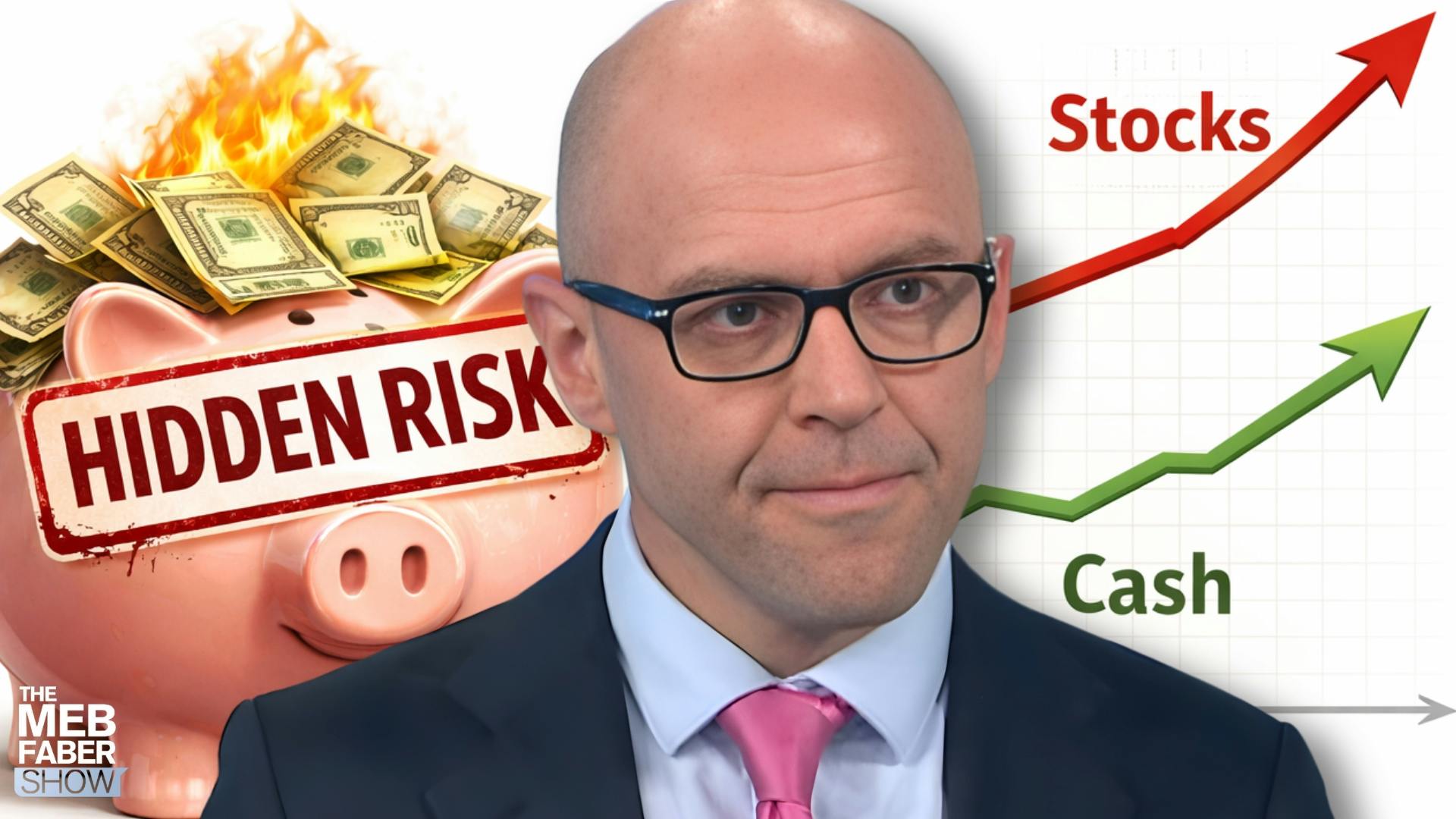
In an economy where currency is being systematically devalued through money printing, holding cash is a losing strategy. The only way to preserve wealth is to own a diverse basket of 12-15 uncorrelated assets (e.g. stocks, commodities, real estate) that are subject to different economic pressures.

In an economic system with persistent currency debasement, holding cash in a savings account guarantees a loss of purchasing power. Prosperity is no longer achievable through simple saving; it requires actively "betting" on assets that can't be inflated, such as stocks, real estate, or crypto.

The strategy to manage debt involves holding interest rates below the true rate of inflation. This slowly erodes the value of the debt—and any cash savings. In this environment, holding dollars is a guaranteed way to lose purchasing power, while assets like stocks, real estate, and crypto are likely to climb in nominal value.

Cash is not a long-term wealth-building tool due to inflation. Its purpose is strategic and short-term. You should only accumulate cash for an emergency fund, a specific large purchase like a house down payment, or to deploy into investments during a market downturn.

In an era of "fiscal dominance," where massive national debt forces continuous money printing, holding excess cash in a savings account is not a safe haven but a "melting ice cube." The invisible tax of inflation guarantees that your purchasing power will consistently decrease over time.

While investing carries risks, holding cash guarantees a loss of purchasing power due to inflation. Therefore, the decision to abstain from investing is a far riskier financial gamble than participating in the market over the long term.
Inflation is not a passive economic event but an active mechanism. It devalues cash and paychecks, effectively transferring that evaporated wealth to those who own assets, rigging the game against anyone not invested in the market.

In an environment dominated by government debt and money printing, holding cash is not a neutral act of saving; it's direct exposure to inflation. As the government devalues the currency to manage its interest payments, the purchasing power of cash diminishes. The priority must shift from simply saving to owning productive or scarce assets as a defense.
