Get your free personalized podcast brief
We scan new podcasts and send you the top 5 insights daily.
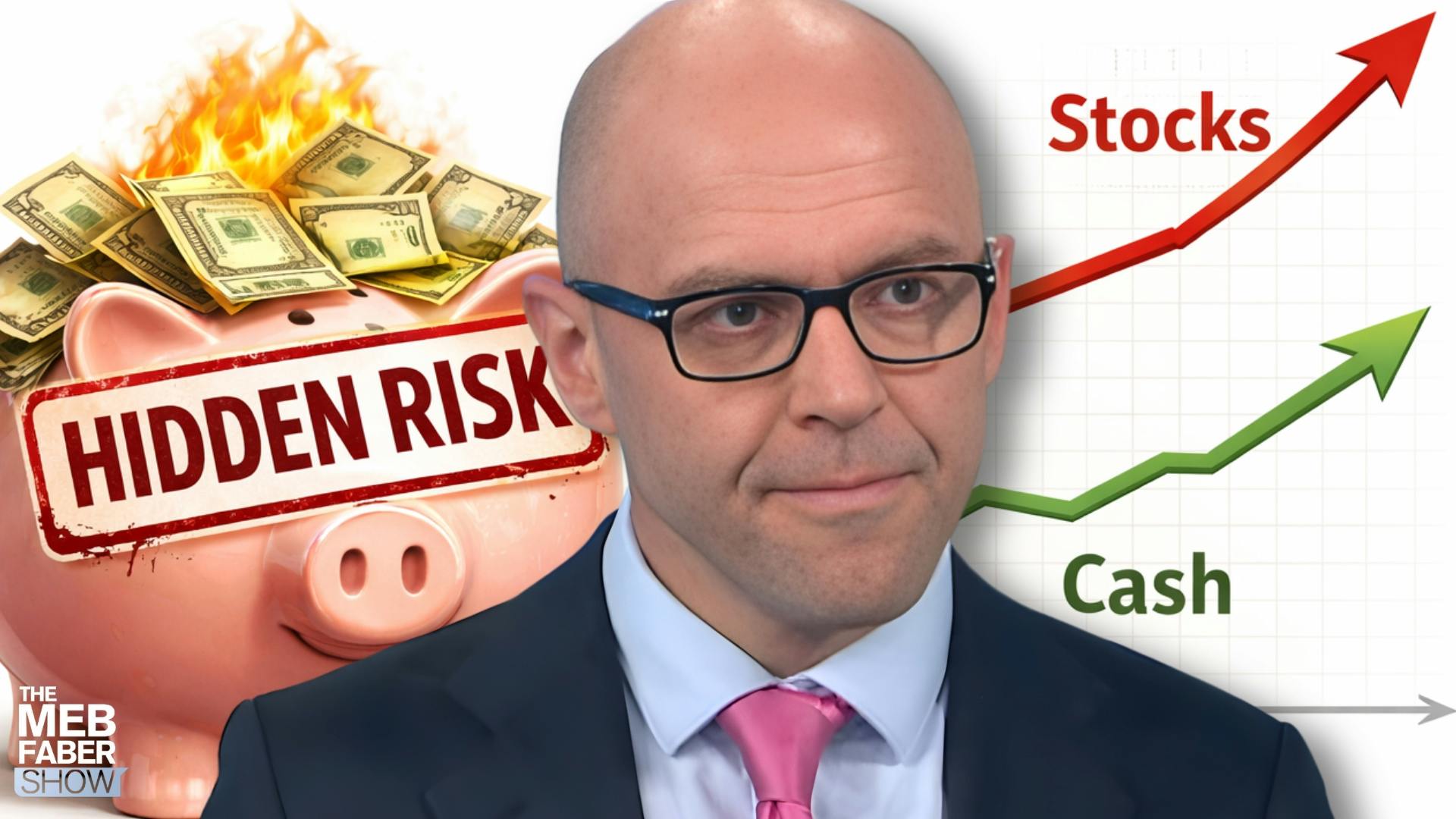
Contrary to its perceived safety, holding cash is a losing proposition over the long term. Deutsche Bank's historical data over 200 years shows a global real return of -2% per year for cash, eroding purchasing power significantly.
Related Insights
Holding cash is a losing strategy because governments consistently respond to economic crises by printing money. This devalues savings, effectively forcing individuals to invest in assets like stocks simply to protect their purchasing power against inflation.

In an economy where currency is being systematically devalued through money printing, holding cash is a losing strategy. The only way to preserve wealth is to own a diverse basket of 12-15 uncorrelated assets (e.g. stocks, commodities, real estate) that are subject to different economic pressures.

In an economic system with persistent currency debasement, holding cash in a savings account guarantees a loss of purchasing power. Prosperity is no longer achievable through simple saving; it requires actively "betting" on assets that can't be inflated, such as stocks, real estate, or crypto.

During profound economic instability, the winning strategy isn't chasing the highest returns, but rather avoiding catastrophic loss. The greatest risks are not missed upside, but holding only cash as inflation erodes its value or relying solely on a paycheck.

Cash is not a long-term wealth-building tool due to inflation. Its purpose is strategic and short-term. You should only accumulate cash for an emergency fund, a specific large purchase like a house down payment, or to deploy into investments during a market downturn.

Even if an investor had perfect foresight to buy only at market bottoms, they would likely underperform someone who simply invests the same amount every month. The reason is that the 'market timer' holds cash for extended periods while waiting for a dip, missing out on the market's general upward trend, which often makes new bottoms higher than previous entry points.

The true value of a large cash position isn't its yield but its 'hidden return.' This liquidity provides psychological stability during market downturns, preventing you from becoming a forced seller at the worst possible time. This behavioral insurance can be worth far more than any potential market gains.
In an era of "fiscal dominance," where massive national debt forces continuous money printing, holding excess cash in a savings account is not a safe haven but a "melting ice cube." The invisible tax of inflation guarantees that your purchasing power will consistently decrease over time.

Investors often prefer interest-bearing cash or bonds over non-yielding gold. Dalio calls this a "trap." This works until the government's promise to redeem the currency is broken (like the US leaving the gold standard), revealing the hidden credit risk of fiat money.

In an environment dominated by government debt and money printing, holding cash is not a neutral act of saving; it's direct exposure to inflation. As the government devalues the currency to manage its interest payments, the purchasing power of cash diminishes. The priority must shift from simply saving to owning productive or scarce assets as a defense.
